

Start with the free clues: the boundary stopcock, the point where the pipe enters the house, and a straight line between them. A CAT scanner confirms metal pipes but misses plastic ones, which is what most modern supply pipes are made of. Professional tracing marks the exact route, so any digging happens in one small hole.
How to Trace Underground Water Pipes Before You Dig
Nobody digs up a driveway for fun. Whether you are chasing a suspected leak, planning an extension, putting in a new fence or replacing an old lead pipe, the first question is always the same: where exactly does the pipe run? Get that wrong and you either cut through a live water supply with a digger, or you excavate three trenches to find a pipe that was a metre to the left the whole time.
This guide explains how to trace underground water pipes, what you can work out yourself for nothing, what the tools actually do (and do not do), and where the line falls between your pipe and Scottish Water’s.
What this guide covers
Why tracing comes before digging
An underground water pipe gives you almost nothing to go on from the surface. Unlike a drain, there are no inspection covers along its length. The pipe was buried decades ago, often before the current owner bought the house, and the route in someone’s memory is worth about as much as a guess.
We have seen the results of digging on instinct plenty of times. A monoblock driveway lifted in the wrong two places before anyone thought to trace the pipe. A garden trenched end to end for a leak that turned out to be under the front step. Each wrong hole costs twice: once to dig it, once to reinstate it. On a paved or monoblocked surface, reinstatement is usually the bigger bill.
There is a safety point too. Striking a pressurised water pipe with a spade is unpleasant. Striking the electricity cable that often shares the same trench line is far worse.
Where underground water pipes usually run
Before any equipment comes out, you can narrow the search area considerably with logic. Supply pipes were laid by people who wanted the shortest sensible route, so they usually follow one.
Clues that reveal the route
- The boundary stopcock
A small metal or plastic lid, usually in the pavement or just inside your boundary. This is where your pipe starts. In Scotland it belongs to Scottish Water, but it marks the start of your run. - The entry point into the house
Find your internal stopcock, typically under the kitchen sink or in a hall cupboard, and note where the pipe comes through the floor or wall. This is where your pipe ends. - The straight-line rule
Most supply pipes run in a near-straight line between those two points. Kinks exist, usually around old obstructions, but straight is the starting assumption. - Depth
Supply pipes are buried deep enough to sit below frost, so do not expect to find one just under the turf. That depth is also why surface dampness can appear some distance from the actual pipe.
Sketch that line on a bit of paper before you do anything else. If you are tracing the pipe because of a persistent damp area outside, our guide to wet patches in the garden or driveway covers how to tell whether that patch is a leak at all.
How to trace underground water pipes yourself
With the straight line sketched, a few checks firm the route up without any digging.
Step 1: Open both ends
Lift the boundary stopcock lid and find the pipe’s entry point indoors. If the two points do not face each other logically, the pipe probably takes a dogleg, often around a bay window footing, an old coal cellar or a drain run.
Step 2: Look for surface tells
Old trench lines leave fingerprints. A strip of lawn that grows differently, a line of settlement across a path, a row of cracked or sunken monoblock, or a visible mortar repair in concrete all suggest someone dug there before. Buried services are usually the reason.
Step 3: Check neighbouring properties
Houses built together were usually plumbed together. If your neighbour’s boundary stopcock sits in the same relative position, the routes are probably mirrored. In older terraced streets, be aware the whole row may share one supply pipe rather than having one each.
Step 4: Ask for records
Scottish Water can tell you where its own network sits, and your title deeds or a previous owner’s building work paperwork sometimes show private pipe routes. Treat old drawings as a guide rather than gospel. Pipes get moved, and drawings do not always get updated.
This gets many people close enough for a careful hand-dug test hole on soft ground. What it does not give you is certainty under a driveway, and it tells you nothing about where along the pipe a leak sits. That is where equipment comes in, and the equipment is widely misunderstood.
CAT scanners: what they find and what they miss
The tool most people have heard of is the CAT, the Cable Avoidance Tool that utility crews sweep across the ground before excavating. Paired with its signal generator (the Genny), it detects buried metallic services: power cables, metal gas pipes, and older metal water pipes such as lead, iron or copper.
Here is the catch. A CAT finds metal and live electrical signals. The majority of modern water supply pipes are MDPE plastic, the blue pipe used for decades on new installations and replacements, and plastic gives a CAT nothing to lock onto. Sweeping a driveway with a CAT and finding nothing does not mean there is no water pipe under it. It often just means the pipe is plastic.
Tracing a plastic water pipe needs a different approach:
- Sonde tracing
A small transmitter is fed along the inside of the pipe where access allows, and a receiver follows its signal from the surface, mapping the route as it goes. - Acoustic tracing
With water flowing, the pipe makes noise. A ground microphone follows that noise along the run. It doubles as leak detection, since a leak is the loudest point on the pipe. - Tracer gas
A harmless hydrogen and nitrogen mix is put into the pipe. It escapes at any split, rises through the ground and is picked up by a surface probe. On plastic pipes with suspected leaks, this is often the decisive method.
If the reason you are tracing the pipe is a suspected leak rather than planned building work, it is worth reading our full guide to finding an underground water leak, because route tracing and leak location are two halves of the same job.
CAT scanner vs correlator: two different jobs
People often ask us whether they should hire a correlator instead of a CAT. The honest answer is that they do not compete. They answer different questions.
| CAT and Genny | Leak noise correlator | |
|---|---|---|
| Question it answers | Where does the pipe run? | Where on the pipe is the leak? |
| How it works | Detects electromagnetic signals from buried metallic services | Sensors at two points on the pipe time how long leak noise takes to reach each one, then calculate the leak position between them |
| Works on plastic pipe? | Not directly, needs a sonde or tracing method | Yes, though plastic carries sound poorly, so sensor placement and pipe data matter more |
| Needs to know the route first? | No, finding the route is the job | Yes, a correlation is only as good as the route and pipe details fed into it |
| Typical user | Anyone excavating safely | Leak detection engineers and water companies |
Notice the dependency in that table. A correlator needs the pipe route, material and length to place a leak accurately. Trace first, correlate second. Doing it the other way round produces a confident-looking number in the wrong place.
If you would rather skip the equipment hire and the learning curve, call us on 07700 152 467 and we will trace the pipe and pinpoint any leak on it in one visit.
Whose pipe is it? The Scottish boundary explained
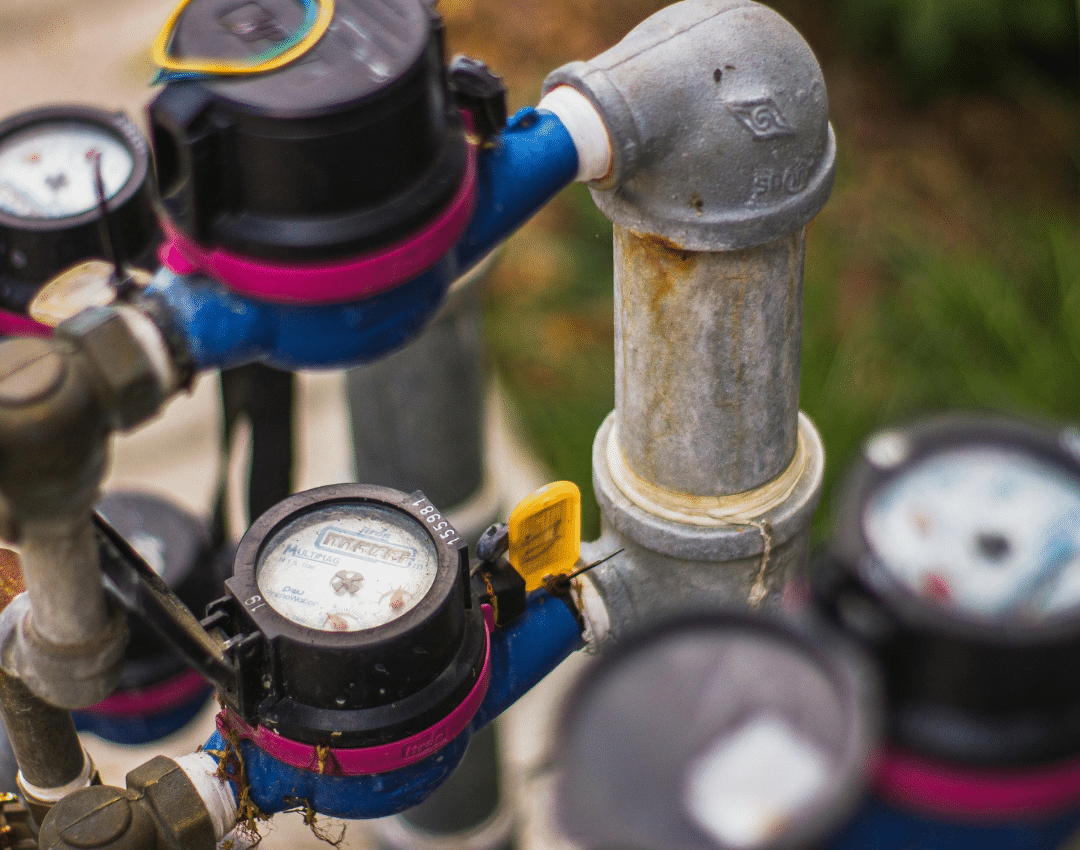
Before you trace anything, it helps to know which parts of the run are even yours to worry about. In Scotland the split is clearly defined.
Scottish Water owns the water main in the street, the communication pipe that runs from the main to your property boundary, and the boundary stopcock itself. The owner is responsible for the supply pipe from that boundary into the home, plus all the internal plumbing (Scottish Water sets out the boundary here).
So the section you may need to trace, and the section any leak repair falls on, is the private run inside your boundary. Problems on the street side are Scottish Water’s to investigate, and reporting them costs nothing.
One wrinkle worth knowing about: flats and older or terraced houses in Scotland often share a single supply pipe, which makes responsibility for it joint between the connected owners (Scottish Water’s pipes FAQ explains this). A shared pipe also changes the tracing job, because the route may cross several gardens before it reaches yours. Our article on who is responsible for water pipes in Scotland walks through each scenario.
What professional pipe tracing looks like
A professional trace is quick, and it is non-destructive from start to finish. The engineer confirms both ends of the run, selects the method the pipe material allows (electromagnetic tracing for metal, sonde, acoustic or tracer gas for plastic), then follows the pipe across the surface and marks the route with paint or pegs as they go.
If a leak is suspected, the same visit locates it. The marked route becomes the search corridor, and acoustic or tracer gas methods narrow the leak down to a dig point about a spade’s width across. You dig once, in the right place, and the driveway keeps its dignity.
The economics are straightforward. One traced route and one small excavation nearly always costs less than one speculative trench, and if the trace is part of locating a hidden leak, most buildings insurance policies include trace and access cover that pays for locating the leak and making good the access afterwards. MoneySuperMarket, citing Defaqto, puts that cover in 94% of policies, typically limited to £5,000 to £10,000.
Frequently asked questions
Can I trace a plastic water pipe with a CAT scanner?
Not directly. A CAT detects metallic services and live electrical signals, and plastic MDPE pipe produces neither. Plastic pipes are traced by feeding a sonde transmitter along the pipe, following the water noise acoustically, or introducing tracer gas and following it from the surface. A clear CAT sweep does not mean the ground is empty.
How deep are water pipes buried in the UK?
Deep enough to protect them from frost, which is the reason for the depth rules in water regulations. In practice that means a supply pipe sits well below spade depth, so you will not clip one while weeding. It also means surface wetness from a leak can surface some distance from the pipe itself.
Does Scottish Water know where my supply pipe runs?
Usually not. Scottish Water holds records of its own network, the mains and communication pipes up to your boundary. The private supply pipe inside your boundary is yours, and no utility keeps reliable maps of private pipework. Title deeds and old building paperwork sometimes help, but a physical trace is the only way to be sure.
Do I need to trace the pipe before a driveway or extension?
Yes, and before the design is finalised, not after the digger arrives. Building over a supply pipe creates access problems for the rest of the pipe’s life, and striking one during groundworks floods the excavation and stops the job. A trace takes a fraction of a day and removes the risk entirely.
Can pipe tracing find the leak as well as the route?
The trace itself only maps the route, but the same visit usually locates the leak too. Once the route is marked, acoustic listening or tracer gas along that corridor pinpoints the escape point, typically to within a spade’s width. That is why tracing and leak detection are best done together rather than as separate hires.
Related reading
- How to Find an Underground Water Leak (and Who to Call)
- Wet Patch in the Garden or Driveway? Finding an Outside Leak
- Who Is Responsible for Water Pipes in Scotland?
MCR Leak Detection provides professional leak detection and pipe tracing across Scotland.
Speak to MCR Leak Detection
We trace underground water pipes and pinpoint leaks on them in a single non-destructive visit, anywhere in Scotland, 24/7. One marked route, one small hole, no wrecked driveway.