

A sealed heating system should sit at 1 to 1.5 bar when cold and need topping up once or twice a year at most, according to Worcester Bosch. If yours needs topping up weekly or monthly, water is escaping somewhere: a weeping radiator valve, a faulty boiler part, or a hidden pipe leak that is quietly damaging the house.
Boiler Losing Pressure? Causes and What to Do Next
The gauge read 1.2 bar last month. Now it reads 0.4 and the heating has locked out again. You top it up, it works for a while, and then the same slow slide starts over. Sound familiar?
A boiler losing pressure is one of the most common heating complaints in the country, and the frustrating part is that the boiler is often not the culprit. The pressure gauge measures the whole sealed system: every radiator, valve and metre of pipe in the house. This guide ranks the realistic causes, shows you the diary test that narrows them down, and explains when a dropping gauge means a leak hiding under your floors.
What this guide covers
How boiler pressure works
A modern combi or system boiler runs a sealed loop. A fixed amount of water circulates round the radiators, and the gauge on the boiler shows the pressure of that trapped water. Worcester Bosch’s guidance is that the gauge should read between 1 and 1.5 bar when the system is cool, and that a drop below 0.5 bar means water has been lost and must be replaced.
Because the loop is sealed, the pressure cannot fall unless something changes. Water expands and contracts a little with temperature, which is why the needle rises when the heating runs. But a sustained fall over days or weeks means one of two things: water is getting out, or air got in when the system was last worked on and has since been bled off. There is no third option. That is what makes the gauge such a useful witness.
Figures from Worcester Bosch boiler pressure guidance.
How much pressure loss is normal
Some loss over months is nothing to worry about. Tiny amounts of water escape through automatic air vents, and bleeding a radiator removes water from the loop too. Worcester Bosch puts the normal top-up frequency at once or twice a year, and says plainly that anything much more frequent should be looked at.
So calibrate your worry against the calendar. A top-up every autumn when the heating comes back on is routine maintenance. A top-up every fortnight is a fault. A top-up every two days is a leak, full stop, and the only question left is where.
The causes of a boiler losing pressure, ranked
| Cause | How common | Tell-tale signs |
|---|---|---|
| Radiator valve or joint weeps | Very common | Crusty white or green deposits on valves, rusty staining, damp carpet edges by radiators |
| Pressure relief valve (PRV) passing | Common | Drips from the copper discharge pipe outside, often after pressure was set too high |
| Expansion vessel failure | Common | Pressure swings high when hot, then drops; frequent lockouts; PRV starts discharging |
| Leak inside the boiler | Less common | Damp or staining under the boiler casing, corrosion visible below the unit |
| Hidden leak on heating pipework | The one nobody wants | Steady pressure loss with no visible drips anywhere; sometimes warm patches on floors or musty smells |
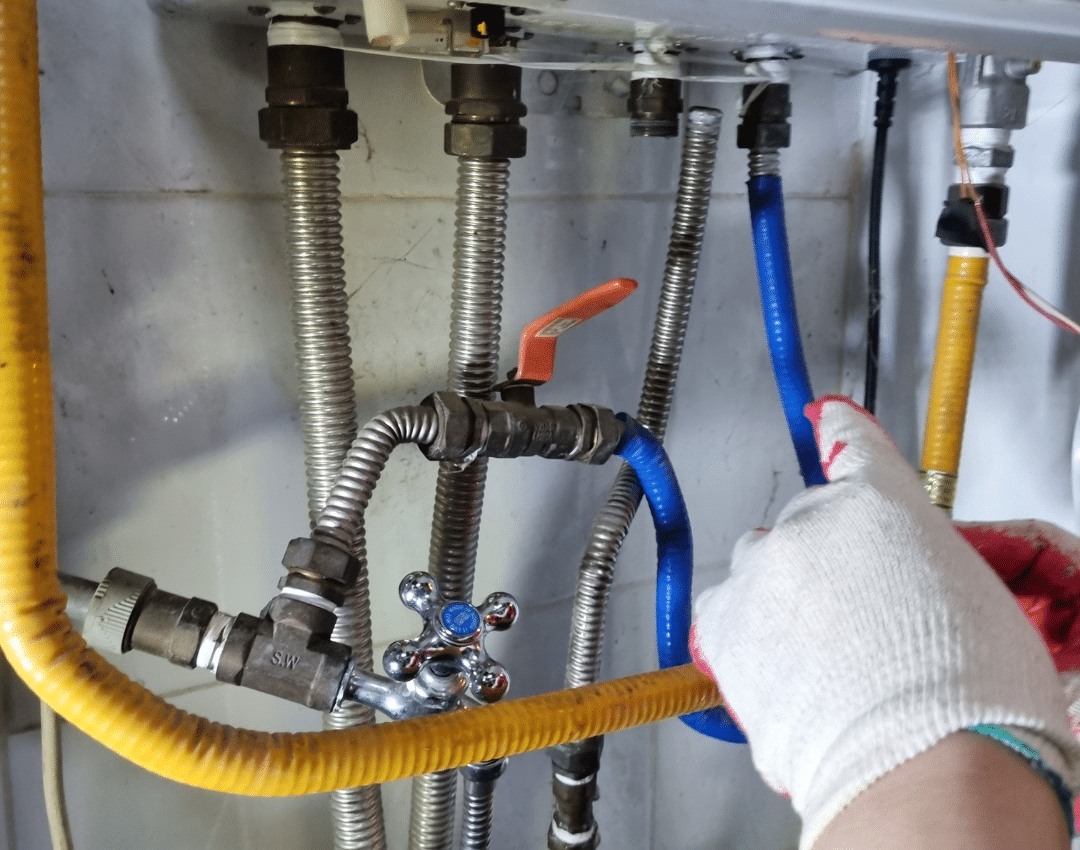
Notice the pattern in that table. The most likely causes are small, visible and cheap: a weeping valve, a passing PRV. The least visible cause, a split or corroded pipe under the floor or in a wall, is the one that does real damage while it waits to be found.
Work the list in order of visibility. Check every radiator valve, every accessible joint and the pipework under the boiler itself before anyone starts talking about lifting floors.
The PRV discharge pipe deserves special attention. It is the copper pipe that exits through the wall behind the boiler. If it drips, the system is venting water and the pressure fall is explained; a Gas Safe engineer can sort the valve or the expansion vessel behind the problem.
The pressure-gauge diary test
Before spending money on anyone, spend a week gathering evidence. This test costs nothing and tells an engineer more than an hour of poking around.
Step 1: Set a baseline
With the system cold, top up to 1.2 bar or so and photograph the gauge with your phone. The photo timestamps itself, which keeps the diary honest.
Step 2: Log it morning and night
Photograph the gauge cold each morning and note whether the heating ran. A week of readings shows the rate and rhythm of the loss.
Step 3: Read the pattern
Loss only on days the heating runs points to something that leaks under heat and pressure, often a joint or the expansion vessel circuit. Steady loss day and night, heating on or off, points to a constant escape, and overnight drops with cold radiators are a classic hidden leak signature.
Step 4: Match it to evidence
Now check the PRV pipe outside, valve bodies, and ceilings below upstairs radiators. If the diary shows steady loss and the visible checks show nothing, the water is going somewhere you cannot see.
If your losses cluster overnight, our article on boiler pressure dropping overnight digs into why those hours are so revealing.
Checks you can make yourself
- Radiator valvesRun a dry tissue around every valve body and compression nut. The tissue finds weeps your eyes miss. Our guide to a leaking radiator valve covers what you will find and what is fixable.
- Ceilings and floorsLook for faint rings or staining on ceilings under upstairs radiators and pipe runs, and press skirting-level carpet near radiators to feel for damp.
- The PRV discharge pipeHold a dry jar under it overnight. Any water collected explains at least part of the loss.
- Under the boilerTorch and mirror. Corrosion trails or drip marks under the casing mean the boiler itself needs a Gas Safe engineer.
- Repressurising habitsTop up correctly and note how often you do it. If you are unsure of the method, our step-by-step guide to repressurising a boiler walks through it safely.
One warning from experience: do not keep topping up indefinitely without a diagnosis. Fresh water carries oxygen and minerals into the system, feeding corrosion, and every litre you add is a litre that already leaked into your building somewhere. If the diary and the tissue test have not found it, call us on 07700 152 467 before the ceiling finds it for you.
When repeated top-ups mean a hidden system leak
Heating pipework runs under floors, through walls and inside screed, and a pinhole in any of it will drain your pressure without showing a single drip. Warm water disperses into the building fabric and often evaporates as fast as it escapes, so there is no puddle, just a gauge that will not hold and, eventually, a warped floorboard, a musty smell or a stain that appears months after the leak began.
Scottish housing adds its own suspects. Solid concrete ground floors hide heating loops in screed, and post-war microbore systems corrode from the inside. In unmetered Scottish homes there is no water bill change to raise the alarm either, so the pressure gauge is genuinely the best early-warning instrument most households own. Treat it like one. A steady unexplained loss is a symptom worth the same respect as the other signs of a hidden water leak.
How the leak gets found without wrecking the house
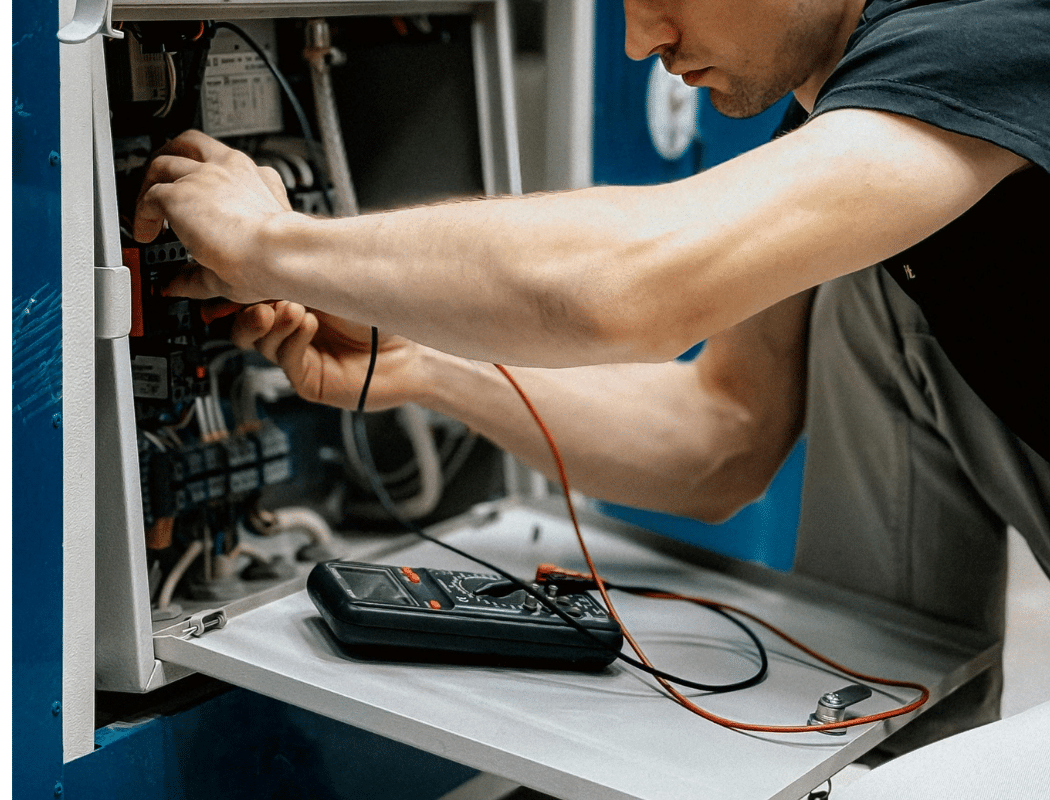
Finding a heating leak is a process of elimination done with instruments instead of a crowbar. The system can be isolated in sections to prove which circuit is losing water. Thermal imaging then traces the hot pipe runs and shows the tell-tale warm bloom where water escapes into the floor.
Where thermal imaging cannot reach, tracer gas takes over: the circuit is charged with a harmless hydrogen-nitrogen mix that rises through floors and registers on a surface probe directly above the split.
The result is a marked point and one small opening, not a lifted floor. Our guide to finding a leak in a central heating system covers the full process.
Frequently asked questions
What pressure should my boiler be at?
Between 1 and 1.5 bar with the system cold, according to Worcester Bosch guidance. The needle rising while the heating runs is normal expansion. Below 0.5 bar means water has been lost and needs replacing, and around 2.75 bar or more is too high and into the red zone.
Is it normal for a boiler to lose pressure over time?
Slow loss over months is normal; manufacturers expect a top-up once or twice a year. Anything more frequent points to a fault or a leak. The speed of the loss is the diagnostic clue: weekly top-ups suggest a small escape, daily top-ups mean a live leak that needs finding now.
Can a boiler lose pressure without a leak?
Yes, in limited ways. Bleeding radiators removes water, a failing expansion vessel causes swings that vent water through the pressure relief valve, and recent work can leave air that settles out. But a sealed system that steadily drops with none of those explanations is losing water somewhere, even if you cannot see it.
Why does my boiler lose pressure but there is no visible water anywhere?
Because heating pipes mostly run where you cannot look: under floors, in walls, through screed. Warm escaping water spreads and evaporates into the building fabric, so small leaks rarely puddle. No visible water does not mean no leak; it means the leak is hidden, which is the kind detection equipment exists for.
Will topping up the boiler damage anything?
Occasional correct top-ups are harmless. Constant topping up is not: every refill drags in fresh oxygenated water that accelerates corrosion inside radiators and pipework, and dilutes the inhibitor protecting the system. Meanwhile the escaped water is soaking into your floors or walls. Diagnose the cause rather than feeding the leak.
Related reading
- How to Repressurise a Boiler (and When You Shouldn’t)
- Boiler Pressure Dropping Overnight: What It Usually Means
- How to Find a Leak in a Central Heating System
MCR Leak Detection provides professional leak detection across Scotland, including central heating and underfloor systems.
Speak to MCR Leak Detection
Tired of watching the gauge fall? We trace heating leaks non-destructively with thermal imaging and tracer gas, anywhere in Scotland, 24/7, and mark the exact spot before anything gets opened up.