

Published UK guides put professional leak detection at roughly £500 on average, with quotes ranging from a few hundred pounds to £1,500 or more for complex jobs. Access, property size and method drive the price. If you have trace and access cover, your buildings insurance often pays for locating the leak.
How Much Does Leak Detection Cost? UK and Scotland Price Guide
Nobody budgets for a hidden leak. So when the ceiling stains or the boiler will not hold pressure, the first question is usually the same one you are asking now: what does leak detection cost, and is it worth it?
We are going to answer with published market figures rather than our own price list, because a fair quote depends on your property, your access and your leak. What we can do is show you what the wider UK market charges, what makes the number rise or fall, and how a good chunk of homeowners end up paying nothing at all because their insurer covers it.
What this guide covers
What leak detection costs across the UK market
Three published sources give a fair picture of the going rate. Checkatrade’s 2026 cost guide puts standard leak detection anywhere between £80 and £1,600 depending on the techniques required, with most leak searches costing around £500. ADI Leak Detection, a national specialist, publishes prices from £595 plus VAT and describes a UK range of £595 to £1,500 and beyond. Ideal Response quotes a typical range of £550 to £1,250.
| Source | Published figure | Notes |
|---|---|---|
| Checkatrade (2026 guide) | £80 – £1,600, around £500 average | Range depends on the techniques the job needs |
| ADI Leak Detection | From £595 + VAT; £595 – £1,500+ | Specialist firm’s own published pricing |
| Ideal Response | £550 – £1,250 | Typical professional detection range |
Why the spread? The low end covers a plumber spending an hour confirming an accessible leak. The high end covers a specialist spending a full day on a large property with underground pipework, several methods and a written report at the end. Those are different jobs wearing the same name.
What moves the price up or down
- Where the leak hidesA weep under a sink is quick. A leak under a concrete floor, a monoblock driveway or an underfloor heating loop takes specialist kit and more hours.
- Property size and pipe runsA one-bedroom flat has metres of pipe to check. A farmhouse with a 40-metre supply run across a field has rather more, and rural properties also add travel time.
- Methods requiredAcoustic listening, thermal imaging, moisture mapping and tracer gas each suit different situations. Jobs that need two or three methods cost more than jobs that need one.
- Access and urgencyFurniture out, floor coverings up and a clear story about the symptoms all shorten the visit. Out-of-hours emergencies carry a premium anywhere in the trade.
- The reportIf you are claiming on insurance you need a written report with findings, photographs and the pinpointed location. Expect it to be part of a specialist’s price rather than a plumber’s.
What a proper survey includes
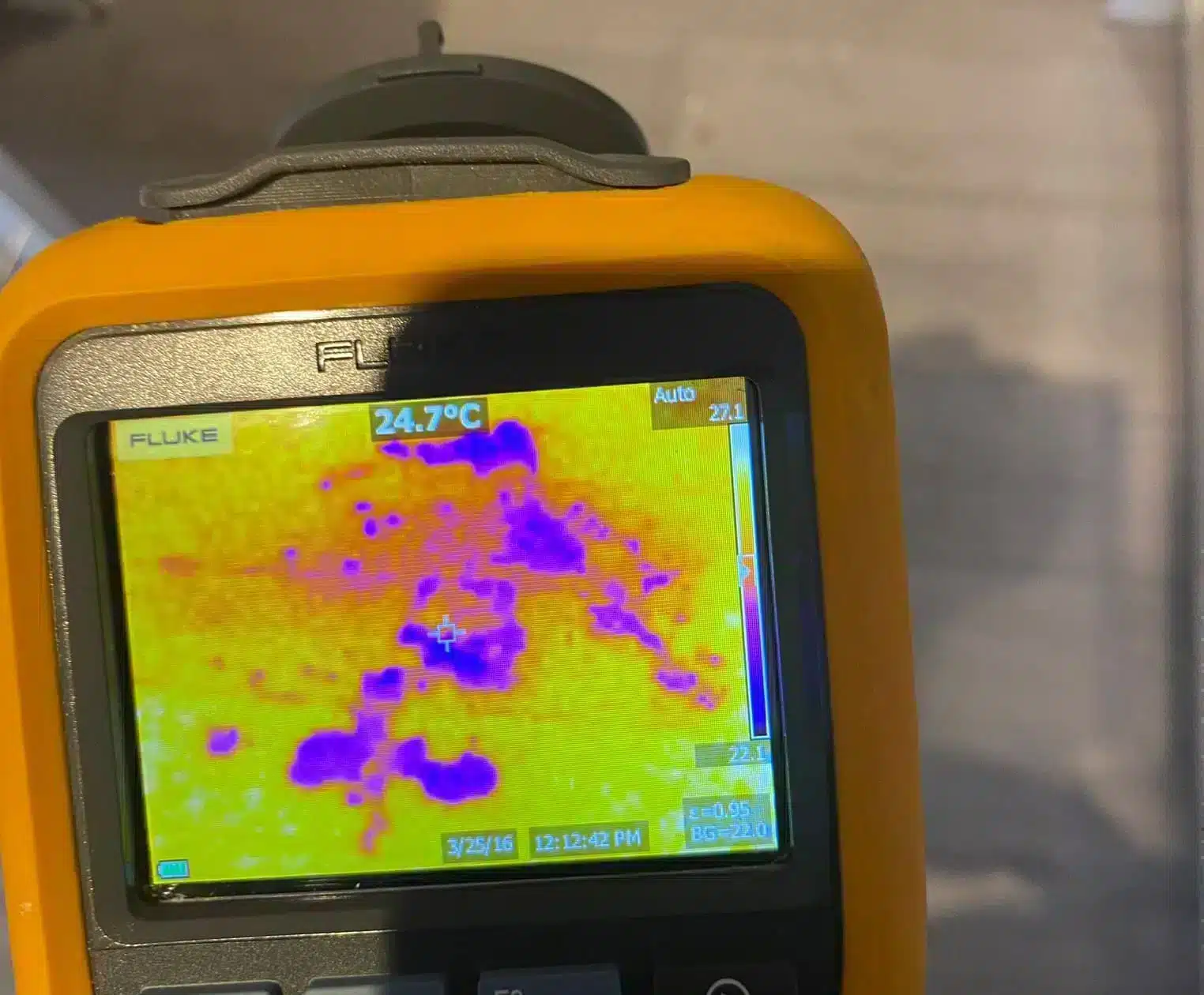
You are not paying for someone to wander round with one gadget. A worthwhile survey starts with questions and system checks: where the symptoms show, what the boiler pressure is doing, which pipes serve the area.
Then comes the equipment, chosen to suit the job. Thermal imaging shows temperature patterns behind surfaces, acoustic gear listens for the hiss of a pressurised split, moisture meters map how far water has spread, and tracer gas finds leaks that stay silent.
The deliverable is a pinpointed location, not a shrug. You should finish the visit knowing where the leak is, usually to within a spade’s width, plus a report you can hand to your insurer or plumber. Our guide to what trace and access involves walks through the method in detail.
When insurance pays instead of you
Here is the part that changes the maths for most homeowners. The majority of UK buildings insurance policies include trace and access cover, which pays the cost of finding a hidden leak and making good the access afterwards. MoneySuperMarket, citing Defaqto, puts it at 94% of buildings policies, with typical limits of £5,000 to £10,000.
Two cautions. First, trace and access pays for finding the leak and repairing the access route (the hole in the floor, the lifted tiles), not for fixing the pipe itself. Second, the leak damage claim is separate, and gradual damage exclusions can apply if a slow leak ran unreported for months. We cover the detail in our guides to trace and access cover and whether home insurance covers water leaks.
If you think a claim is likely, check your policy wording before commissioning anything, and use a firm that produces an insurer-ready report as standard. It smooths the claim and usually pays for itself.
The Scottish twist on leak costs
In England, a metered household leak announces itself on the water bill, and the bill is often what pushes people to act. Scotland is different. Most Scottish households pay for water through council tax rather than a meter, so a leak does not raise the household bill at all (Scottish Water explains this). The cost of ignoring a leak here is not water charges. It is the slow, compounding damage to floors, walls and foundations, plus a legal duty: under the Water (Scotland) Act, owners must repair leaks on their supply pipe, and Scottish Water can serve notice, do the work and bill the owner, as Citizens Advice Scotland sets out.
Scottish businesses are the exception. They are metered, so a leak burns money daily, but they can also claim a Burst Allowance through their Licensed Provider once the leak is repaired, with policy allowing up to nine months’ allowance and a 50% water-and-waste allowance for private leakage (Scottish Water and Business Stream publish the rules). A detection report forms part of the evidence, so for a metered business the survey often recovers its own cost several times over.
Why the cheapest option can cost the most
The expensive version of leak detection is not the specialist survey. It is the guess. We regularly arrive at homes where floors have already been lifted in two wrong places, or a kitchen wall has been opened on a hunch, and the leak is still running. Every wrong hole adds joinery, tiling and decorating bills on top of the detection you end up needing anyway.
A quote that sounds too good usually buys you one method, no report and no answer if the first idea fails. Judge quotes on what happens when the leak is not where everyone hoped: does the engineer have thermal, acoustic, moisture mapping and tracer gas on the van, or one gadget and an apology?
Want a number for your actual situation instead of a national range? Call us on 07700 152 467 and describe what you are seeing. It takes five minutes and costs nothing.
How to get an accurate quote
Have this ready when you call any detection firm
- What you can see and smell: stains, damp patches, mould, warm spots on floors
- Whether the boiler is losing pressure, and how fast
- Your property type and rough age (tenement flat, bungalow, farmhouse)
- Floor construction if you know it: solid concrete, suspended timber, tiled
- Whether you plan to claim on insurance, so a report is quoted from the start
The more of that picture a firm has, the tighter the quote and the shorter the visit. Vague symptoms produce padded quotes, because the engineer has to price for the unknown.
Frequently asked questions
How much does leak detection cost in the UK?
Checkatrade’s 2026 guide puts standard leak detection between £80 and £1,600 depending on the techniques required, with most searches around £500. Specialist firms publish similar figures: ADI from £595 plus VAT, Ideal Response £550 to £1,250. Complexity and access drive where your job lands.
Will my home insurance pay for leak detection?
Often, yes. Around 94% of buildings policies include trace and access cover according to MoneySuperMarket, citing Defaqto, typically limited to £5,000 or £10,000. It pays for locating the leak and making good the access, though not the pipe repair itself. Check your wording before you commission work.
Why do quotes vary so much between firms?
Because the job varies. An accessible leak confirmed in an hour with one tool costs far less than a full-day survey using thermal imaging, acoustics and tracer gas on buried pipework, finished with an insurer-ready report. Compare what each quote includes, not just the headline number.
Is leak detection worth it if my water is not metered?
Yes, arguably more so. An unmetered Scottish home gets no warning on the bill, so leaks run longer and damage costs more by the time they surface. Owners also have a legal duty to repair supply pipe leaks under the Water (Scotland) Act, so finding the leak early keeps you in control.
Does MCR Leak Detection charge these exact prices?
The figures above are published market rates from third parties, not our price list. Every property and leak is different, so we quote each job individually once we understand the symptoms and access. Call us or use the contact page and we will give you a clear price before any work starts.
Related reading
- What Is Trace and Access Cover? Home Insurance Explained
- Does Home Insurance Cover Water Leaks? Escape of Water Explained
- What Is Trace and Access? The Method Explained
MCR Leak Detection provides water leak detection across Scotland, with clear pricing agreed before any survey begins.
Speak to MCR Leak Detection
Skip the national averages and get a price for your actual leak. We survey non-destructively across Scotland, 24/7, and every job ends with a pinpointed location and a report your insurer will accept.