

In Scotland, flats and older or terraced houses usually share one supply pipe, and responsibility for the shared section is joint between the owners it serves. A leak on it is everyone’s repair, owners are legally obliged to fix it, and costs are normally split between the connected homes. Detection shows which section is leaking, and that decides who pays.
Shared Supply Pipes in Scottish Flats and Terraces: Who’s Responsible?
Somewhere under your street, a single pipe leaves the water main, crosses the boundary and quietly serves your home along with two, four or a dozen of your neighbours’. Nobody thinks about it for decades. Then it springs a leak under someone’s front garden, and suddenly several households need to agree whose problem it is.
Shared supply pipe responsibility is one of the least understood corners of Scottish home ownership, and most advice online is written for England, where the setup and the rules differ. Here is how it actually works in Scotland, with Scottish Water’s own guidance linked, and a practical route through the neighbour conversations.
What this guide covers
What a shared supply pipe is
Start with the basic split. Scottish Water owns the water main in the street, the communication pipe from the main to your property boundary, and the boundary stopcock. The supply pipe, everything from the boundary to the building and inside it, belongs to the property owners (Scottish Water sets out the boundary here).
In a detached modern house, that supply pipe serves one home and one owner. But Scottish Water is clear that flats, and older or terraced houses, usually have a shared supply pipe instead: one private pipe teeing off to serve several properties (Scottish Water’s pipes FAQ). The Victorian builders who laid out Scotland’s tenements and terraces saw no reason to trench in a separate pipe for every door.
The full ownership picture, including what Scottish Water will and will not fix, is in our guide to who is responsible for water pipes in Scotland.
How to tell if your supply pipe is shared
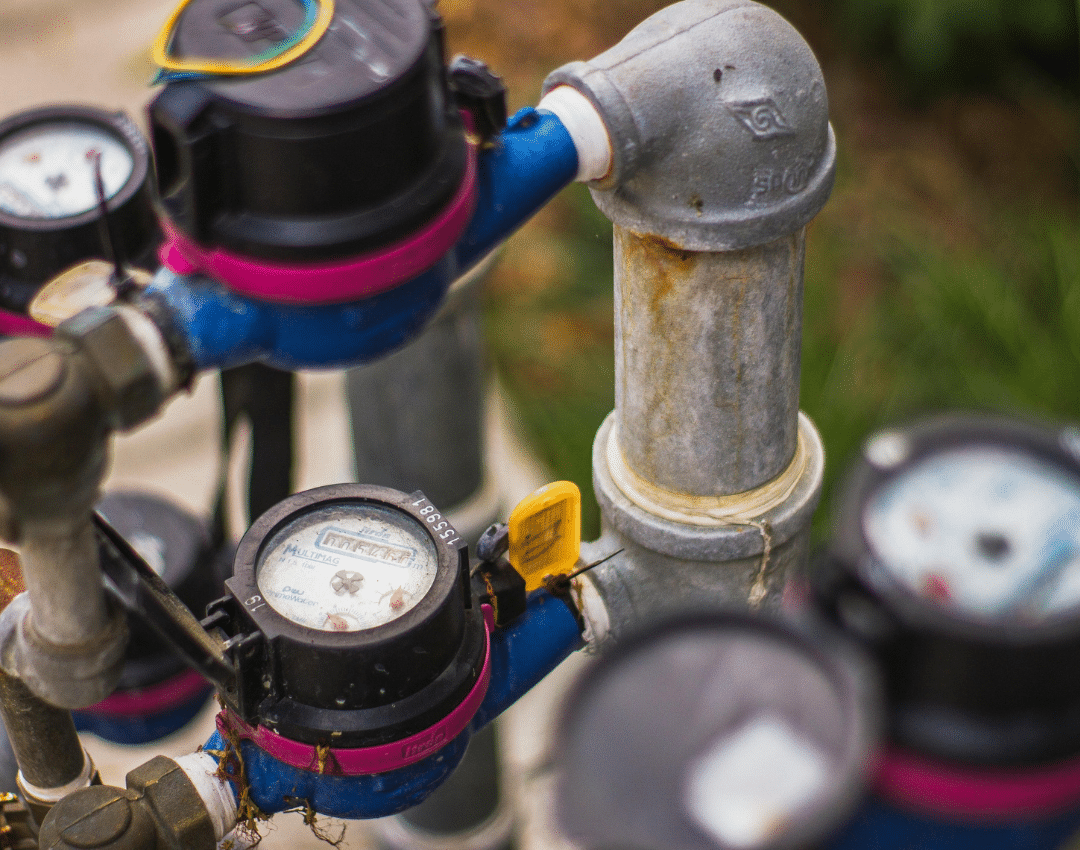
There is rarely a document that says so outright, but the clues stack up quickly:
The age and type of the property. Tenement flats, four-in-a-block houses, and terraces built before the mid twentieth century are the classic candidates. If your neighbours’ homes were built as one development, the pipework was probably laid as one system.
The stopcock count. One external boundary stopcock serving several front doors is a strong sign. So is a shared toby lid in the pavement that shuts off more than one house when tested.
The effect of turning things off. If shutting the external valve kills the water in the flat next door too, the pipe beyond it is shared.
Title deeds sometimes mention shared water pipes, so they are worth checking. Where paperwork and guesswork run out, a professional can trace the actual pipe route: our article on tracing underground water pipes explains how that is done without digging.
Shared supply pipe responsibility is joint, not someone else’s
Here is the rule that surprises people. Responsibility for a shared supply pipe does not belong to whoever lives nearest the leak, or whoever’s garden it crosses. It is joint between all the owners the pipe serves, and that is Scottish Water’s stated position (pipes FAQ).
Three practical consequences follow:
- Location of the leak does not decide who pays
A leak under number 3’s driveway on a pipe serving numbers 1 to 7 is a shared repair. Number 3 is not liable alone just because the wet patch is theirs. - Location within the pipe does matter
Most shared systems have a common run plus private branches to each home. A leak on your private branch after the last tee is yours alone. A leak on the common run is everyone’s. This distinction is worth real money, and only a located leak can settle it. - Every connected owner has standing
You do not need the neighbour whose garden is wet to give permission for the problem to be investigated. Any affected owner can get the process moving.
The legal duty to repair (nobody can just leave it)
A shared leak is not optional homework. Under the Water (Scotland) Act, owners are legally obliged to repair leaks on their supply pipe. If the leak is left running, Scottish Water can serve a formal notice requiring the repair, and where owners still do nothing, carry out the work itself and charge them for it, as Citizens Advice Scotland explains.
Two softeners are worth knowing. Scottish Water may offer an assisted supply pipe repair through its supply pipe repair policy in some circumstances (leakage FAQ), so ask when the leak is reported. And because most Scottish homes are unmetered and pay for water through council tax, the leak is not inflating anyone’s bill in the meantime; the urgency is legal and structural rather than financial. If Scottish Water has already contacted your building, our guide to what happens after a Scottish Water leak notice walks through the process.
Splitting the costs fairly
The law makes the responsibility joint but leaves the arithmetic to the owners, guided by the title deeds where they say anything. In practice, the jobs to split are: locating the leak, repairing the pipe, and reinstating whatever ground was opened. A few approaches come up again and again:
- Equal shares between connected homes
The default most groups land on, and the easiest to defend: every home depends on the same pipe, so every home pays the same. - Deeds-based shares
Where title deeds specify maintenance shares for shared services, use them. In tenement buildings, the cost-sharing machinery of the Tenements (Scotland) Act can also apply; see our guide to who pays for tenement water leaks. - Common run shared, private branches individual
The fairest hybrid: everyone splits work on the shared section, while a leak proven to sit on one home’s branch is that owner’s cost.
Whichever split you use, agree it in writing before work starts, even by email. Money conversations are easier before the invoice exists. Check buildings insurance too: trace and access cover, included in most policies, can pay for locating the leak and making good access (MoneySuperMarket explains the cover).
When one neighbour refuses to pay
Most refusals are really doubts in disguise: doubt that the leak exists, doubt that it is on the shared pipe, doubt that the quote is fair. Treat them in that order.
Step 1: Put facts in front of them
A detection report showing the leak’s position on the shared run, with the evidence behind it, removes the honest objections. It is much harder to dispute an instrument reading than a hunch.
Step 2: Show the alternative
If owners do not repair a supply pipe leak, Scottish Water can eventually serve notice, do the work and bill the owners. Waiting rarely makes the job cheaper, and it takes the timing out of everyone’s hands.
Step 3: Proceed and pursue the share
Where a repair is urgent, the willing owners sometimes proceed and recover the refusing owner’s share afterwards. Before fronting anyone else’s costs, take advice on your position; keep the report, quotes and correspondence as your paper trail.
Why detection comes first, not last
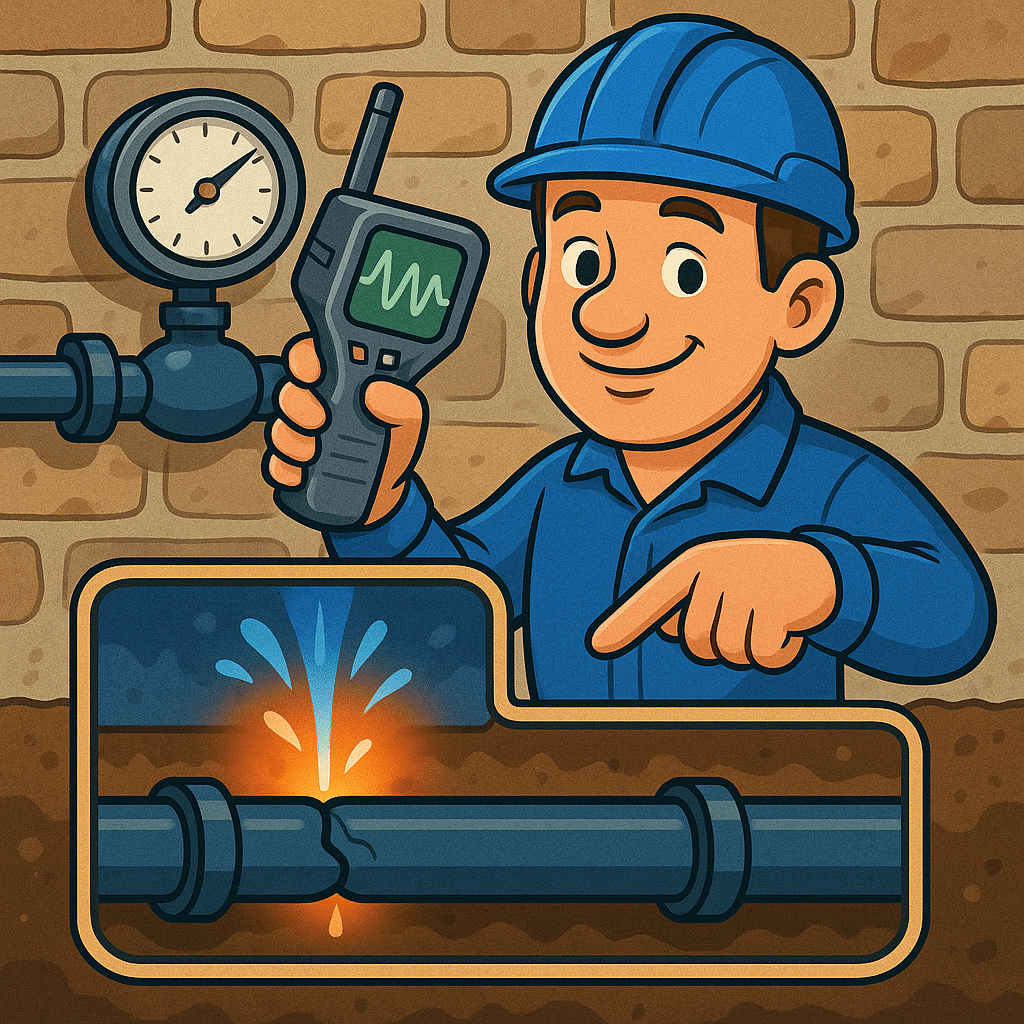
On a shared pipe, guesswork multiplies across every household. Dig in the wrong place and several owners have paid to break ground twice; blame the wrong section and the cost falls on the wrong person entirely.
Non-destructive detection reverses that. Acoustic listening and correlation equipment pinpoint the leak along the buried run, and tracer gas confirms it where pipes are plastic or deep. The result is a marked dig point and a written report naming the section, common run or private branch, that is leaking.
The signs that trigger the search in the first place, wet patches, lush strips of grass, a hissing stopcock, are covered in our guides to wet patches in the garden or driveway and finding an underground water leak.
If your street is heading into a shared-pipe negotiation, call us on 07700 152 467 first. One survey, one dig, one bill to split is a far better meeting agenda than three estimates and an argument.
Frequently asked questions
The leak is under my neighbour’s garden. Why should I pay anything?
Because responsibility follows the pipe, not the garden. If the leaking section is on the shared run that serves your home, Scottish Water’s guidance is that responsibility is joint between all the owners served. If detection shows the leak is on your neighbour’s private branch instead, then it is theirs alone.
Will Scottish Water fix a shared supply pipe leak?
Not as a matter of course. The supply pipe is private property, so the owners arrange and fund the repair. Scottish Water may offer an assisted supply pipe repair under its policy in some circumstances, and it holds the power to serve notice and charge owners where a leak is ignored, so ask about help when you report it.
Does a shared supply pipe leak put my water bill up?
For most Scottish households, no. Homes here are usually unmetered, with water charges collected through council tax, so the bill does not move with usage. The costs that matter are the repair itself and any damage the water causes. Metered businesses on a shared pipe are different, and should check their bills promptly.
How are detection costs usually split?
Most groups split the survey the same way as the repair, since it benefits every connected home. Before splitting anything, check buildings insurance: trace and access cover, included in most policies, can pay for locating the leak and making good access. One survey shared between four households is rarely a large sum each.
Can I replace my section with a separate supply pipe?
Often, yes. Laying a new private supply pipe from the boundary to your home takes you off the shared run for good, and a repeated-failure pipe can make that worthwhile. It needs coordination with Scottish Water for the new connection, and the old shared pipe remains the remaining owners’ responsibility.
Related reading
- Who Is Responsible for Water Pipes in Scotland?
- Tenement Water Leaks: Who Pays for Repairs in Scotland?
- Scottish Water Says You Have a Leak? What Happens Next
- How to Find an Underground Water Leak (and Who to Call)
MCR Leak Detection provides water leak detection across Scotland, including shared supply pipes serving flats, terraces and whole closes.
Speak to MCR Leak Detection
A shared pipe dispute needs one thing before anything else: the leak’s exact position. We locate it non-destructively, anywhere in Scotland, 24/7, and give every connected owner the same written evidence to work from.