

Scottish businesses are metered, so a hidden leak shows up as rising water charges from your Licensed Provider. Commercial leak detection pinpoints the leak with minimal disruption, often out of hours, and the detection report doubles as evidence for a Burst Allowance claim, which can recover a large share of the wasted water charges.
Commercial Leak Detection in Scotland: What to Expect
Domestic and commercial leaks behave the same. What differs is everything around them: the billing, the paperwork, the stakes of shutting the water off, and the number of people who need to agree before a floor gets lifted. A leak under a shop, a hotel or a factory floor is a business problem first and a plumbing problem second.
This guide covers commercial leak detection from the Scottish business side: how leaks reveal themselves on a metered supply, how to claim money back through a Burst Allowance, what a survey visit involves, and how detection works when a landlord or factor is in the chain.
What this guide covers
Why commercial leaks differ from domestic ones
Most Scottish households pay for water through council tax, so a home leak never shows on a bill. Businesses are different: commercial premises are metered, and water is billed through a Licensed Provider such as Business Stream rather than Scottish Water directly. Every litre a hidden leak wastes is a litre you are charged for, on both the water and the waste water side of the invoice.
That makes the meter your early warning system and your evidence. It also raises the stakes: a slow leak that would cost a homeowner nothing in charges can quietly add thousands to a year of commercial water bills before anyone notices a damp patch.
Signs your premises has a leak
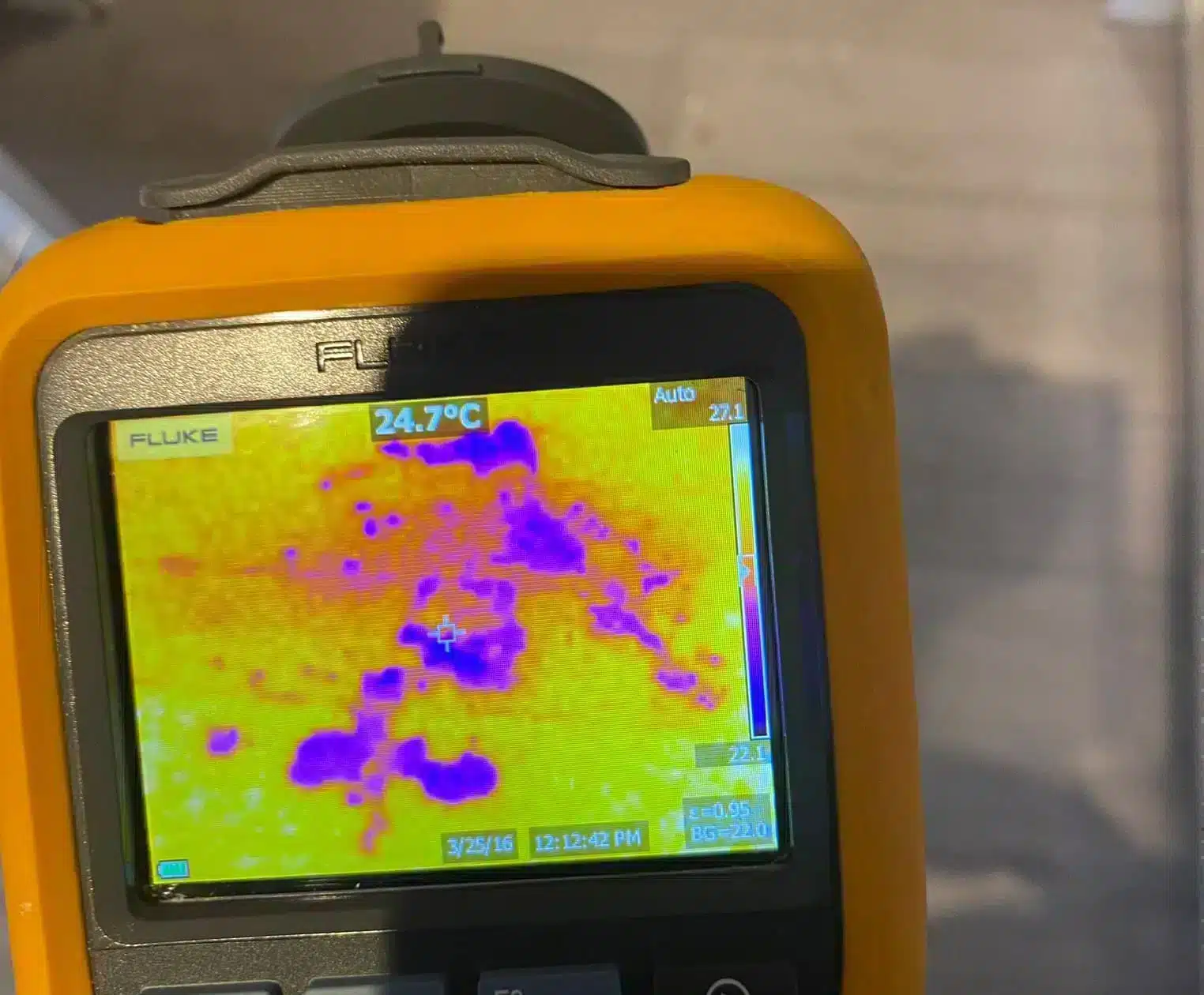
On commercial premises the paperwork usually speaks before the building does:
- Rising water chargesConsumption creeping up on your Licensed Provider invoices with no change in trading is the classic first signal.
- The meter moves overnightRead the meter at close and again before opening. With everything off, any movement is going through a leak.
- Pressure or boiler problemsHeating systems that need constant topping up point to a circuit leak, same as at home.
- Damp, staining or smellsMusty plant rooms, stained ceiling tiles, lifting floor coverings and warm patches on solid floors all earn investigation.
The Burst Allowance: getting money back
Here is the part many Scottish businesses never hear about. If a hidden leak or burst on your private pipework has inflated your bills, you can apply for a Burst Allowance through your Licensed Provider. Under Scottish Water’s Burst Allowance policy, an allowance can cover up to 9 months of leakage for premises with biannually read meters, with a 50% water-and-waste allowance for private leakage. Providers publish their own claim routes; Business Stream’s leak and burst allowance page sets out the process for its customers.
The claims are evidence-driven. Expect to provide the repair date, the estimated date the leak started, a plumber’s or leak detection report, and two meter readings taken a week apart after the repair to prove consumption has returned to normal. Fixing the leak quietly and skipping the paperwork leaves money on the table. We cover the wider rules, including why the English household leak allowance does not exist here, in our guide to leak allowances in Scotland.
What a commercial leak detection survey involves
The toolkit is the same non-destructive kit we use everywhere: acoustic ground microphones and correlators for buried mains, thermal imaging for heating circuits and voids, tracer gas for plastic pipe and quiet leaks, moisture mapping to separate leaks from condensation. The difference is scale and method planning. Commercial pipe runs are longer, drawings are often out of date, and the survey usually starts by proving which circuit loses water, using meter tests and section-by-section isolation, before any pinpointing begins.
On larger sites we ask for whatever pipework drawings exist, access to plant rooms and stop valves, and a contact who knows the building. Even rough information shortens the search. The methods themselves are covered in our guide to the equipment leak detection engineers use.
Working around your business
A survey that shuts your kitchen, ward or production line has already cost you more than the leak that day. So commercial work gets planned around trading:
- Out-of-hours surveysNights and weekends suit acoustic work anyway, because background noise drops when the building empties. Quiet premises make leaks easier to hear, not just easier to work around.
- Sectional isolationRather than shutting the whole supply, we isolate and test one circuit at a time so the rest of the premises keeps running.
- Non-destructive firstPinpointing before opening means the eventual access is one planned hole, made where it least disrupts the operation, not a speculative dig through a trading floor.
If a leak is costing you money right now, call us on 07700 152 467 and we will plan a survey around your opening hours, not ours.
Landlords, factors and shared buildings
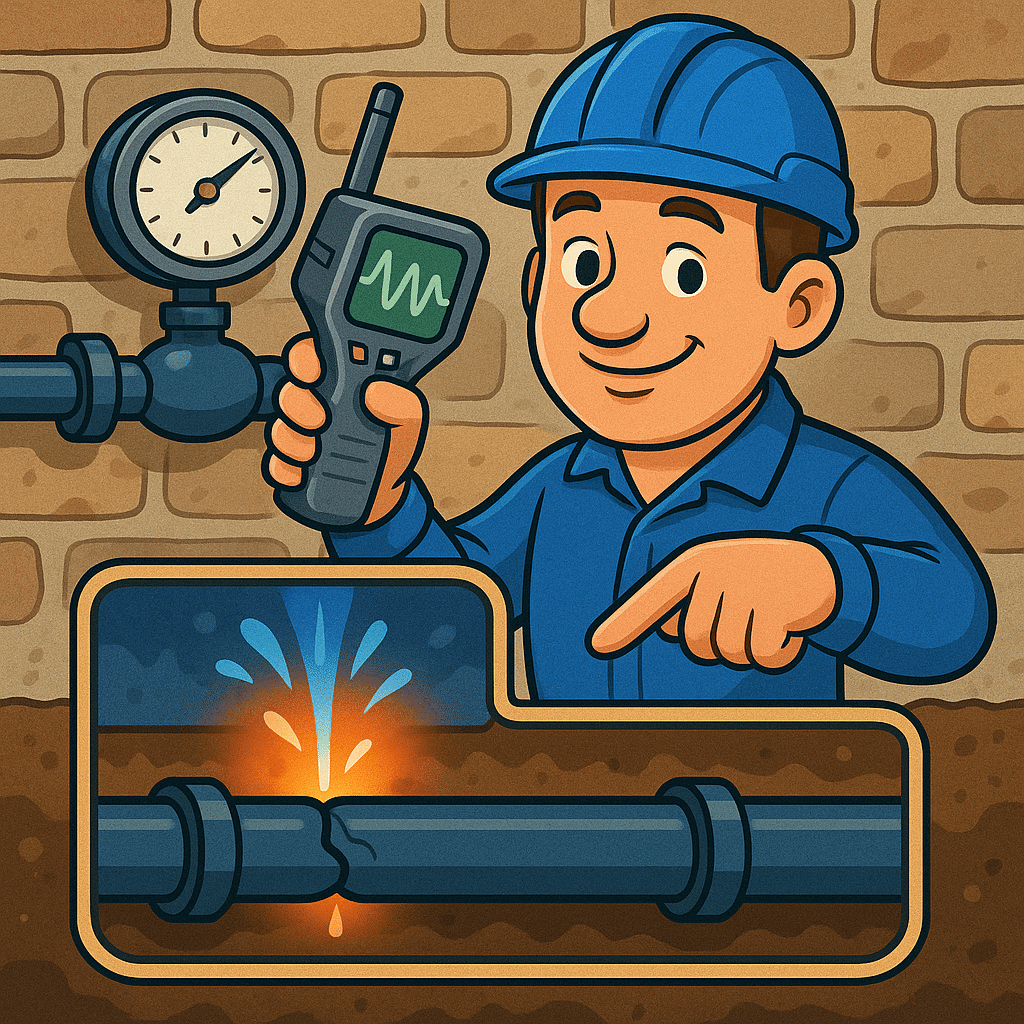
Plenty of Scottish commercial property is leased, factored or shared, and a leak in a mixed-use block raises the same question as a tenement: whose pipe is it? Responsibility for the supply pipe sits with the owner once water crosses the property boundary, while Scottish Water owns the main and communication pipe, as we explain in who is responsible for water pipes in Scotland.
An independent detection report settles the whose-pipe question with evidence rather than argument, which is exactly what a landlord, managing agent or factor needs before repair costs can be allocated. In factored blocks with shared supplies, the same logic applies as in residential tenement leak disputes: find it first, then split the bill on facts.
The detection report as evidence
Every commercial job ends with a written report: where the leak is, how it was located, the readings and images behind the conclusion, and the repair recommendation. That one document does three jobs. It supports your Burst Allowance claim. It supports an insurance claim where the leak has caused damage, as covered in why insurers ask for a leak detection report. And it gives landlords, factors and contractors a shared factual basis, which is what stops shared-building repairs stalling in dispute.
Speak to MCR Leak Detection
From single shops to factored blocks and multi-site estates, we locate commercial leaks across Scotland with minimal disruption, out of hours where needed, with a report ready for your allowance or insurance claim. Available 24/7.
Frequently asked questions
How do I confirm a suspected leak before booking a survey?
Use the meter. Take a reading at close of business, leave everything off overnight, and read again before opening. Movement with no legitimate use is a leak. Two or three nights of readings also give the engineer a flow rate to work with, which speeds up the survey itself.
Will the water need to be shut off during the survey?
Not for the whole visit, and rarely for the whole building. Acoustic and thermal work happens with the system live. Isolation tests and tracer gas need individual circuits shut down in turn, which we schedule around your quiet periods so trading continues.
What evidence does a Burst Allowance claim need?
The repair date, an estimate of when the leak started, a plumber’s or leak detection report, and two meter readings taken a week apart after the repair showing consumption back to normal. Claims go through your Licensed Provider, such as Business Stream, under Scottish Water’s Burst Allowance policy.
Who pays for detection in a leased or factored building?
It depends on whose pipework is leaking and what the lease or title deeds say. The practical answer is to locate the leak first: an independent report showing which pipe has failed turns a liability argument into a fact, and cost allocation usually follows quickly from there.
Can you survey premises that cannot close, like hotels or care settings?
Yes. We survey around continuous operations by working section by section, using non-destructive methods that need no shutdown, and booking noisy or isolation-dependent stages for the quietest hours. The building stays in service throughout; that constraint just gets built into the survey plan.
Related reading
- Leak allowances in Scotland: the rules for homes and businesses
- Why insurers ask for a leak detection report
- Who is responsible for water pipes in Scotland?
- How much does leak detection cost? UK and Scotland price guide
Or start at the hub: professional water leak detection across Scotland.