

The strongest signs of a water leak under the floor are warm spots underfoot, floorboards cupping or lifting, a musty smell, damp skirtings and boiler pressure that keeps dropping. Confirm water is escaping with the stopcock silence test and the pressure gauge, then have the leak located non-destructively before lifting anything.
Water Leak Under the Floor? How to Tell Without Lifting It
Floors hide leaks better than any other part of a house. A pipe weeping under a solid kitchen floor has metres of screed and insulation to soak before anything shows, and under a suspended timber floor the water can drip into the void for months, wetting nothing you can see. Then one day the laminate peaks, or someone notices the hall floor is warm, and the questions start.
The good news: you can get a long way towards confirming a water leak under floor level without lifting a single board. This guide covers the signs for both Scottish floor types, the two checks that prove water is escaping, and how professional detection puts an X on the floor so the repair means one small opening.
In this guide
Know your floor type first
Scottish homes broadly have two kinds of ground floor, and the same leak behaves differently under each.
Suspended timber floors are standard in tenements, Victorian terraces and most pre-war housing: boards or sheets on joists over a ventilated void. Leaked water drips into the void and soaks joists and the ground below. The clues are smell, movement and rot rather than visible damp, because the void swallows the water. Listen for changes underfoot: boards that have started creaking, springing or feeling soft near the problem area.
Solid concrete floors dominate post-1960s housing and renovated kitchens: pipes buried in or below screed, often heating pipes with hot water in them. Escaping water spreads sideways through the slab, so the clues are warm patches, damp creeping up the bottom of walls and skirtings, and floor coverings failing: tiles debonding, vinyl bubbling, laminate swelling at the joints.
Signs of a water leak under the floor
- A warm patch on the floorThe single best clue on solid floors. Escaping hot water from a heating or hot water pipe warms the slab above it. If bare feet find warmth nowhere near a radiator or any underfloor heating, take it seriously.
- Cupping, peaking or swollen boardsTimber and laminate absorb moisture from below and move. Boards cupped at the edges, laminate peaking at joints or a floor that recently started creaking are all telling you about moisture underneath.
- A musty smell in one roomDamp voids grow mould, and the smell rises through the gaps long before staining appears. A persistent musty smell at floor level is an early and reliable warning.
- Damp skirtings and low wall patchesWater in a slab wicks sideways and up into the wall base. Damp or dark staining along the bottom 100 to 300 millimetres of a wall, with dry wall above, points down at the floor, not up at the roof.
- Boiler pressure that keeps droppingIf the leak is on the heating circuit, the gauge gives it away. Repeated top-ups mean system water is going somewhere, and under the floor is the most common somewhere. Our boiler pressure guide covers the other causes to rule out.
- The sound of water when everything is offA faint hiss or trickle from floor level on a quiet night is pressurised water escaping. Do not talk yourself out of it.
Two checks that confirm water is escaping
Check 1: the stopcock silence test (mains-fed leaks)
Turn off every tap and water-using appliance. Listen at the stopcock inside the house. A continuous hiss means water is flowing in with everything off. Now close the stopcock: if the hiss stops, you have confirmed a live leak on your cold water pipework, and floor-level sound puts it under the floor.
Check 2: the pressure gauge test (heating leaks)
Note the boiler gauge reading when the system is cold. Check again at the same temperature over the next two or three days without topping up. A steady fall with no visible drips at radiators and valves means the heating circuit is losing water into the building, very often under a floor.
Either check coming back positive alongside the physical signs above is enough evidence to act on. If you would rather not lift floorboards on a hunch, call us on 07700 152 467 and we will pinpoint it first.
Which pipe is it likely to be?
Three systems run under most floors, and the symptoms usually identify the culprit. A warm patch plus falling boiler pressure means the central heating circuit; this is common enough in Scottish homes that we wrote a dedicated guide to central heating pipes leaking under the floor. A constant hiss that stops at the stopcock means the cold mains or a hot water supply pipe. And dampness that appears only when a bath empties or a machine drains means a waste pipe, which carries no pressure and therefore leaks only when used.
That last distinction matters for the fix as much as the find: pressurised leaks run constantly and get worse, while waste leaks are intermittent but still rot floors and feed mould just as effectively.
Finding it without lifting the floor
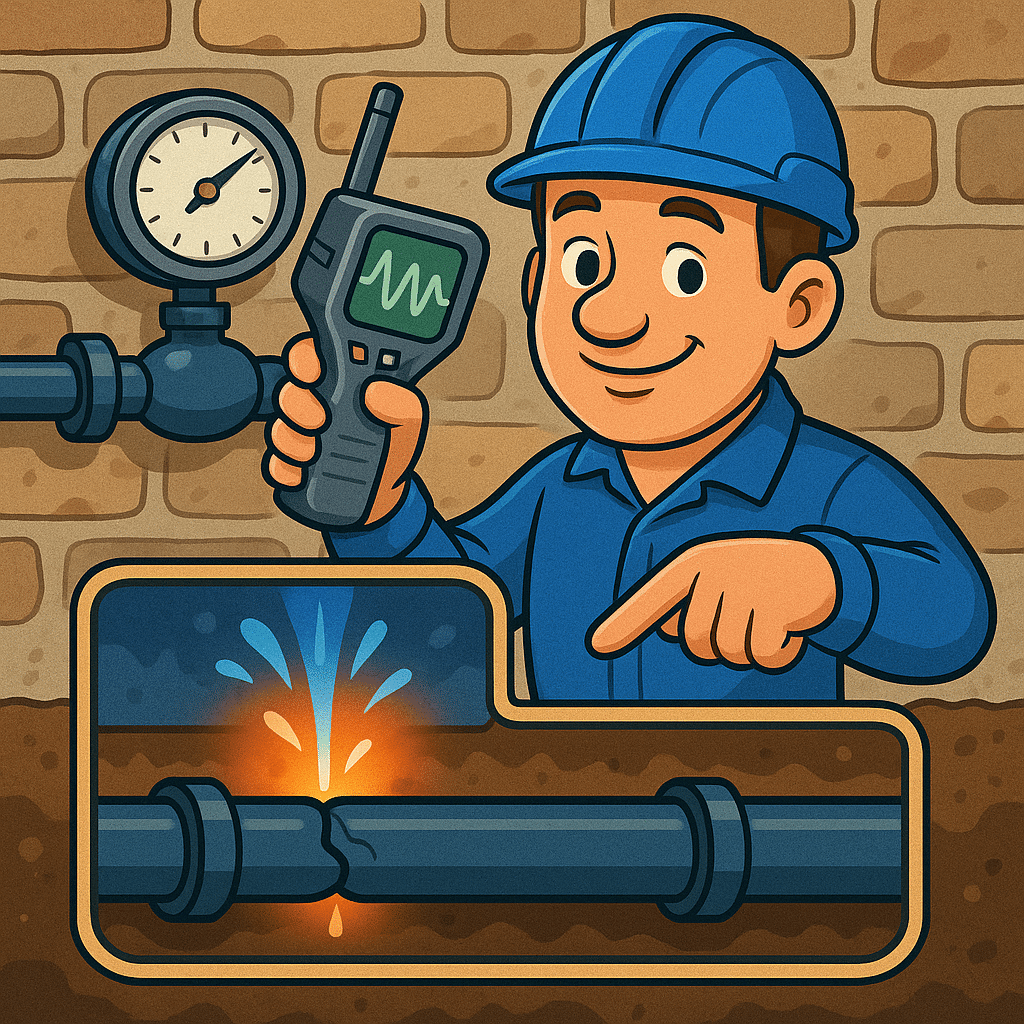
Modern detection reads through flooring instead of removing it. Thermal imaging maps temperature across the floor and shows the plume a leaking hot pipe creates in a slab, or the cool evaporative patch above a wet void; our guide to thermal imaging leak detection shows real examples.
Acoustic equipment then listens for the specific noise of water escaping a pipe, loudest directly above the hole, as explained in our guide to acoustic leak detection. Moisture meters map how far the wet area extends, and on stubborn heating circuits tracer gas finds the exact fitting.
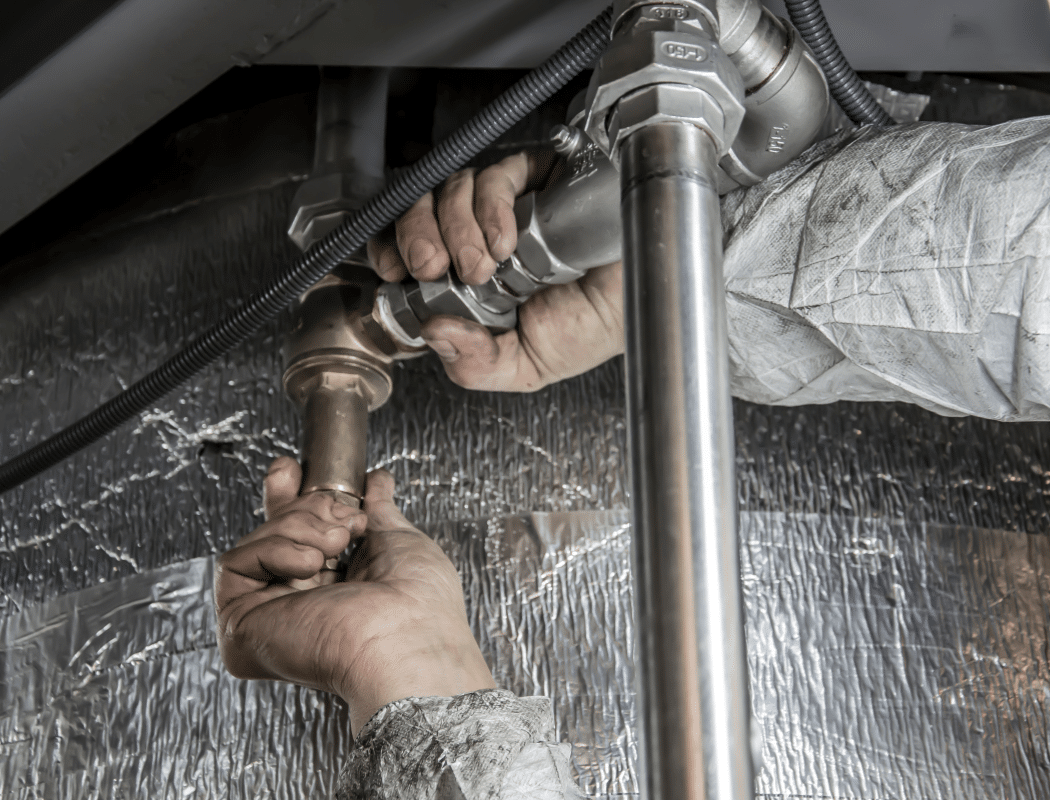
The combined result is a location accurate to a few centimetres, marked on the floor before anything is opened. The repair then needs one board lifted or one neat opening cut in the screed, directly over the fault, instead of a room stripped back to joists.
On suspended floors there is sometimes an even less invasive route: where a hatch or void access exists, the repair can be made from within the void, and the floor above is never touched at all.
What not to do
Do not start lifting boards or breaking screed where the floor looks worst. Water travels along joists and pipe runs before it surfaces, so the damp spot and the leak are frequently a metre or more apart, sometimes in the next room. Every exploratory hole is mess, cost and, on solid floors, permanent damage to coverings, and the first hole is rarely in the right place.
Do not run the heating hard to “dry it out” either. If the leak is on the heating circuit, more heat means more pressure cycling and more water pumped into the floor. And avoid pouring leak sealer into the system before the leak has even been located: it can gum up boiler components, and if it fails you have the same leak plus a contaminated system.
Insurance and trace and access
Before paying for anything, check your buildings insurance for trace and access cover. It pays the cost of locating a hidden leak and making good the access afterwards, even though the pipe repair itself usually stays your cost. Most policies now include it: MoneySuperMarket, citing Defaqto, reports 94 per cent of buildings policies carry the cover, with typical limits of £5,000 to £10,000. Our guide to trace and access cover explains how a claim works, and a written detection report supports it.
Located first, repaired second, claimed correctly: that order keeps an under-floor leak a manageable job rather than a wrecked room. It is the approach we take on every survey as part of water leak detection across Scotland.
Speak to MCR Leak Detection
Warm patch, musty smell or a gauge that will not hold? We locate under-floor leaks non-destructively across Scotland, 24/7, and mark the spot before a single board is lifted.
Frequently asked questions
How do I know if the leak is under the floor or in a wall?
Follow the wettest evidence. Damp concentrated at skirting level with dry wall above, floor coverings moving, warmth underfoot or smells rising through board gaps all point down. Damp starting mid-wall or high up points into the wall. Thermal imaging resolves ambiguous cases quickly.
Can a leak under a concrete floor really be found without breaking it open?
Yes. Heat from the leak shows through the slab on a thermal camera, acoustic sensors hear the escape through the concrete, and tracer gas rises through screed to a detector at the surface. The slab is only opened once, at the marked repair point, not to search.
How long has my under-floor leak been running?
Usually longer than the symptoms suggest. Screed and floor voids absorb a lot of water before anything shows, so weeks or months is normal. The extent of moisture spread on a survey gives a rough idea, which also helps if your insurer asks when the damage started.
Is a warm spot on the floor always a leak?
No. Pipes running close beneath the surface create mild warm lines even when sound, especially where heating flow pipes cluster near the boiler. A leak produces a spreading patch rather than a narrow line, and it usually arrives with a second symptom such as falling boiler pressure.
Will insurance pay to fix the pipe under my floor?
Typically the policy covers locating the leak, access, making good and the resulting water damage, while the pipe repair itself is excluded as wear and tear. Check your schedule for trace and access cover and any escape of water conditions before starting work, and keep the detection report.
Related reading
- Central heating pipe leaking under the floor
- How acoustic leak detection works
- How thermal imaging finds hidden water leaks
- Underfloor heating leak signs
Or learn more about our water leak detection service across Scotland.