

The giveaway signs are a warm patch on the floor, falling boiler pressure, stains on the ceiling below, swollen or lifting boards and a musty smell. Do not start lifting boards to look. A hot leaking pipe can be pinpointed from above with thermal imaging or tracer gas, so only one small section of floor comes up.
Central Heating Pipe Leaking Under the Floor: Signs and What to Do
Most central heating pipe in a Scottish home runs where you cannot see it: threaded between joists, clipped under floorboards or buried in the screed of a solid floor. When one of those pipes starts weeping, there is no puddle to find. The water soaks into timber, insulation or concrete, and the first clue is usually indirect, a boiler that needs topping up or a floor that feels oddly warm in one spot.
This guide covers the signs of a central heating pipe leaking under the floor, what changes between the suspended timber floors and solid floors common in Scottish housing, and how a leak gets located without turning your living room into a building site.
What’s in this guide
First, confirm the heating is the culprit
Two separate pipe systems run under your floors: the sealed heating circuit and the mains cold water plumbing. The boiler gauge tells you which one is leaking. If the pressure keeps falling and needs regular topping up, the escape is on the heating side. If the pressure holds steady but the floor is damp, suspect a mains or waste pipe instead.
Heating water also looks and smells different. It carries black sludge and inhibitor, so it stains grey or rusty brown rather than drying clean, and it often has a faint metallic smell. Fresh, clear water points at the mains. The distinction matters because it changes both the search method and who you call. For the step-by-step elimination on the heating side, see our guide on how to find a leak in a central heating system.
Signs of a central heating pipe leaking under the floor
- Falling boiler pressureUsually the very first sign, weeks before anything shows. A steady overnight slide on the gauge means water is leaving the system somewhere.
- A warm or hot patch on the floorLeaking heating water is hot, and it warms whatever it soaks into. A patch that stays warm an hour after the heating goes off sits close to the leak.
- Stains on the ceiling belowIn two-storey homes and upper flats, a first-floor heating leak shows on the ceiling underneath as a brown-edged stain or bubbling paint.
- Swollen, lifting or creaking boardsTimber swells across the grain when wet. Laminate peaks at the joints, engineered boards cup, and a floor that never creaked starts to.
- A musty smellPersistent damp in an enclosed floor void smells earthy and stale long before mould becomes visible.
Suspended timber floors: most older Scottish homes
Victorian and Edwardian houses, tenement flats and most Scottish homes built before the 1950s have suspended timber floors: boards on joists over a ventilated void. Heating pipes run through or under the joists, and a leak drips into the void below.
That void is both a blessing and a menace. The blessing is access: individual boards can be lifted, and the pipe can be inspected and repaired without breaking anything structural. The menace is that the void hides water well. A weep can run for months, soaking joist ends and skirtings, before a smell or a stain appears. Ground-floor leaks drip onto the solum, the bare earth or concrete under the void, so they sometimes never show at all until rot sets in. In an upper flat, the void is your downstairs neighbour’s ceiling, and their stain is often your first warning. If water is already coming through below, our guide to water coming through the ceiling covers the emergency steps.
Solid and screeded floors: post-war and modern builds
From the 1950s onwards, and in almost all modern estates, ground floors are solid: concrete slab with the heating pipes buried in the screed layer. A pipe leaking in screed cannot drip anywhere. The water spreads sideways through the slab, wicks up into walls and floor coverings, and shows as damp skirtings, dark patches on the slab or mould behind furniture, often a surprising distance from the pipe itself.
Breaking open a solid floor on a guess is the most expensive mistake in this whole subject. Each exploratory hole means a breaker, dust sheets and a relaid patch, and the leak is rarely under the first hole. This is precisely the situation non-destructive location exists for, and it is why we insist on pinpointing before anyone opens the slab. The same logic applies to piped underfloor heating, which has its own warning signs; see our guide to underfloor heating leak signs.
If you are staring at a warm patch right now and wondering whether to hire a breaker, call us first on 07700 152 467. One survey is cheaper than one wrong hole in a concrete floor.
What not to do while you wait
- Do not lift boards at randomWater tracks along pipes and joists before it surfaces, so the damp spot rarely sits over the hole. Random lifting wrecks tongues and grooves and seldom finds the leak.
- Do not run the heating flat outEvery hour it runs pumps more hot water into your floor structure. Use it briefly if you need heat, but a lockout from low pressure is the system doing you a favour.
- Do not just keep topping up for monthsFresh water feeds corrosion inside the system, and the escaping water keeps feeding rot and damp under the floor while you wait.
- Be wary of leak sealerA liquid sealer is a gamble on a buried pipe, and a failed gamble leaves you with the same leak plus a dosed system. We explain the trade-offs in our leak sealer guide.
How we locate the leak without lifting the whole floor
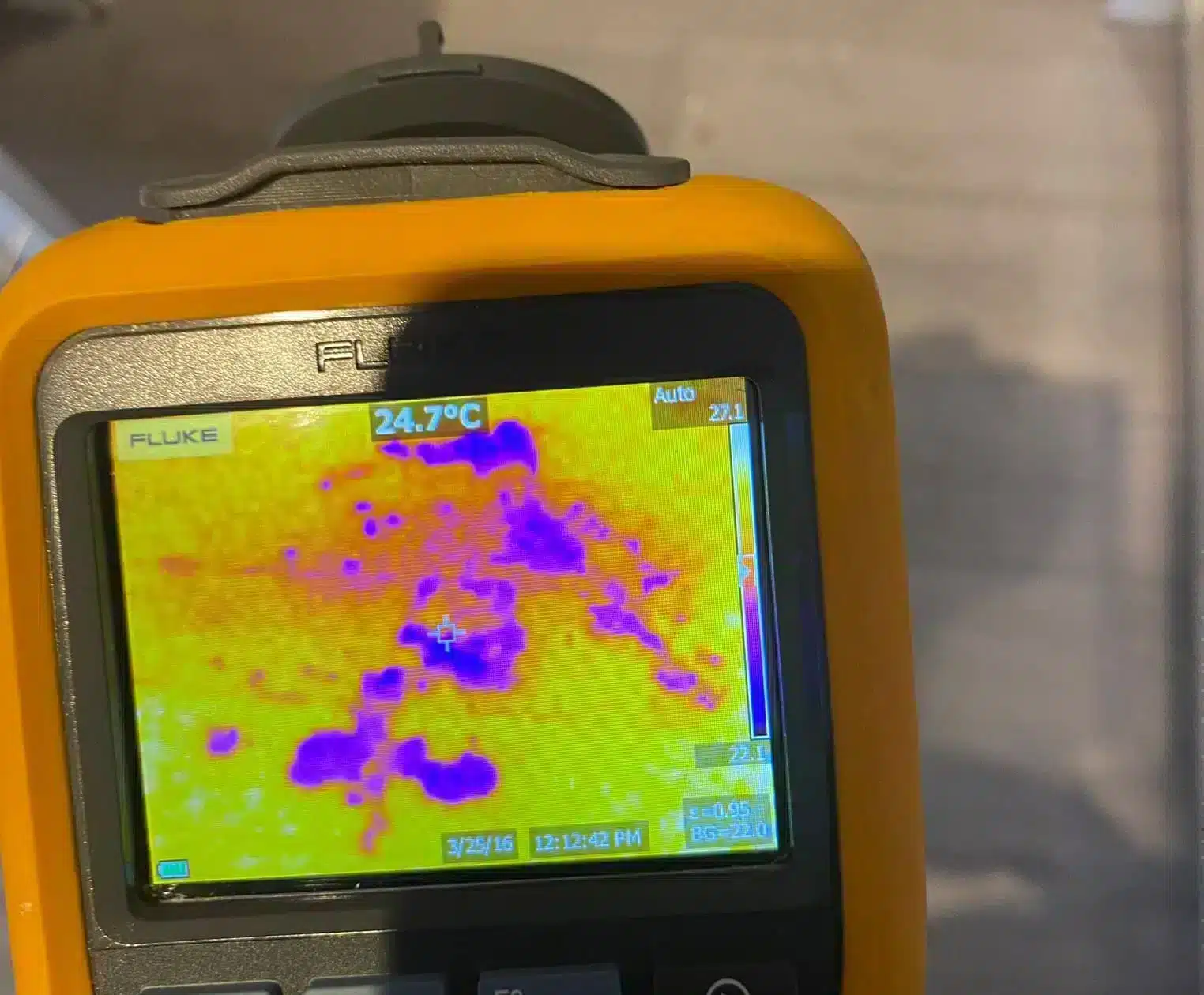
A hot pipe under a floor is one of the easier targets in leak detection, because the leak announces itself in heat. A typical survey runs like this:
First we pressure test the system in sections to prove which circuit and which part of the house is losing water. Then, with the heating warm, a thermal camera maps the pipe runs through the floor covering and shows the leak as a spreading plume rather than a neat line. Our article on thermal imaging leak detection shows what the camera sees.
Where the floor build-up muffles the heat signal, or the pipe is plastic and deep in screed, we drain the circuit and introduce a safe hydrogen and nitrogen tracer gas. The gas escapes at the split, rises through the floor and registers on a probe above. The result is a marked cross on the floor, and one small, deliberate opening directly over the leak.
Repairs, making good and where insurance fits
Once the leak is exposed, the pipe repair itself is usually quick: a new section of copper or a proper fitting, then the system is refilled, dosed with inhibitor and pressure tested. The bigger cost is normally the access and reinstatement, which is exactly what trace and access cover exists for. MoneySuperMarket, citing Defaqto, reports that 94% of buildings policies include it, typically capped between £5,000 and £10,000. It pays for locating the leak and making good the access, though not the pipe repair itself.
Keep evidence as you go: photographs of the gauge, the stains and the exposed pipe, plus the detection report. A dated professional report showing where and why the leak occurred makes the claim conversation far shorter. For what the finding stage costs on the open market, our leak detection cost guide quotes named UK sources.
Quick action list
- Note the boiler pressure now, and again at the same time tomorrow
- Map warm patches with your hand or a cheap infrared thermometer
- Photograph every stain, swollen board and damp skirting with dates
- Turn the heating down or off between uses
- Book detection before any floor comes up
Frequently asked questions
How do I know the leak is the heating pipe and not the mains?
Watch the boiler gauge. A heating leak makes the pressure fall steadily and need topping up, while a mains leak leaves it untouched. Heating water also stains rusty brown and smells faintly metallic because of the sludge and inhibitor it carries, whereas mains water is clean and clear.
Is the leak directly under the warm patch?
Close, but not always directly under. Hot water spreads through screed or along joists, so the warm patch marks the general area rather than the exact point. Thermal imaging distinguishes the spreading plume from the pipe line itself, which is why we survey before cutting anything open.
Can a heating pipe leak under a concrete floor be fixed without digging up the whole room?
Yes, in almost every case. Once the leak is pinpointed, only a small section of slab over the fault is opened, the pipe is repaired or rerouted, and that one patch is reinstated. Whole-room excavation belongs to the era before non-destructive detection existed.
Should I turn my heating off completely until it is fixed?
Use it sparingly rather than not at all, especially in winter. Every hour of running pushes more hot water into the floor, but a cold house brings its own risks, including frozen pipes. Short bursts of heat, with the pressure watched, is a reasonable compromise for a few days.
Will insurance pay for the damaged flooring as well?
Usually the water damage to floors, ceilings and decoration is covered under the main buildings policy, and trace and access cover pays for finding the leak and making good the access. The failed section of pipe itself is normally excluded as wear and tear. Check your own policy wording.
Speak to MCR Leak Detection
Warm patch on the floor and a falling gauge? Our engineers pinpoint underfloor heating pipe leaks non-destructively, anywhere in Scotland, 24/7, so only one small section of floor ever comes up.
Related reading
- How to Find a Leak in a Central Heating System
- Boiler Pressure Dropping Overnight: What It Usually Means
- Signs of an Underfloor Heating Leak (and What to Do Next)
- Water Coming Through the Ceiling: Emergency Steps That Limit Damage
Or learn more about our water leak detection across Scotland.