

Professional leak detection equipment includes acoustic ground microphones, leak noise correlators, thermal imaging cameras, tracer gas kits, moisture meters, borescopes and pipe locators. Each tool finds a different kind of leak and misses others, which is why engineers carry all of them and layer two or three methods before marking a repair point.
The Equipment Professional Leak Detection Engineers Use
Homeowners are often surprised by how much kit comes out of the van for one damp patch. There is a reason for it. Every piece of leak detection equipment answers a different question: is the leak making noise, is it changing temperature, where exactly is the pipe, is the damp even a leak at all. No single gadget answers them all.
This is a tour of the toolkit we bring to a survey: what each instrument does, what it is best at, and, just as usefully, what it misses.
What this guide covers
Why no single tool finds every leak
A leak only gives away what its situation allows. A pressurised copper main under a driveway makes noise but no visible damp. A weeping plastic heating loop in screed makes warmth but almost no sound. A slow leak inside a stud wall makes moisture but neither noise nor heat. Choose the wrong instrument and you can sweep all day and find nothing.
That is why how professional leak detection equipment works together matters more than any single purchase, and why a specialist survey starts with questions and system checks before the first case is opened. The tool follows the leak, not the other way round.
Acoustic ground microphones
The classic image of leak detection: headphones on, sensor on the ground. Water escaping a pressurised pipe vibrates the pipe wall and the surrounding ground, and a ground microphone amplifies that noise through the surface. A skilled operator walks the pipe route, listening for the point where the hiss peaks.
Ground mics excel on metal pipes under hard surfaces such as tarmac, concrete and monoblock, where sound travels well. They struggle with plastic pipe, very small weeps and noisy surroundings. Our guide to acoustic leak detection covers the listening method in full, including why mains surveys sometimes happen at night when background noise drops.
Leak noise correlators
A correlator does with mathematics what a ground mic does with ears. Two sensors clamp to the pipe at points either side of the suspected leak, for example at a stopcock and a meter. Both hear the same leak noise, but the sound reaches the nearer sensor first. From that time difference and the pipe details, the correlator calculates how far along the pipe the leak sits.
Correlators shine on long buried runs where walking the route with a microphone would be slow: supply pipes under gardens, mains under streets, long commercial feeds. They need access to the pipe at two points and accurate pipe data to do their sums, and like all acoustic kit they prefer noisy leaks in metal pipe.
Thermal imaging cameras
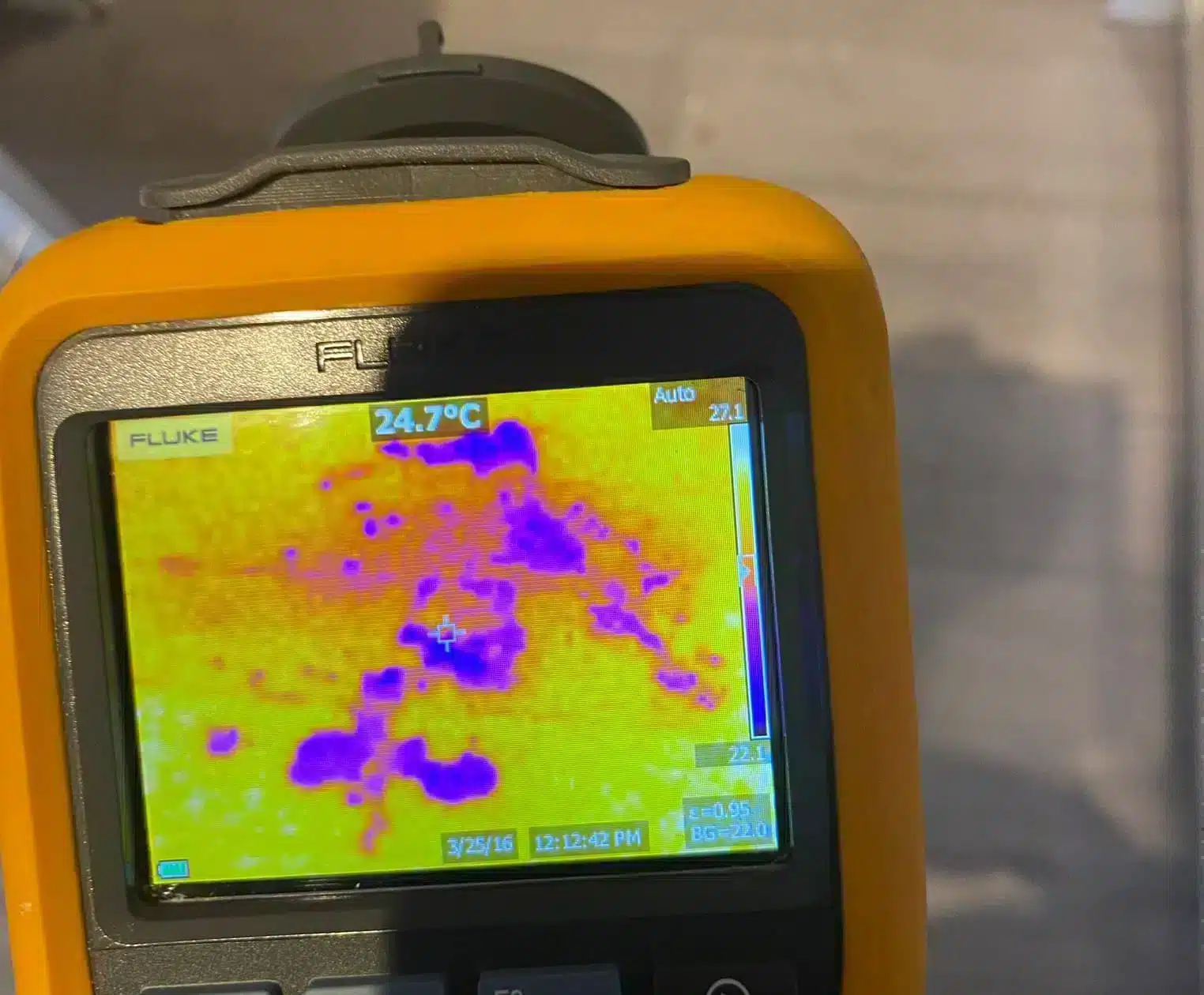
A thermal camera does not see water. It sees temperature, and leaks change temperature patterns. A leaking hot pipe warms the floor above it in a telltale streak. Evaporating moisture cools a wall patch below its surroundings. A camera sweep across a floor or ceiling turns those differences into an image in minutes, with nothing touched.
The limits matter: a cold water leak under a cold floor may show nothing, and warm patches have innocent causes too, so thermal findings always get confirmed with a second method. We explain the strengths and the false positives in how thermal imaging finds hidden water leaks.
Tracer gas kits
For the quietest leaks, we stop listening and start sniffing. The pipe is drained and filled with a safe, non-flammable mix of 5% hydrogen and 95% nitrogen. Gas escapes at the defect, rises through screed, soil or flooring, and a handheld detector pinpoints where it surfaces. Hydrogen is the smallest molecule there is, so even a hairline split passes a detectable amount.
Tracer gas is the answer for plastic pipework, underfloor heating loops and deep or silent leaks that defeat acoustic equipment. It takes longer, because the pipe must be isolated, drained and refilled. The full method is covered in our guide to tracer gas leak detection.
Moisture meters and mapping
Before hunting a leak, it pays to confirm the damp is a leak. Pin and pinless moisture meters measure how wet a material actually is, and a grid of readings across a wall or floor builds a moisture map. The pattern tells the story: a live plumbing leak reads wettest at a point and fades outward, condensation spreads across cold surfaces, and old staining reads dry.
Meters are also how we track a leak back through the fabric, following rising readings toward the source. What counts as a normal reading varies by material, which trips up plenty of DIY meter owners; our guide to moisture meter readings explains the scales.
Borescopes, locators and the supporting kit
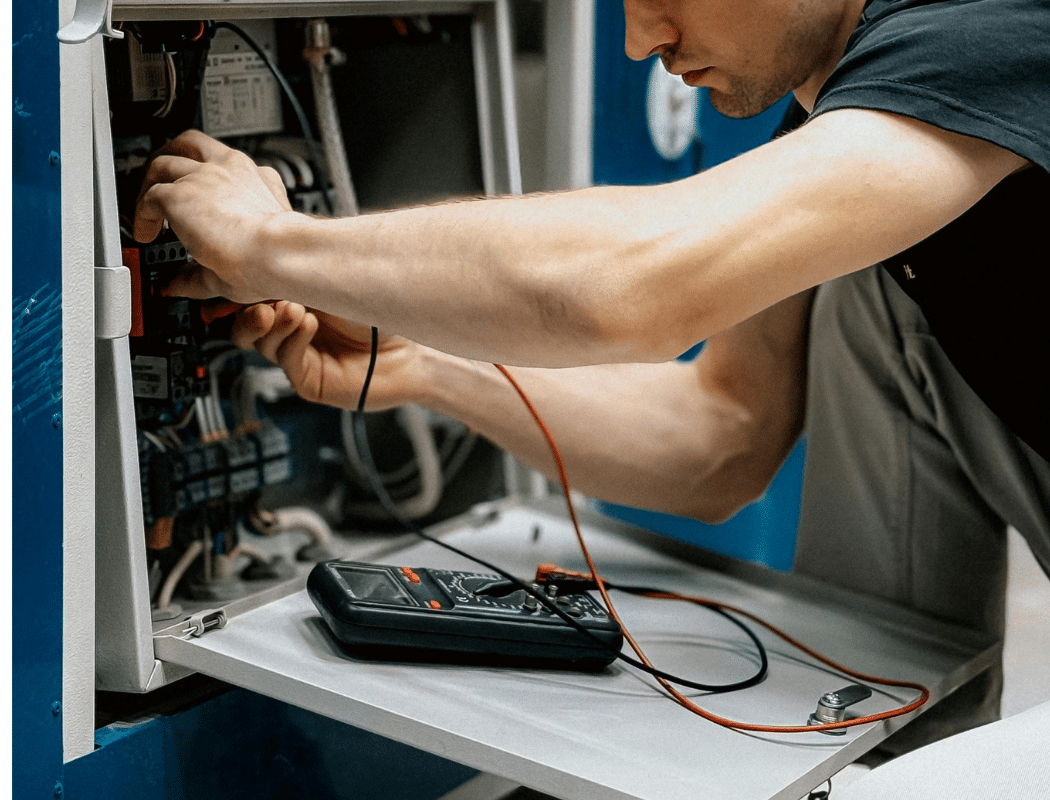
Around the headline instruments sits the supporting kit that makes a survey rigorous:
- Borescope camerasA camera on a flexible probe goes through a small drilled hole or an existing gap to inspect voids, boxed-in pipework and under baths without opening anything up.
- Pipe and cable locatorsBefore anyone listens or digs, a locator traces where the pipes actually run. Buried pipe routes rarely match assumptions, and driveways have been wrecked over that mistake.
- Pressure gauges and test kitsIsolating sections and watching pressure decay proves which circuit is losing water before location work starts.
- Dye testingSimple, cheap and conclusive for tracing waste leaks, shower trays and toilet cisterns where pressurised methods do not apply.
Leak detection equipment compared: what each tool finds and misses
| Equipment | Best at finding | What it misses |
|---|---|---|
| Ground microphone | Noisy leaks on metal pipe under hard surfaces | Plastic pipe, tiny weeps, noisy environments |
| Correlator | Position along long buried metal runs | Quiet leaks; needs two access points and pipe data |
| Thermal camera | Hot water and heating leaks, moisture cooling | Cold leaks with no temperature difference |
| Tracer gas kit | Silent leaks, plastic pipe, underfloor heating | Pipes that cannot be isolated and drained |
| Moisture meter | Confirming and mapping damp, tracing spread | The leak point itself; readings need interpreting |
| Borescope | Visual proof inside voids and boxed-in runs | Anything outside its line of sight |
Wondering which of these your damp patch needs? Call us on 07700 152 467 and we will tell you honestly what the right survey looks like before you book anything.
Speak to MCR Leak Detection
Our engineers carry the full toolkit, acoustic, thermal, tracer gas and more, to every survey across Scotland, so the method fits the leak rather than the other way round. Available 24/7.
Frequently asked questions
Can I buy leak detection equipment and do it myself?
You can buy a basic moisture meter cheaply and it is genuinely useful for confirming damp. Professional acoustic sets, correlators and tracer gas kits cost thousands and take training to interpret. The reading is rarely the hard part; knowing what it means in a real building is. See our honest DIY vs professional guide.
Which piece of equipment is the most accurate?
None of them wins outright, because accuracy depends on the leak. A correlator is superb on a long metal main and useless on a drained plastic loop, where tracer gas excels. The accurate approach is matching the tool to the pipe material, depth and leak behaviour, then confirming with a second method.
Do engineers really use more than one method on a normal house?
Usually, yes. A typical survey might use pressure testing to prove which circuit leaks, thermal imaging to narrow the area, then acoustic listening or tracer gas to fix the point. Layering methods is what stops a marked repair spot being a guess in disguise.
Does all this equipment mean holes get drilled anyway?
The instruments themselves touch nothing; that is the point of non-destructive detection. A borescope sometimes needs a small drilled hole to see inside a void, but that is millimetres wide and made deliberately, a long way from lifting floors or chasing walls on speculation.
Why does the equipment choice affect the survey price?
Time, mostly. An acoustic sweep of an accessible pipe run is quick. A tracer gas survey means draining, injecting, sweeping and refilling a system, which can take half a day. Price guides such as Checkatrade’s put UK detection anywhere between £80 and £1,600 for this reason. Our cost guide has the detail.
Related reading
- Acoustic leak detection: how engineers hear leaks underground
- How thermal imaging finds hidden water leaks
- Tracer gas leak detection: how it works and when it’s used
- Moisture meter readings explained
Or start at the hub: water leak detection across Scotland.