

Tracer gas leak detection fills a drained pipe with a safe mix of 5% hydrogen and 95% nitrogen. The gas escapes at the leak, rises through soil, screed or flooring, and a surface probe pinpoints where it surfaces. The mix is non-flammable and non-toxic, and it finds quiet leaks that acoustic equipment cannot hear.
Tracer Gas Leak Detection: How It Works and When It’s Used
Some leaks make noise. Water forced through a split in a pressurised copper pipe hisses, and an engineer with a ground microphone can hear it. Other leaks are close to silent: a weep in a plastic pipe, a slow escape deep under a concrete floor, a pinhole in an underfloor heating loop. For those, we reach for tracer gas.
Tracer gas leak detection is one of the most dependable ways to pinpoint a hidden water leak without breaking anything open. It works on plastic and metal pipe, indoors and outdoors, under tiles, screed and monoblock. This guide explains what the gas is, how a survey runs, why it is safe to use in your home, and when we choose it over listening equipment or a thermal camera.
What this guide covers
What tracer gas actually is
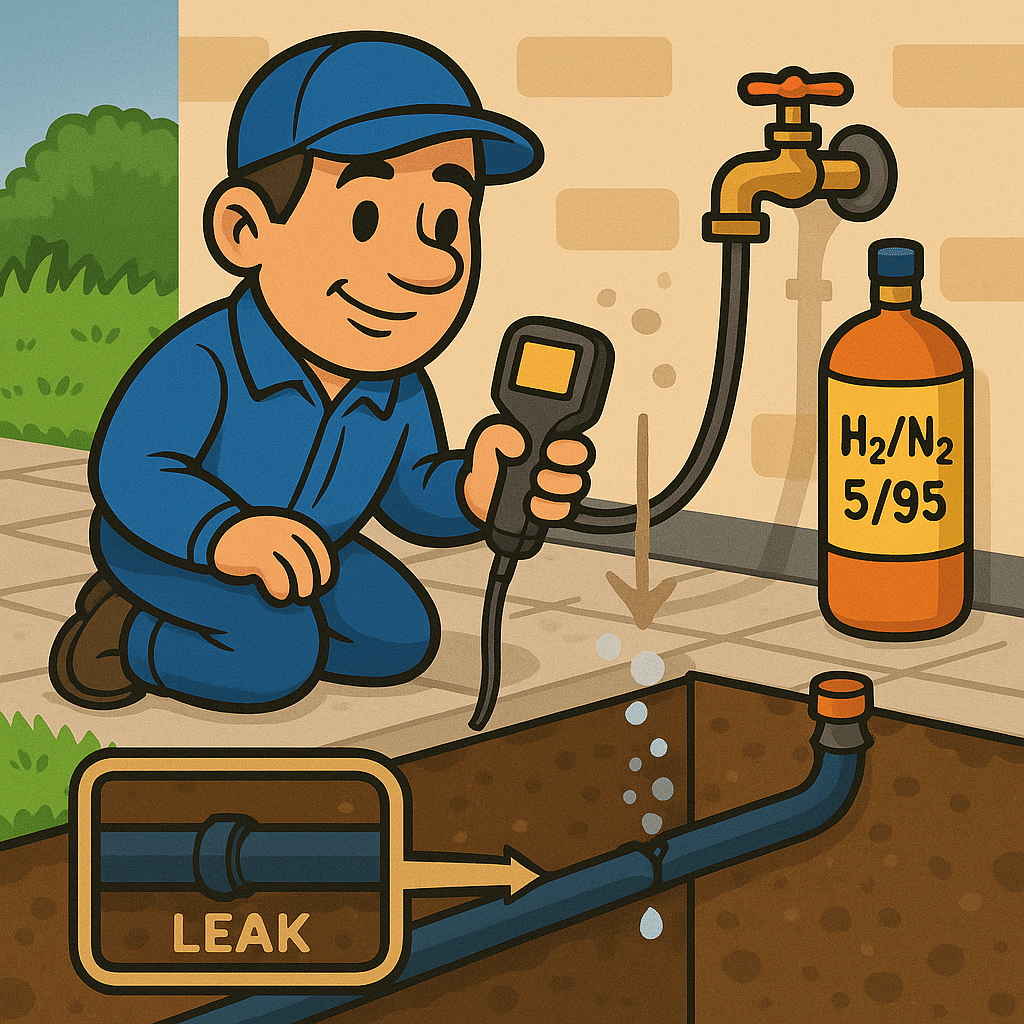
Tracer gas is a mix of 5% hydrogen and 95% nitrogen, sold industrially as forming gas. At that low concentration the hydrogen cannot burn: mixed with air there is either too little hydrogen or too little oxygen for combustion, so the blend is classed as non-flammable. It is also odourless, non-toxic and harmless to people, pipework and the environment, which is why it is used on drinking water pipes, household plumbing and heating circuits, according to gas detection manufacturer Esders.
The clever part is the hydrogen. It is the smallest molecule there is, so it slips through a hole that water barely weeps from. It is also far lighter than air, so once it escapes the pipe it goes straight up.
How tracer gas leak detection works, step by step
A tracer gas survey follows the same sequence whether the suspect pipe is a heating circuit, a supply pipe under the garden or a hot water feed buried in a kitchen floor.
Step 1: Isolate and drain the pipe
We shut off and drain the suspect pipe run. The gas needs the pipe to itself; a pipe full of water will not carry it to the leak.
Step 2: Inject the gas
A regulated cylinder feeds the hydrogen and nitrogen mix into the empty pipe at a controlled pressure. On a heating system we usually connect at the boiler filling point or a radiator valve; on a supply pipe, at an outside tap or the stopcock.
Step 3: The gas escapes at the leak
The pipe is sealed at both ends, so the only way out is the hole we are hunting. Gas streams out of the defect exactly where water was escaping before.
Step 4: It rises to the surface
Because hydrogen is lighter than air, it climbs almost vertically through soil, sand, concrete screed, tile adhesive and floor coverings. It does not wander sideways the way escaping water does.
Step 5: We sweep with a detector probe
A handheld gas detector reads hydrogen concentration at the surface. We sweep the floor or ground in a grid, watch the numbers climb, and mark the strongest reading. That mark sits above the leak.
If you would rather not lift floorboards on a hunch, call us on 07700 152 467 and we will pinpoint the leak before anything gets opened up.
Why hydrogen finds hidden leaks
Water is a terrible messenger. It runs along pipe runs, joists and damp-proof membranes, then shows up as a stain two rooms from the actual leak. Chasing the wet patch is how floors get ripped up in the wrong place.
Hydrogen behaves the opposite way. It leaves the pipe at the defect and rises. Where the detector reads strongest is, in almost every case, directly above the hole. That turns a vague search area into a repair point, which is the whole aim of non-destructive leak detection: one opening, in the right place, first time.
The small molecule size matters too. A hairline split that loses a litre an hour still lets gas through in detectable quantities. That makes tracer gas well suited to the slow, quiet leaks that drop boiler pressure week after week without ever showing a damp patch.
When tracer gas beats acoustic listening
Acoustic leak detection is fast and effective on pressurised metal pipe, and it is often the first tool out of the van. But sound has limits, and tracer gas takes over where listening struggles:
- Plastic pipesPlastic does not carry leak noise the way copper or iron does, so a leak on a plastic run can be nearly inaudible. Gas does not care what the pipe is made of.
- Very small leaksA pinhole weep may not generate enough noise to stand out. It still passes hydrogen.
- Deep or well-insulated pipesSoil depth, insulation and screed all muffle sound. Gas rises through them regardless.
- Noisy surroundingsTraffic, machinery and pumps drown out faint leak noise. A gas reading is unaffected.
- Underfloor heatingUFH loops are plastic, buried in screed and quiet. Tracer gas is usually the method that finds them, as we cover in our guide to underfloor heating leak signs.
In practice we rarely use one method alone. A typical survey might use acoustic equipment to narrow the search, then tracer gas to confirm the exact point before anyone picks up a drill.
Is tracer gas safe in your home?
Yes. This is the question homeowners ask most, and it deserves a straight answer. The 5% hydrogen mix is below the threshold at which hydrogen can ignite in air, so it is non-flammable in use. It is non-toxic, has no smell, and leaves no residue in the pipe. Once the survey is done, the gas vents harmlessly and disperses. The same mix is used to test drinking water mains, so using it on your supply pipe or heating circuit is routine, not experimental (Esders).
Your pipework is not stressed either. The injection pressure is controlled and modest, typically no higher than the pipe sees in normal service. When we finish, the system is refilled, vented and returned to normal use the same visit.
What tracer gas cannot do
We would rather you knew the limits before booking than discovered them after. Tracer gas is a locating tool, not a repair, and there are jobs where it is the wrong choice:
- The pipe must be isolatableWe need to drain the run and seal it. If a section cannot be isolated from the rest of the system, gas will spread everywhere and tell us nothing useful.
- Sealed surfaces slow it downVinyl flooring, tanking membranes and dense concrete let gas through, but slowly. Surveys on sealed floors need patience and sometimes small test points.
- Wind scatters readings outdoorsOn an exposed site a strong breeze thins the surfacing gas. We work in sheltered conditions or shield the probe area.
- It will not find every fault typeA leak on a drain or waste pipe (unpressurised) needs different methods, such as a dye test or CCTV, not tracer gas.
What it costs and how long it takes
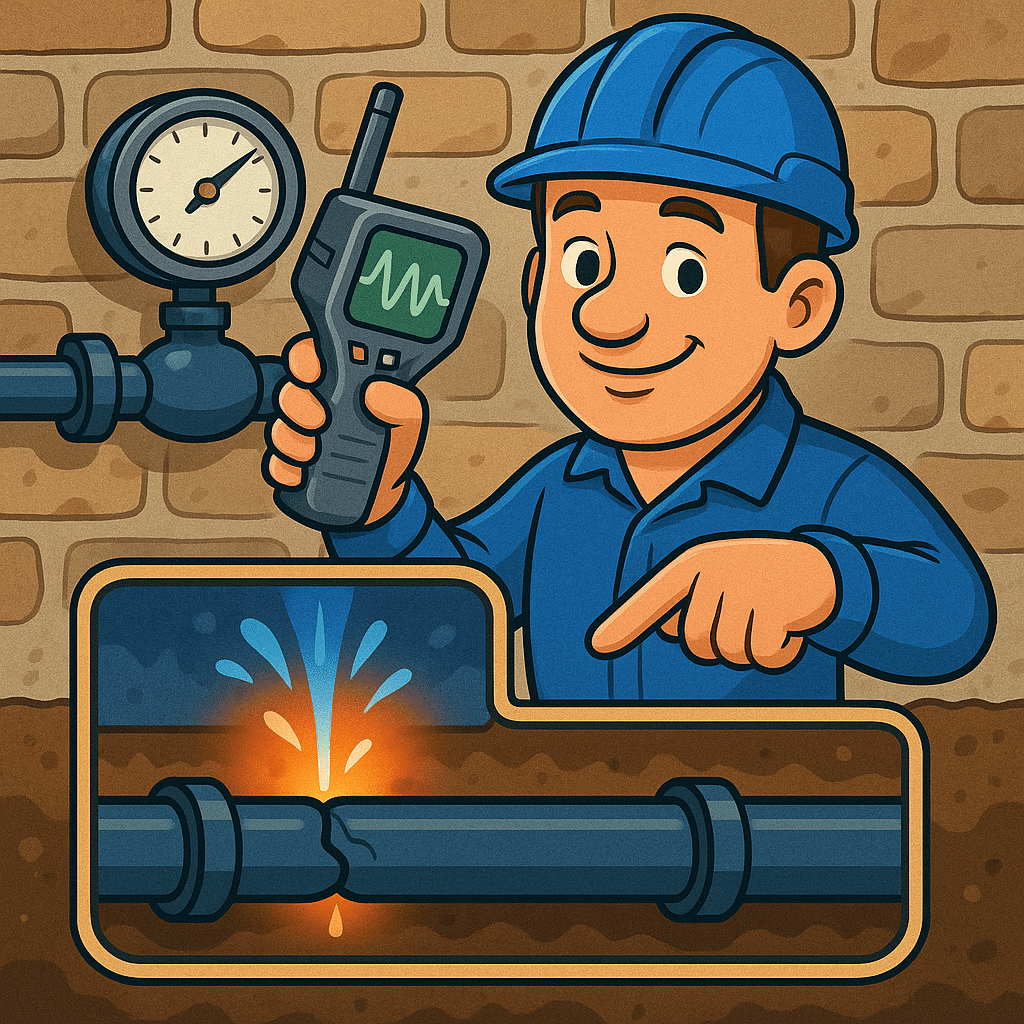
Tracer gas takes longer than a straight listening survey because of the draining, injection and refill work, so expect a half-day visit for most domestic jobs. On price, Checkatrade’s 2026 cost guide puts UK leak detection at anywhere between £80 and £1,600 depending on the methods needed, with tracer gas sitting towards the fuller-survey end. Our own leak detection price guide breaks down what moves the number.
One more thing worth checking before you book: if the leak is causing damage, the locating cost is often claimable under the trace and access section of your buildings insurance. Our guide to trace and access cover explains how that works.
Speak to MCR Leak Detection
If a leak is hiding under a floor, a driveway or an underfloor heating system, our engineers use tracer gas and the rest of the non-destructive toolkit to pinpoint it anywhere in Scotland, 24/7.
Frequently asked questions
Is tracer gas safe on drinking water pipes?
Yes. The 5% hydrogen and 95% nitrogen mix is non-toxic, odourless and leaves no residue, and it is routinely used to test drinking water mains and household plumbing. Once the survey ends the gas disperses and the pipe is flushed and refilled, so your water is unaffected.
Does my water need to be turned off during the survey?
Only the pipe under test is shut off and drained, because the gas needs an empty, sealed run to work. On a heating circuit your cold water taps stay on as normal. For a supply pipe test you will be without mains water for the duration of the survey, usually a few hours.
How accurately does tracer gas locate a leak?
The strongest surface reading sits above the defect, so the method typically narrows the repair to a small opening rather than a trench or a stripped floor. Accuracy depends on depth and floor build-up, which is why we grid-sweep and confirm the peak reading before marking the spot.
Will the gas damage my boiler, radiators or pipework?
No. The mix is inert in use, injected at controlled pressure no higher than the system normally operates at, and it leaves nothing behind. Heating systems are refilled, vented and returned to service the same day, with inhibitor topped up where the system has been drained.
Why choose tracer gas instead of a listening survey?
Acoustic listening works best on noisy leaks in metal pipe. Tracer gas wins when the pipe is plastic, buried deep, under screed, or leaking so slowly that it makes almost no sound. Often the two are used together: sound narrows the area, gas confirms the exact point.
Related reading
- Acoustic leak detection: how engineers hear leaks underground
- How thermal imaging finds hidden water leaks
- Signs of an underfloor heating leak
- What is trace and access? The method explained
Or start at the hub: water leak detection across Scotland.