

A musty smell that will not air out means damp material is feeding mould or bacteria somewhere, and a hidden water leak is one of the most common sources. Smell usually arrives weeks before any stain shows. Track which room smells strongest, check the likely spots below, and get persistent cases moisture-mapped.
Musty Smell in the House? It Might Be a Hidden Leak
Nobody calls us about a smell. They call about a ceiling stain, a warped floor or a boiler that keeps losing pressure, and then, halfway through the survey, someone says the room has smelled odd for months. The nose knew first. It almost always does.
A musty smell hidden leak connection is worth taking seriously because smell is the earliest signal a concealed leak gives off. Water under a floor or inside a wall can take weeks to produce a visible mark. The smell of the damp materials it is soaking travels through voids and floorboards long before that. This guide explains what the smell actually is, how to hunt the source room by room, and when the search needs equipment rather than a nose.
In this guide
What that smell actually is
The classic musty smell, somewhere between wet earth, old books and forgotten gym kit, is produced by mould and bacteria growing on damp material. As they feed, they release gases called microbial volatile organic compounds. In plain English: damp growth gives off fumes, and those fumes are what you can smell.
That detail matters for one reason. The organisms only produce the smell while they are alive and growing, and they only grow while moisture keeps arriving. A cupboard that got damp once and dried out stops smelling within weeks. A room that smells musty month after month has a moisture source that keeps topping itself up. Something is feeding it, and in a heated, ventilated home, a leak is high on the list of suspects.
Why the musty smell of a hidden leak beats stains by weeks
Building materials are absorbent. A slow leak under a floor soaks into joists, insulation and screed for a long time before the moisture reaches a surface you can see. Mould does not wait for that. It starts growing on the hidden, wet side of the materials almost straight away, and the smell it produces drifts through air gaps, floorboards, service holes and skirting joints into the room.
So the running order of a typical concealed leak looks like this: first a faint smell that comes and goes, then a persistent smell in one room, then secondary clues like lifting flooring or a boiler that needs topping up, and only then a visible stain. Homeowners who act at stage one or two save themselves most of the damage. Our guide to the signs of a hidden water leak lists the other early warnings worth checking alongside the smell.
Hunting the source room by room
Before calling anyone, spend an evening narrowing it down. You are trying to answer two questions: where is the smell strongest, and what water-carrying pipework or fittings live near that spot?
Step 1: map the smell
Walk the house after it has been shut up for a few hours, when smells are strongest. Note the worst room, then get low. Smell at floor level, inside cupboards, behind furniture and at skirting boards. Musty air sinks into still corners, and the strongest point is usually close to the source.
Step 2: check the usual suspects in that room
Under the kitchen sink, behind the washing machine and dishwasher, around the bath panel, under the shower tray, inside the airing cupboard, and any boxed-in pipework. Put a dry hand on the floor and walls: cold, clammy surfaces in a heated room are holding moisture.
Step 3: listen and look for supporting evidence
With everything off, listen for hissing or ticking near the smell. Check the boiler pressure gauge over a few days. Look for swollen skirting, cupping floorboards, or paint that has recently bubbled. Any one of these alongside a persistent smell strengthens the leak theory considerably.
Step 4: rule the room in or out
If the smell is strongest in a room with no plumbing at all, think condensation, a roof or gutter fault on that elevation, or a leak travelling from an adjacent room. Water tracks along joists and pipes, so the smelliest room and the leaking room are neighbours more often than you would think.
If the trail goes cold, or everything points under a floor or behind tiling, stop there. This is the point where opening things up on a hunch starts costing real money. Call us on 07700 152 467 instead and we will trace it with equipment before anything is lifted or cut.
The health side of damp and mould
A musty house is not just unpleasant. UK government guidance on damp and mould is blunt about the risks: people breathe in the substances damp and mould produce, which can cause coughs, wheeze and shortness of breath, worsen asthma and other allergic airway conditions, and in the most severe cases cause serious illness. The same guidance names leaking water from waste and heating pipes as one of the main causes of damp in homes, alongside condensation and building defects. You can read it in full in the gov.uk damp and mould guidance.
Children, older people, pregnant women and anyone with a lung condition or weakened immune system are most at risk. If someone vulnerable sleeps in the room that smells, that is a reason to move the investigation up the priority list, not a reason to panic. Find the moisture source, stop it, and the mould loses its supply.
How we trace a smell to a leak
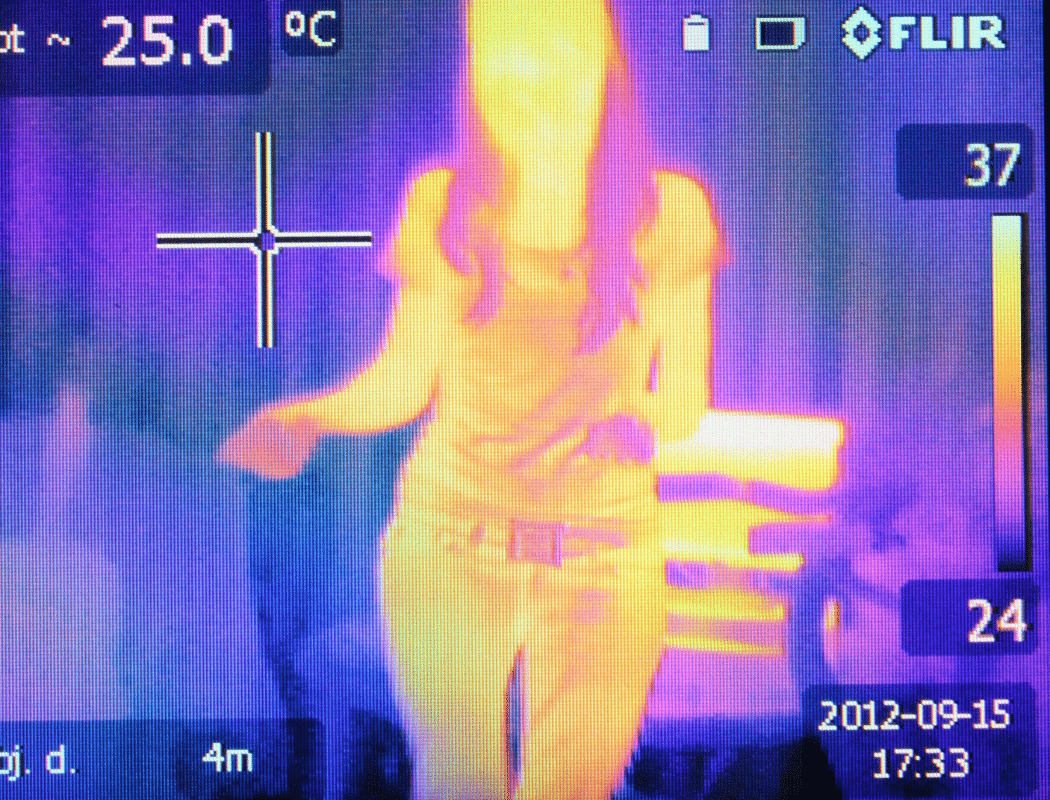
A smell tells you a room. Equipment tells you a spot. On a survey we work from the room you have identified and map the moisture properly: a thermal imaging camera shows the cool patches that hidden dampness creates on floors and walls, and a moisture meter confirms whether each suspect patch is actually wet or just cold.
Mapping the readings across the room reveals the shape of the wet area, and the wettest point plus the pipe layout points to the leak. Acoustic listening then confirms live escapes on pressurised pipes. Our guides to thermal imaging leak detection and moisture meter readings explain both tools in detail.
The point of all this is that nothing gets opened up until the evidence agrees. A persistent musty smell has a source, the source has a location, and finding that location non-destructively is precisely the job of professional water leak detection across Scotland.
When it is not a leak
Honesty matters here: plenty of musty rooms have no leak at all. The common alternatives are worth knowing.
- Condensation and poor ventilationCold corners, unused rooms and furniture pushed hard against external walls all breed condensation mould, especially in winter. The clue is distribution: condensation mould favours cold spots and window reveals across several rooms, while leak mould concentrates near one source.
- Blocked or dead air spacesBlocked underfloor vents in older Scottish homes with suspended timber floors let the void below turn stagnant and musty without any leak. Check that airbricks are clear.
- Old water damage that never driedA past leak, fixed but never dried out properly, can keep a floor void smelling for months. A moisture survey distinguishes drying-out damp from a live leak.
- Penetrating dampFailed pointing, leaking gutters and driving rain on exposed gables wet walls from outside. The smell follows weather rather than water use. Our guide to damp patches with no obvious leak covers how to tell these apart.
Speak to MCR Leak Detection
A musty smell that keeps coming back has a moisture source, and we find it without pulling your home apart. Thermal imaging, moisture mapping and acoustic detection, anywhere in Scotland, 24/7.
Frequently asked questions
Can a water leak smell musty without any visible damp?
Yes, and it is common. A leak under a floor or inside a wall wets the hidden side of materials first, and mould growing there releases the smell through gaps long before a stain reaches the surface. Persistent smell with no visible mark is a classic concealed leak pattern.
Why does the musty smell get worse when the heating is on?
Warmth speeds up mould activity and helps the smelly compounds evaporate from damp material, so heating a room with a hidden moisture source turns the volume up. If the smell strengthens near a warm floor, a leaking heating pipe under that floor deserves particular suspicion.
Will opening the windows fix a musty smell?
Ventilation clears the smell temporarily and helps genuine condensation problems. It cannot fix a leak, because the moisture keeps arriving. The test is simple: if a room still smells musty after weeks of regular airing, the moisture source is active and needs finding.
Is a musty smell in the house dangerous?
It signals damp and mould, which UK government guidance links to coughs, wheeze and worsening asthma, with children, older people and those with lung conditions most at risk. The smell itself is a warning rather than an emergency. Treat the source promptly and the risk goes with it.
The smell is strongest in a room with no plumbing. What does that mean?
Water travels. A leak two rooms away can track along joists and pipe runs and soak the floor void where you smell it. Roof and gutter faults on that side of the house are also candidates. Moisture mapping across the affected rooms usually reveals the true path quickly.
Related reading
- 12 signs of a hidden water leak in your home
- Damp patch on the wall but no obvious leak? Start here
- How to find a water leak in a wall or ceiling
- Moisture meter readings explained
Or learn more about our water leak detection service across Scotland.