

Start by reading the stain: the leak is rarely directly behind or above it, because water travels along pipes, joists and plasterboard before it shows. List what plumbing sits above and behind the mark, run isolation tests to narrow the source, then let moisture mapping and thermal imaging pinpoint it before anyone cuts a hole.
How to Find a Water Leak in a Wall or Ceiling
A brown ring on the ceiling. A bubbling patch of paint halfway up the wall. Skirting that has started to lift. Trying to find a leak in a wall or ceiling is maddening for one simple reason: the evidence almost never sits where the water is escaping. Water obeys gravity and follows the easiest path, and that path can run a surprising distance from the faulty pipe to the visible mark.
The temptation is to cut a hole where the stain is. Do that and you will usually find clean, dry plasterboard and a bigger repair bill, with the leak still running somewhere else. This guide covers what you can work out yourself, in order, and how professionals pinpoint the source before anything gets opened up.
What’s in this guide
First: is the ceiling safe?
Before any detective work, look at the shape of the damage. A flat stain is a clue. A ceiling that is bulging, sagging or holding a blister of water is a hazard, because plasterboard soaks up water until it fails suddenly. Do not stand under it, and do not prod the middle of a bulge. Shut off the water, put a bucket down and treat it as urgent. Our guide on water coming through the ceiling covers the emergency steps in order.
If water is actively dripping, the leak is live and finding it is easier. If the stain is dry, you may be looking at an old, repaired leak, or one that only runs when something specific happens. That timing question becomes your best clue.
Read the stain like an engineer
The mark itself tells you more than most people realise:
- Ring marks with a darker rimClassic slow leak. Each wetting spreads slightly further and dries, leaving concentric tide lines. The number of rings hints at how long this has been happening.
- A clean, spreading wet patchA live or recent escape. Press the centre gently with a dry tissue; genuine dampness means the water source is still active.
- Yellow or brown stainingWater that has travelled through building materials, picking up tannins and rust on the way. Common under old heating pipes and long drips.
- A straight-line stainDamp tracking along one joist or one pipe run. That line is a map: the leak sits somewhere along it, usually at the higher end.
Note the timing too. Damage that grows after baths and showers points at the bathroom. Damage that appears during rain points at the roof, gutters or wall itself rather than plumbing. Damage that creeps steadily regardless of weather or water use points at a pressurised pipe, which never rests. A falling boiler gauge alongside a ceiling stain is a strong pointer to a heating pipe, something our guide to boiler pressure loss explains.
List the suspects above and behind
Stand under the stain and think about what the building is hiding. Most wall and ceiling leaks come from a short list:
- Bathroom wastes and sealsBath, shower and basin wastes above a ceiling stain are the most common culprits, along with failed sealant letting shower water past the tray or tiles.
- Heating pipesFlow and return runs cross ceilings everywhere in Scottish homes, and a pinhole on one drips constantly whenever the system is pressurised.
- Supply pipes in wallsFeeds to taps, toilets, showers and radiators, often chased into the wall and forgotten for decades.
- Tank overflows and valvesIn older properties, loft tanks and their float valves sit above bedroom ceilings.
- Not plumbing at allRoof slates, flashings, blocked gutters and driving rain through solid masonry all mimic pipe leaks. If your wall stain appears with the weather, read our guide to a damp patch with no obvious leak before blaming a pipe.
Simple tests that narrow it down
1. The dry-out and use test
Dry the area, then use one suspect at a time. Run the shower for ten minutes with someone watching the stain. Next day, fill and empty the bath. Then leave everything off and run only the heating. Whichever activity revives the damp names your culprit.
2. The isolation test
Turn off every tap and appliance, then check whether your boiler pressure falls or you can hear water moving at the indoor stop valve. Movement with everything off means a pressurised pipe is leaking somewhere, not a waste or seal.
3. The weather test
Keep a simple note of when the patch darkens. Correlation with rain, especially wind-driven rain on one elevation, moves suspicion from plumbing to the building fabric.
4. The torch-across-the-surface test
Hold a torch flat against the wall or ceiling and shine it across the surface. Raking light exaggerates bumps, blisters and sag you cannot see face-on, showing how far the moisture really extends.
These checks cost nothing and often narrow the leak to one room or one system. What they rarely do is give you a spot to cut, and that is the gap the instruments fill. More symptom checks live in our roundup of the signs of a hidden water leak.
If the tests point at a pressurised pipe and the damage is growing, stop there and call us on 07700 152 467. Pinpointing it first costs far less than redecorating twice.
Why the stain misleads: how water travels
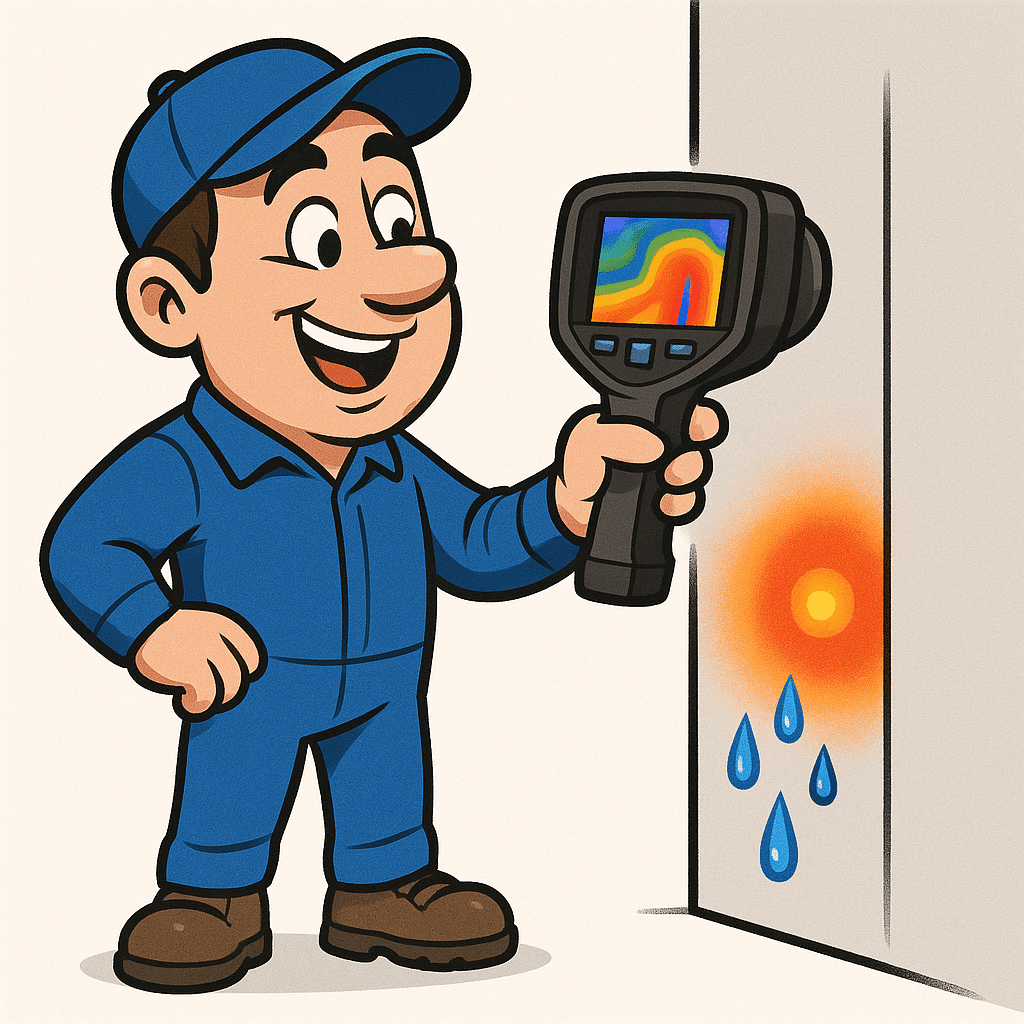
Inside a ceiling void, a drip lands on a joist or a pipe and runs along it, sometimes for metres, until it meets a joint, a nail or a low point. Only then does it soak through and show. In a wall, water slides down the back face of plasterboard or the inside of a solid wall and surfaces wherever the plaster is weakest, often at a skirting or above a door frame.
The practical rule our engineers work to: treat the stain as the end of the water’s journey, not the start. The leak is usually higher, and frequently in a different room. First-floor bathroom leaks routinely appear on hallway ceilings below, two walls away from the failed joint.
How professionals find a leak in a wall or ceiling
A detection survey replaces guesswork with measurement, working from the outside in:
- Moisture mappingA moisture meter takes readings in a grid across the wall or ceiling. The readings rise towards the true entry point, turning one vague stain into a directional trail. Our guide to moisture meter readings shows what the numbers mean.
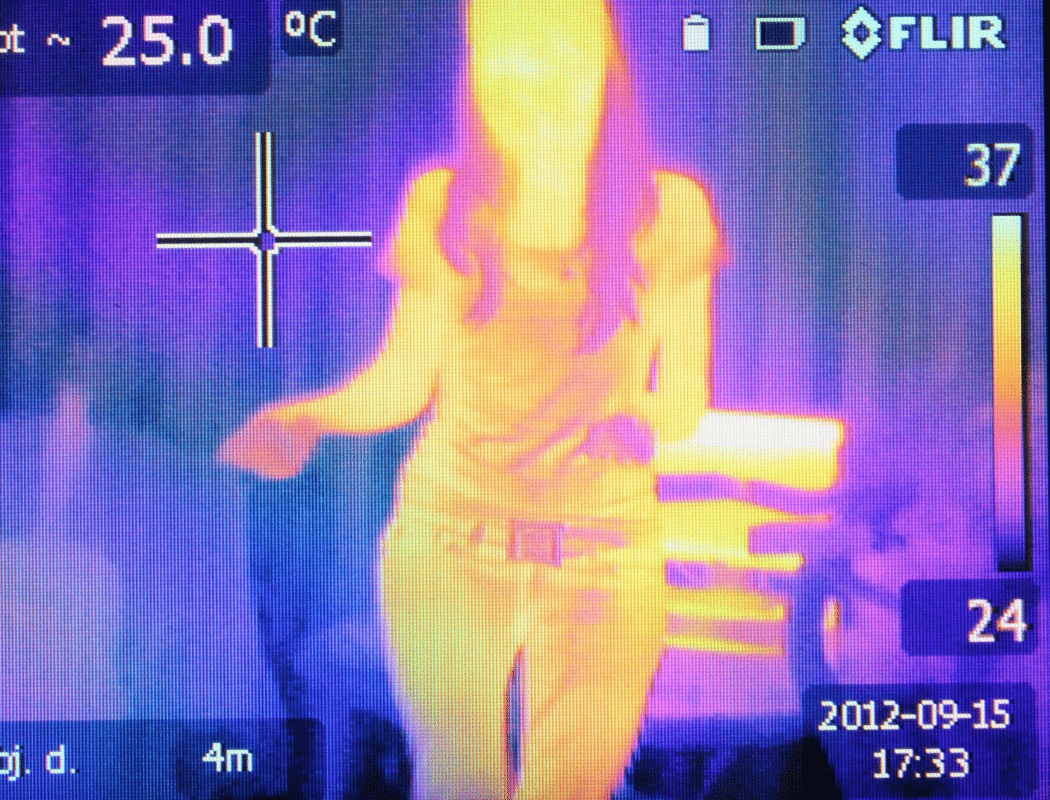
- Thermal imagingA thermal camera shows the temperature shadow of hidden moisture and the warm line of any leaking heating pipe behind the surface. See our full guide to thermal imaging leak detection.
- Acoustic listeningPressurised leaks hiss. Sensitive microphones pick that up through plaster and pinpoint position along the pipe.
- Dye and flow testingFor wastes and showers, dyed water proves exactly which fitting is letting go.
The survey ends with the leak marked on the surface and a written report, which matters for insurance. Most buildings policies include trace and access cover, which pays for locating a leak and making good the access. MoneySuperMarket, citing Defaqto, puts it in 94% of policies, with typical limits between £5,000 and £10,000.
When opening up makes sense
Sometimes cutting in is the right move. Once instruments agree on the spot, one neat access hole exposes the pipe for repair, and cutting plasterboard is cheap compared with the survey work that placed the hole correctly. The mistake is opening up on a hunch. We have surveyed homes with five exploratory holes in a ceiling, every one of them dry, while the actual leak sat above the landing.
Before anyone cuts, you should be able to say
- Which system is leaking (waste, mains, heating or weather)
- Why the evidence points there (test results, readings, timing)
- Where the access hole goes, and why that exact spot
- Who makes good afterwards, and whether insurance contributes
Frequently asked questions
Is the leak always above the ceiling stain?
It is above it in height, but rarely directly above it. Water runs along joists, pipes and the back of plasterboard before dropping, so the true source is often a metre or more to one side, and sometimes in the next room. Treat the stain as the end of the trail.
Can I find a leak in a wall without removing plaster?
Usually, yes. Moisture mapping traces the dampness to its highest concentration, thermal imaging shows what sits behind the surface, and acoustic equipment hears pressurised leaks through plaster. Opening up then happens once, at the confirmed spot, instead of speculatively.
Why does my ceiling only leak sometimes?
Intermittent damage means the water source is intermittent. Shower seals leak only during showers, wastes only when water drains, weather leaks only in rain, and heating pipes mainly when the system is hot and at pressure. Matching the timing to an activity is the fastest way to name the culprit.
Should I dry the stain or leave it for the survey?
Photograph it first, then it is fine to dry the surface and protect your belongings. Moisture deeper in the plaster and timber stays measurable for a long time, so the trail survives. What matters more is noting when the patch was wet and what was happening in the house at the time.
Will insurance pay for finding the leak?
Most buildings policies include trace and access cover, which pays for professionally locating the leak and making good the access hole. MoneySuperMarket, citing Defaqto, reports 94% of policies carry it. The repair of the pipe itself normally stays your own cost, so check your wording.
Speak to MCR Leak Detection
If a stain keeps growing and the source will not show itself, our engineers pinpoint leaks in walls and ceilings with thermal, acoustic and moisture surveys, anywhere in Scotland, 24/7. One marked spot, one small hole, no guesswork.
Related reading
- Water Coming Through the Ceiling: Emergency Steps That Limit Damage
- Damp Patch on the Wall but No Obvious Leak? Start Here
- 12 Signs of a Hidden Water Leak in Your Home
- How to Find a Water Leak: 10 Ways to Track It Down
Or learn more about our water leak detection across Scotland.