

Turn off the water at the stop valve, switch off electrics to any affected circuits, and catch the water. If the ceiling is bulging, keep everyone out of the room. Then find the source above before repairs start. Photograph everything as you go, because your insurer will want the evidence.
Water Coming Through the Ceiling: Emergency Steps That Limit Damage
Water coming through the ceiling is one of those problems that punishes hesitation. Plasterboard soaks up water fast, and a stain the size of a saucer at lunchtime can be a sagging, dripping mess by teatime. The good news is that the first half hour usually decides how bad the damage gets, and the right moves are simple.
We attend ceiling leaks across Scotland every week, in everything from new-build semis to Glasgow tenements. This guide covers what to do right now, how to work out where the water is actually coming from, and how to protect the insurance claim that often follows.
What’s in this guide
The first ten minutes: stop, isolate, catch
Step 1: Turn off the water
Shut the internal stop valve, usually under the kitchen sink. If water keeps flowing, the leak may be on a stored supply, so drain it by running the cold taps. Not sure where your valve is? Our guide to finding your stopcock covers every common location, including tenements.
Step 2: Kill the electrics in the affected area
Water and ceiling roses are a bad mix. If water is anywhere near a light fitting, switch off the lighting circuit at the consumer unit and leave it off until an electrician or the drying process confirms it is safe. Do not test the switch to see what happens.
Step 3: Catch the water and clear the room
Buckets under the drips, towels around them, and furniture, rugs and electronics moved out or covered. If the ceiling is dripping in several places, a plastic sheet funnelled into one container saves the floor below.
Step 4: Turn off the heating if the leak might be from it
If your boiler pressure gauge has dropped or the water coming through is discoloured and slightly oily, the leak may be on the central heating circuit. Switch the boiler off so the system stops pushing water out of the fault.
If the flow is heavy and will not stop, treat it as a burst rather than a leak and follow our burst water pipe checklist.
If the ceiling is bulging, take it seriously
A bulging ceiling means water is pooling on top of the plasterboard. That water is heavy. A sag the size of a dinner plate can be holding several litres, and a saturated ceiling can come down without much warning. Keep children and pets out of the room and do not stand under the bulge to inspect it.
The standard trade approach is to place a large container under the lowest point of the bulge and pierce a small hole with a screwdriver to let the water drain in a controlled way. One small hole in a ceiling that was coming down anyway is cheap. A collapsed ceiling is not. If the sag is large, spreading, or directly above anything you cannot move, stay out of the room and get professional help the same day.
Finding where the water coming through the ceiling starts
Once the dripping is under control, the question becomes where the water started. The awkward truth about ceiling leaks is that water travels. It runs along joists, pipes and the top of the plasterboard before it finds a way through, so the drip is often a metre or more from the actual fault.
Work through the likely suspects in the room above:
- Bathroom above the stainFailed sealant around a bath or shower, a leaking waste trap, or a weeping supply connection. Leaks that only appear after someone showers point here.
- Central heating pipesHeating runs cross ceilings in almost every Scottish home. A dropping boiler pressure gauge alongside a ceiling stain is a strong clue.
- Loft tanks and pipeworkIn older properties, a cold water tank overflow or a frost-split pipe in the loft can soak a bedroom ceiling below.
- The roof itselfIf the stain grows during or after heavy rain rather than water use, think slates, flashing or gutters instead of plumbing.
Timing is your best diagnostic tool. A leak that tracks water use is plumbing. A leak that tracks weather is the building. A slow, constant drip regardless of both often means a pressurised pipe, and those rarely fix themselves. Our guide to finding a leak in a wall or ceiling goes deeper on tracing water back to its source.
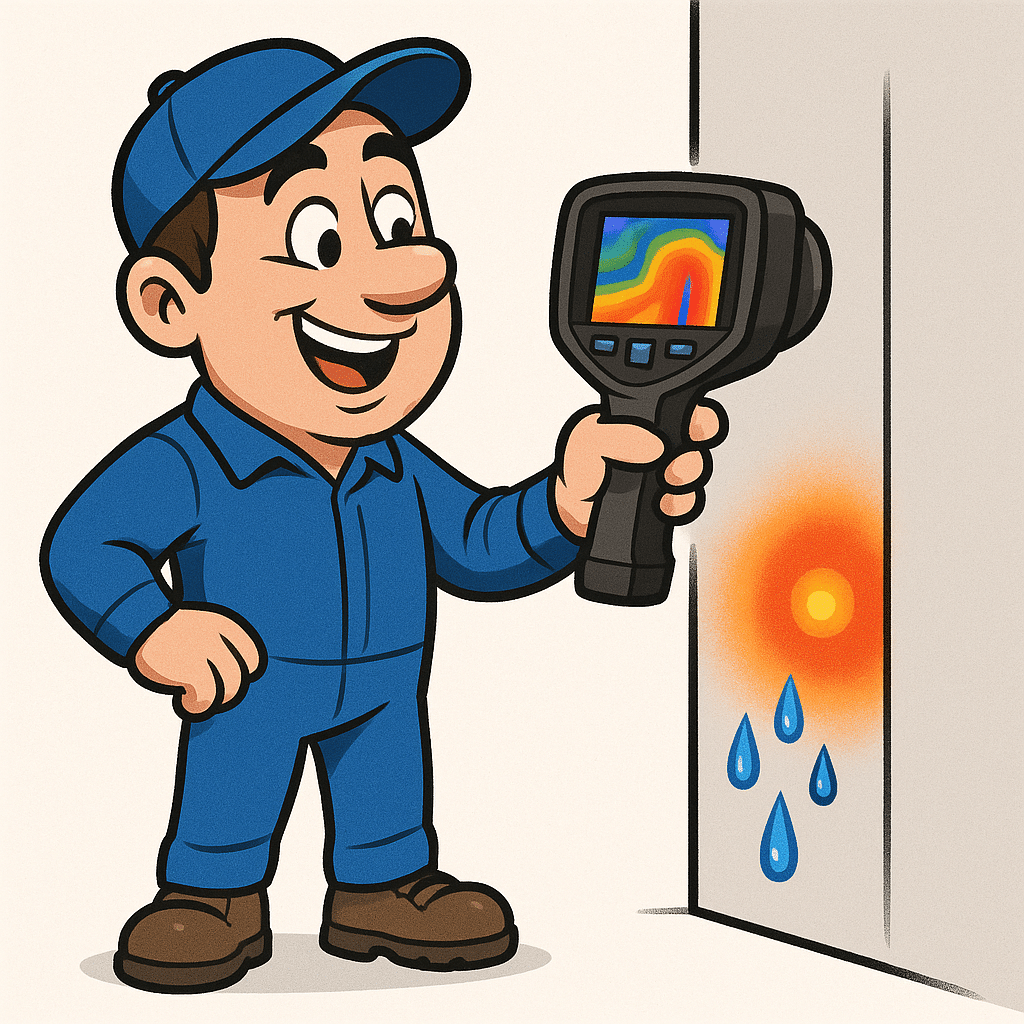
If nothing obvious shows up and the ceiling is still wet, resist the urge to start cutting holes on a hunch. Call us on 07700 152 467 and we will pinpoint the leak with thermal imaging and moisture mapping before anything gets opened up.
If you live in a flat: the leak may not be yours
In a tenement or modern block, water through the ceiling usually means a problem in the flat above, or in a shared pipe serving several properties. Knock on the door above first. Most neighbours will check their bathroom and under their sink straight away, and many ceiling leaks are solved with that one conversation.
If nobody answers or the owner will not engage, Scotland has specific rules that help. The Tenements (Scotland) Act 2004 sets out how shared repairs are managed when title deeds are silent, and Under One Roof publishes practical guidance for exactly this situation. Our article on water leaks from the flat above explains your rights, including what to do when the argument turns to money.
One thing detection genuinely settles in flats is whose pipe failed. A survey that traces the water to a specific pipe in a specific property turns a neighbourly stand-off into a straightforward repair.
Drying out: slower than you would like
Once the leak is fixed, the ceiling needs to dry before anyone repairs or repaints it. Painting over a damp ceiling traps moisture and the stain comes back within weeks.
- Ventilate and heat gentlyOpen windows and keep the room warm. Steady, moderate warmth dries a ceiling better than blasting it.
- Check the void aboveInsulation above a soaked ceiling holds water like a sponge. Wet insulation usually needs lifting out to dry or replacing.
- Watch for mouldBlack spotting within a week or two means the area is still damp. Fix the moisture, not just the mark.
- Let plasterboard prove itselfIf the board has sagged or gone soft, it needs cutting out and replacing. Board that has only stained can usually be sealed and painted once fully dry.
Protecting the insurance claim
Ceiling damage claims are usually straightforward escape of water claims, but only if you can show what happened and when. Insurers also expect you to limit the damage, which is exactly what the steps above do.
Evidence to gather while it is happening
- Photos and video of the ceiling, the water and the room above, before you tidy anything
- The date and time you found the leak, and what you did about it
- Receipts for emergency callouts, materials and anything bought to limit damage
- A professional detection report identifying the source, if the leak was hidden
Most buildings policies include trace and access cover, which pays to find a hidden leak and make good the access. MoneySuperMarket, citing Defaqto, puts it in 94% of buildings policies, with limits typically between £5,000 and £10,000. That is the cover a professional survey sits under. For the full process, from first call to settlement, see our walkthrough of making a water leak insurance claim.
When to call a leak detection specialist
Plenty of ceiling leaks need a plumber, not us. A failed shower seal or a weeping trap is a repair job once you know that is the cause. Call a detection specialist when the source is genuinely hidden: the ceiling keeps staining but the bathroom above checks out, the boiler keeps losing pressure, the leak is intermittent, or the water is appearing a long way from any obvious fitting.
We locate hidden leaks non-destructively with thermal imaging, acoustic equipment and moisture mapping, then hand you a written report that tells the repairing plumber exactly where to open up. One small access hole instead of a ceiling full of exploratory ones.
Frequently asked questions
Should I poke a hole in a bulging ceiling?
If the bulge is small and you can do it safely, yes. Place a large container underneath and pierce the lowest point with a screwdriver so the water drains in a controlled way. If the sag is large or spreading, stay out of the room and get same-day professional help instead.
Is water coming through the ceiling an emergency?
Treat it as one until you know otherwise. Active dripping means water is moving through the building, and plasterboard weakens quickly once saturated. Shut the stop valve, isolate electrics near the water and get the source identified the same day. A dry, old stain is less urgent but still worth investigating.
Why is my ceiling leaking when nothing above seems wet?
Water travels before it drops. It runs along joists, pipe runs and the top of the plasterboard, so the drip can sit a metre or more from the fault. Hidden heating pipes and slow supply leaks also soak the void above a ceiling without leaving any visible sign in the room above.
Who is responsible if the water is coming from the flat above?
If the leak is on a pipe or fitting inside the upstairs flat, its owner is responsible for repairing it. Shared pipes serving several flats are usually a joint responsibility under the Tenements (Scotland) Act 2004. A detection survey that identifies whose pipe failed usually settles the question quickly.
Will insurance pay for the ceiling damage?
Usually, yes. Damage from a sudden escape of water is a standard buildings claim, and trace and access cover pays to locate a hidden source. The pipe repair itself is normally your own cost. Photograph everything early and report the claim promptly to keep it straightforward.
Speak to MCR Leak Detection
Water through the ceiling and no idea where it starts? We pinpoint hidden leaks non-destructively, anywhere in Scotland, 24/7, and give you a written report your plumber and insurer can act on.
Related reading
- Burst Water Pipe? What to Do in the First 10 Minutes
- Where Is My Stopcock? How to Shut Off Your Water in an Emergency
- How to Find a Water Leak in a Wall or Ceiling
- Water Leak From the Flat Above: Your Rights in Scotland
Or learn more about our water leak detection across Scotland.