

Trace and access means locating a hidden leak and making good the access needed to reach it. An engineer traces the leak with thermal imaging, acoustic listening and tracer gas, then the opening made to expose the pipe is repaired afterwards. It does not include fixing the pipe itself, and most buildings insurance policies cover it as a separate item.
What Is Trace and Access? The Method Explained
Trace and access is one of those phrases that means something precise to insurers and engineers, and almost nothing to the homeowner hearing it for the first time, usually while staring at a damp ceiling. It gets used loosely, so this article answers the question properly: what is trace and access, what equipment does the tracing, what “access” actually covers and where the boundary with plumbing repair sits.
One thing before we start. If you searched for this because your insurer mentioned it, the policy side is a separate topic with its own rules, and we cover it in our guide to trace and access cover. This page explains the method itself.
In this guide
What is trace and access, in plain terms?
Split the phrase in two. The trace is the detective work: using specialist equipment to find exactly where a concealed pipe is leaking, without tearing the building apart to look. The access is the controlled opening-up needed to expose that spot for repair, plus making good the hole afterwards, whether that means relaying a section of floor, patching plaster or reinstating a strip of driveway.
The whole point of the method is proportion. Without tracing first, finding a leak under a solid floor means breaking out concrete in educated guesses. With it, the repair team opens one small, correct hole. The difference in mess, cost and disruption is enormous, which is exactly why insurers created a specific category of cover for it.
The trace: how hidden leaks are located
No single instrument finds every leak. A professional trace works by combining methods until the evidence agrees on one spot.
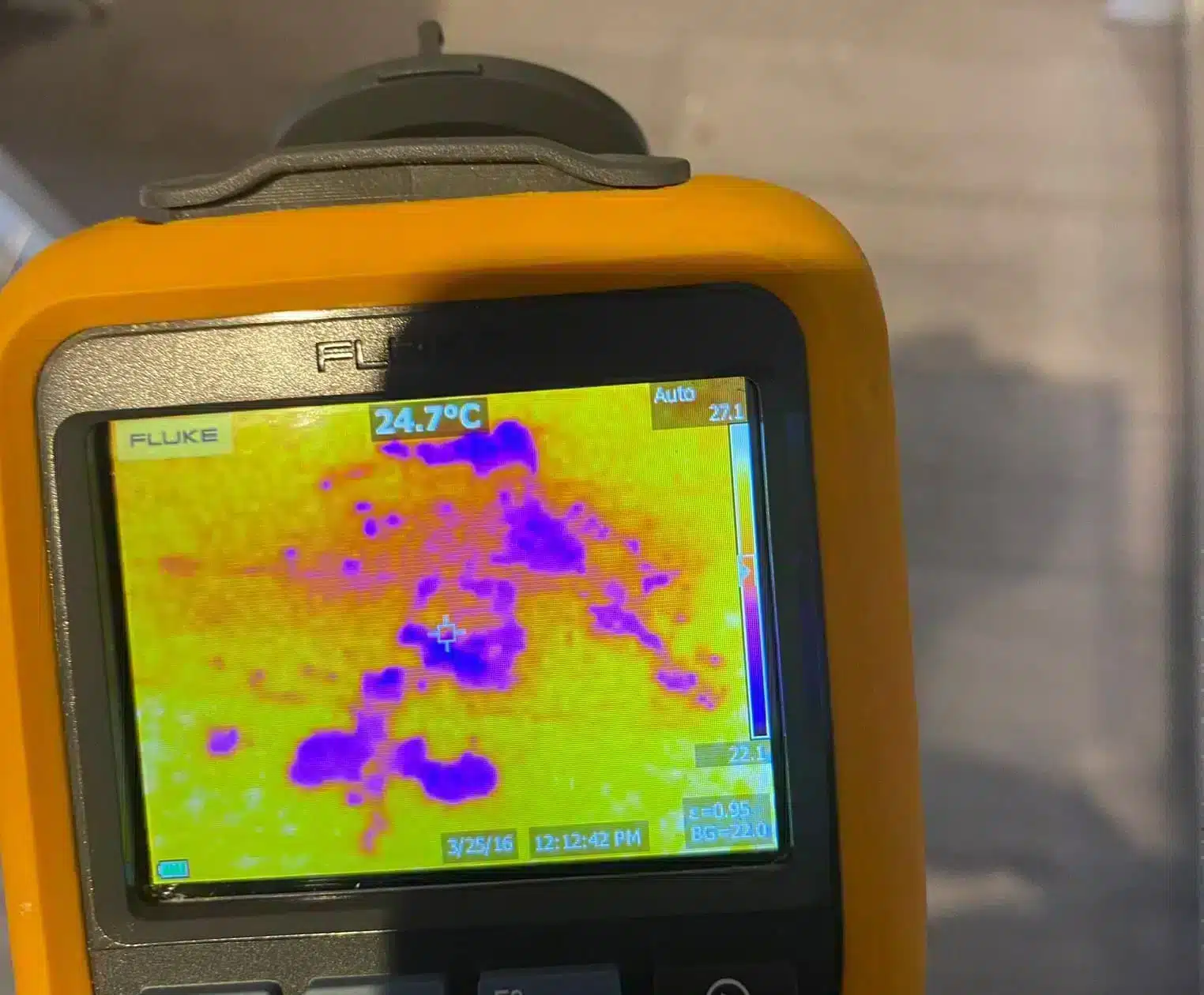
Thermal imaging reads surface temperatures. A leaking hot pipe warms the floor above it; evaporating cold water chills a wall. The camera turns those invisible patterns into a picture, and it works well through tiles, screed and plaster. Our article on thermal imaging leak detection shows what the images reveal.

Acoustic listening amplifies the hiss a pressurised leak makes. Ground microphones let an engineer follow that sound across a floor or garden to its loudest point, which sits directly over the leak. Tracer gas handles the quiet ones: a safe hydrogen and nitrogen mix is introduced into the drained pipe, escapes through the hole, rises through the structure and is picked up by a sensitive probe at the surface.
Add moisture meters to map how far water has spread, and pipe locators to confirm where the runs actually go, and the trace closes in from several directions at once.
The access: opening up and making good
Once the leak is pinpointed, someone still has to reach the pipe. Access means the necessary opening: lifting floorboards or flooring, cutting a neat section of plasterboard, breaking out a small area of screed or excavating a short trench outside. Making good means restoring what was disturbed once the repair is done.
Because the trace happened first, that opening is small and deliberate. On a typical under-floor job we mark the floor to within a very small area, and the exposed section is often no bigger than a paving slab. Compare that with speculative opening-up, where each wrong guess adds another hole to repair.
The building itself decides how delicate this stage needs to be. Scottish housing stock ranges from tenement flats with lath and plaster ceilings below the leak, to Victorian stone houses with deep suspended floors, to modern homes with pipes cast into the screed. Opening the wrong spot in a period property is not just untidy, it can be expensive to reinstate properly, which is another reason the trace has to come first and has to be right.
What trace and access is not
It is not the pipe repair. The industry, and every insurance policy we have seen, treats fixing the leaking pipe itself as a plumbing job that sits outside trace and access. In practice the sequence runs: detection company finds it, plumber repairs it, then the access is made good. Some firms handle more than one stage, but the stages remain distinct, and on insurance claims they are usually costed separately.
It is also not a damp survey or a general plumbing inspection. Trace and access is a targeted exercise that starts from evidence of a live leak: a dropping boiler gauge, an unexplained damp patch, a hissing pipe. If you are not yet sure you have a leak at all, start with our guide to the signs of a hidden water leak before commissioning anything.
What a trace and access visit looks like
1. Questions first
A good engineer starts with the story: what you have seen, when it started, what has changed. Ten minutes of questions regularly halves the search area before any kit comes out of the van.
2. System checks
Pressure tests and isolation confirm which circuit is losing water, mains cold, hot, or heating. This narrows the trace to one system rather than every pipe in the building.
3. The trace itself
Thermal, acoustic, tracer gas and moisture mapping, in whatever combination the building demands. Solid Victorian stone, 1970s screed and modern timber kit homes all behave differently, and the method mix changes accordingly.
4. Pinpoint and report
The leak location is marked physically, and you receive a written report with findings, photos and thermal images. Insurers ask for exactly this document, and our article on leak detection reports for insurance explains what it unlocks.
Where insurance fits in
Most buildings policies include trace and access as a defined benefit. MoneySuperMarket, citing Defaqto research, reports that 94% of home insurance policies include trace and access cover, with typical limits between £5,000 and £10,000. The cover pays for locating the leak and making good the access, not for repairing the pipe or for the water damage itself, which fall under other parts of the policy.
If you are about to claim, the order matters: stop the water, document the damage, get the leak traced and keep the report. MCR Leak Detection carries out trace and access surveys across the whole of Scotland, and our reports are written with insurance claims in mind. Questions before you book? Call 07700 152 467 and talk it through with an engineer.
Need a leak traced, not guessed at?
We locate hidden leaks non-destructively anywhere in Scotland and provide the written report your insurer wants to see. 24/7 availability for emergencies.
Frequently asked questions
Does trace and access include repairing the leak?
No. Trace and access covers finding the leak and making good the opening created to reach it. The pipe repair itself is a plumbing job and, on insurance claims, is usually costed and handled separately. Many homeowners use their own plumber for that stage.
Is trace and access always non-destructive?
The tracing stage is. Thermal imaging, acoustic listening and tracer gas all work without opening anything. The access stage does involve controlled opening-up, but only at the confirmed leak point, and making good that one opening is part of the service and the insurance cover.
How long does a trace and access survey take?
Most domestic surveys take between two and four hours, depending on property size, how the system is configured and how deep the pipe runs sit. Complex jobs, such as shared tenement supplies or long underground runs, can take longer. Preparation, like knowing where your stopcock is, speeds things up.
Do I need to confirm a leak before booking trace and access?
You need reasonable evidence, not certainty. A dropping boiler gauge, a returning damp patch or the sound of running water all justify a survey. If the trace finds no leak, that is a useful answer too, and it points the investigation towards condensation or penetrating damp instead.
Will my insurer choose the trace and access company?
Sometimes they suggest one, but you can usually appoint your own specialist and claim the cost back within your policy limit. Check your documents or ask your insurer first. An independent report states plainly what was found, wherever the evidence leads.
Related reading
- What is trace and access cover? Home insurance explained
- How thermal imaging finds hidden water leaks
- Acoustic leak detection: how engineers hear leaks underground
- Why insurers ask for a leak detection report
Or find out more about professional leak detection across Scotland.