

Turn off every tap and appliance, then check whether the system is still moving water: listen at pipes, watch the boiler pressure gauge and run the stop valve test. Most Scottish homes are unmetered, so the classic meter-dial trick will not work here. If the checks below point to a hidden pipe, get it located professionally before anyone starts lifting floors.
How to Find a Water Leak: 10 Ways to Track It Down
A dripping tap announces itself. A leaking pipe inside a wall, under a floor or beneath the garden does not. It can run for weeks before the first damp patch appears, and by then the water has usually travelled a long way from the actual hole.
We locate hidden leaks across Scotland every week, and almost every job starts with a homeowner who suspected something but could not prove it. Knowing how to find a water leak, or at least narrow it down, is mostly a matter of doing simple checks in the right order, and this guide gives you the same first steps we would take. None of them need special tools, and none of them involve pulling up flooring on a guess.
What this guide covers
Why finding a leak is different in Scotland
Most online advice tells you to read your water meter twice, use nothing overnight, and compare the numbers. Sensible, except that most Scottish households do not have a water meter. Water charges here are collected through council tax, as Scottish Water explains, so there is no dial to read and no bill spike to warn you.
That changes the game in two ways. First, a leak will not show up in your bank account, so it can run undetected for far longer. Second, you need methods that measure the system itself rather than consumption. That is what the ten checks below are built around.
Know the warning signs first
Before you test anything, walk the house and note anything on this list. One sign on its own proves little. Two or three together usually mean water is escaping somewhere.
Common evidence of a hidden leak
- Damp patches or staining on walls, ceilings or skirting boards
- A musty smell in one room that will not air out
- Boiler pressure that keeps dropping and needs topping up
- The sound of running water when everything is off
- Warm patches on a floor away from radiators
- Lifting, cupping or creaking floorboards and swollen laminate
- Mould growing in a spot with no obvious condensation source
- A drop in pressure at taps or the shower
If several of these sound familiar, our companion guide to the signs of a hidden water leak works through each symptom in more detail.
How to find a water leak indoors: checks 1 to 5
1. Walk every visible pipe run
Open the cupboard under each sink, look behind the washing machine, check around the toilet base and inside the boiler cupboard. You are looking for beads of water on joints, green or white crusting on copper, and staining on the cupboard base. A torch and a dry piece of kitchen roll wiped along each joint will find weeps your eyes miss.
2. Test the toilets
A faulty fill valve or flapper lets water trickle from cistern to pan continuously, and it is close to silent. Put a few drops of food colouring in the cistern, wait 30 minutes without flushing, and check the pan. Colour in the bowl means the flush valve is passing water.
3. Watch the boiler pressure gauge
A sealed central heating system should hold roughly steady pressure. If yours drifts down over days and needs regular top-ups, water is leaving the heating circuit somewhere. Note the reading morning and night for three days. Our guide to boiler pressure loss explains what the pattern tells you.
4. Listen with everything off
Pick a quiet evening. Turn off every tap, the washing machine, the dishwasher and any water softener. Then press your ear against pipework at several points, or use the flat end of a screwdriver against the pipe with the handle to your ear. A steady hiss or rush that never stops is pressurised water escaping.
5. Check ceilings below bathrooms
Bathroom leaks usually appear in the room underneath, not the bathroom itself. Look at the downstairs ceiling for rings, bubbling paint or sagging plaster below the bath, shower and toilet. Water tracks along joists, so the stain is often a metre or more from the actual failure.
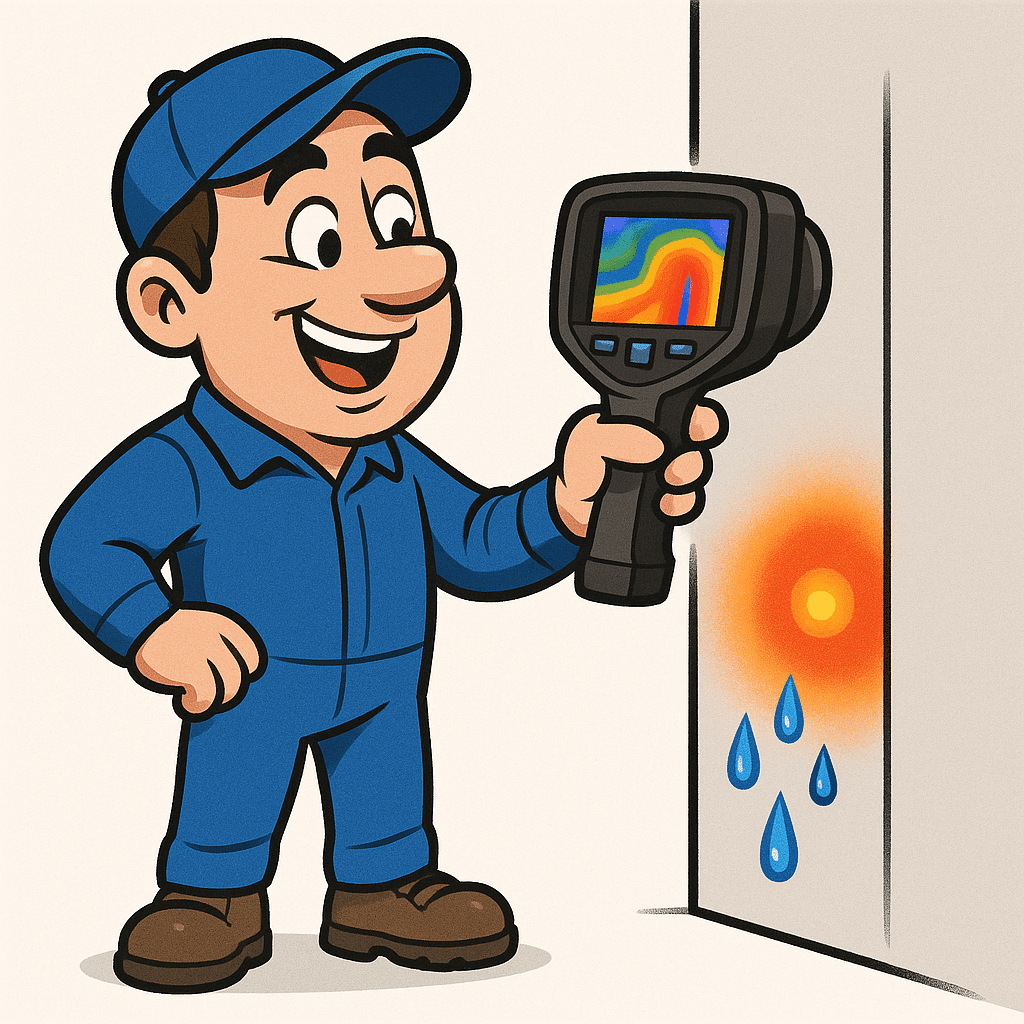
If you would rather not gamble on lifting floorboards or opening a wall, this is the point to pause. Non-destructive equipment can confirm or rule out a leak without any damage at all.
Call us on 07700 152 467 and we will tell you honestly whether your symptoms justify a survey. Sometimes they do not, and we will say so.
Checks 6 to 10: the system and outside
6. Run the stop valve test
Find your inside stopcock (usually under the kitchen sink) and close it last thing at night. If the hissing you heard earlier stops, the leak is on the mains cold side. If boiler pressure still drops with the mains off, the leak is on the heating circuit instead. Not sure where your valve is? Read our guide to finding your stopcock first.
7. Feel the floors
Walk barefoot through the house and pay attention to warm patches on solid floors, away from radiators and sunny windows. A warm spot on a kitchen or hallway floor is a classic sign of a leaking hot water or heating pipe in the screed below.
8. Inspect the loft
Older Scottish homes often have a cold water storage tank in the loft. Check around the tank for overflow marks, look at the insulation for damp or compressed patches, and follow any pipe runs you can see. Frost damage from previous winters often shows here first.
9. Look outside
Walk the line between your outside boundary stopcock and the house. An unusually lush strip of grass, moss between monoblock setts, a persistently wet patch of driveway in dry weather or a sunken area of ground all point to a supply pipe leak. Our guide to finding an underground water leak covers this in full.
10. Isolate circuits one at a time
If you have isolation valves on individual runs (bathroom, kitchen, garden tap), close them one at a time and repeat the listening test after each. When the noise stops, you have just isolated the circuit with the leak on it. Note which valve did it; that detail saves time when a professional arrives.
What the professionals do differently
The checks above narrow a leak down to a circuit or an area. Pinpointing it to a repair spot is a different job, and it is where specialist equipment earns its keep.
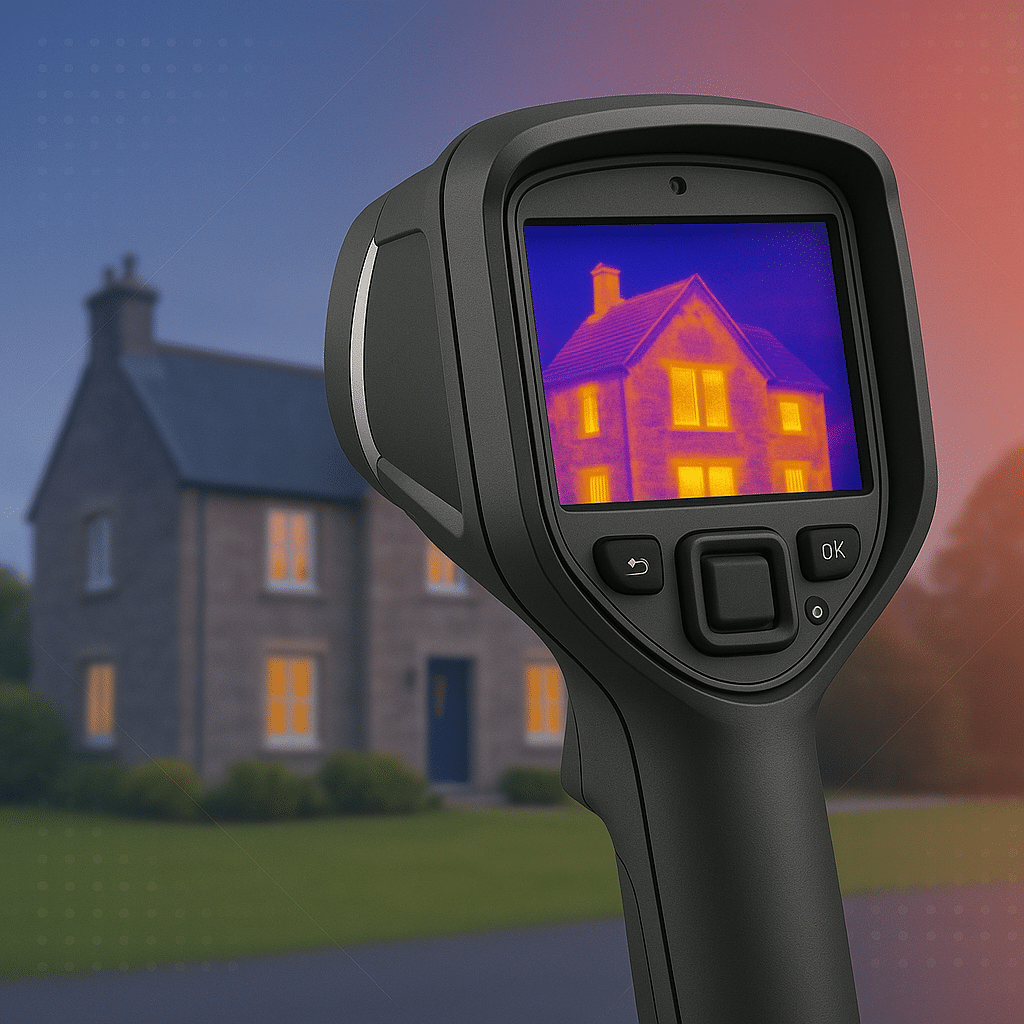
A thermal imaging camera reads the surface temperature of walls and floors and shows where leaking hot water, or evaporative cooling from cold water, has changed it. Acoustic ground microphones amplify the noise a pressurised leak makes so an engineer can follow it to its loudest point. Tracer gas finds leaks that make no usable noise at all.
Used together, these methods locate most leaks to within a very small area, which is the difference between lifting one floorboard and lifting a floor.
| Approach | What it can tell you | What it cannot |
|---|---|---|
| DIY checks (this guide) | Whether a leak exists and roughly which circuit it is on | The exact repair point |
| Exploratory opening-up | Eventually finds the leak | How much of your home survives the search |
| Professional detection | The location, usually without damage | – |
When to stop DIY and call someone
Stop when the next step involves damage. Everything in this guide is observation: looking, listening, feeling and isolating. The moment you are tempted to lift flooring, chase plaster or dig up a path on a hunch, the maths changes. A wrong guess costs more than a survey, and we regularly arrive at homes where two or three wrong guesses have already been made.
Call sooner if water is actively coming through a ceiling, if plaster is sagging, or if the leak is on the supply pipe outside, because in Scotland the owner is responsible for repairing that pipe. MCR Leak Detection provides water leak detection across Scotland, 24/7, using non-destructive methods, and every survey ends with a clear answer about where the water is going.
Speak to MCR Leak Detection
Done the checks and still chasing it? Our engineers pinpoint hidden leaks across Scotland with thermal, acoustic and tracer gas equipment, without ripping your home apart. Available 24/7 for emergencies.
Frequently asked questions
How do I find a water leak without a water meter?
Use system-based checks instead. Close the stopcock and listen for pipe noise stopping, monitor boiler pressure over several days, dye-test the toilets and inspect visible pipework. Most Scottish homes are unmetered, so these checks replace the meter-reading test used elsewhere in the UK.
Can a water leak stop on its own?
Very rarely, and never reliably. Debris or corrosion can slow a pinhole temporarily, but pressurised water enlarges any weakness over time. A leak that seems to have gone quiet has usually just found a different route, so treat any confirmed leak as live until it is located and repaired.
What does a hidden water leak sound like?
A faint, constant hiss, rush or ticking near pipework when every outlet is off. Mains leaks tend to hiss continuously under pressure. Heating leaks are quieter and often silent, which is why a dropping boiler gauge matters more than your ears on the heating side.
Who is responsible for fixing a leak at my home in Scotland?
Everything from the property boundary into the house, including internal plumbing, is the owner’s responsibility. Scottish Water looks after the water main, the communication pipe and the boundary stopcock, as set out on the Scottish Water website.
How much does professional leak detection cost?
Market guides put UK leak detection surveys in the mid-hundreds of pounds, with ADI Leak Detection advertising surveys from £595 plus VAT. Prices vary with property size and access, so ask for a quote for your specific situation before booking anyone.
Related reading
- 12 signs of a hidden water leak in your home
- How to check for a leak when your home has no water meter
- How to find a water leak in a wall or ceiling
- How to find an underground water leak
Or start with our professional leak detection service for homes and businesses across Scotland.