

A small overnight dip is often just the water cooling and contracting, and the gauge recovers once the heating runs. A drop that needs topping up points to a real fault: a tired expansion vessel, a passing pressure relief valve, or a small hidden leak that only shows overnight because nothing else is masking it.
Boiler Pressure Dropping Overnight: What It Usually Means
You go to bed with the gauge sitting at 1.2 bar. By morning it reads 0.6, the boiler has locked out, and you are topping up before breakfast again. When boiler pressure drops overnight, and only overnight, the pattern itself is a clue. The system behaves differently at 3am than it does at 3pm, and that difference narrows down the cause faster than any single check.
This guide explains what happens inside a sealed heating system while the house sleeps, how to tell a harmless dip from a genuine loss, and why overnight drops so often turn out to be small hidden leaks. If your pressure falls at all hours, start with our broader guide to why boilers lose pressure instead.
What’s in this guide
Why boiler pressure drops overnight and not by day
A sealed system is a fixed loop of water under pressure. Three things change overnight. The heating switches off, so the water cools for hours at a stretch. Nobody runs taps or showers, so nothing masks a slow escape. And the house is silent, which is why the morning gauge reading is the most honest reading of the day.
That long cool-down is the key. Water expands when heated and shrinks as it cools. During the day the boiler keeps cycling, so the system never fully cools and the gauge never shows you the true cold pressure. Overnight it does. Some of what looks like a loss is physics. The rest is a fault, and the sections below separate the two.
Cooling contraction: the drop that fixes itself
As the system cools from running temperature down to a December-in-Scotland ambient, the water contracts and the gauge falls. A modest overnight dip that recovers once the heating has run for an hour is contraction, not a leak. No water has left the system. Nothing needs topping up.
The tell is simple. If you have to open the filling loop to get the pressure back, water has genuinely gone. If the gauge climbs back to its usual figure on its own as the system heats, it never left. Plenty of people top up out of habit each morning and accidentally over-pressurise the system by mid-afternoon, which causes its own problems. Our guide to repressurising a boiler covers when topping up helps and when it makes things worse.
The overnight gauge test
Before anyone opens a floor or condemns a part, run this test for three or four nights. It costs nothing and it tells you which kind of problem you have.
1. Set a known starting point
With the system cold, top up to your boiler’s recommended cold pressure. Most sit between 1 and 1.5 bar cold, and the manual or the coloured zone on the gauge gives the exact figure. Photograph the gauge with your phone so the time is stamped.
2. Read it cold each morning
Take the reading before the heating fires, at the same time each day. Photograph it again. You are comparing cold against cold, which removes contraction from the picture.
3. Read the pattern
Cold-to-cold readings that hold steady mean contraction was fooling you, and there is no loss. A steady slide of the same amount each night means water is leaving at a constant rate, which is the signature of a small leak. A drop that only happens on nights the heating ran late points at the expansion vessel or relief valve, because those faults are triggered by the heat-up itself.
The expansion vessel: the usual mechanical suspect
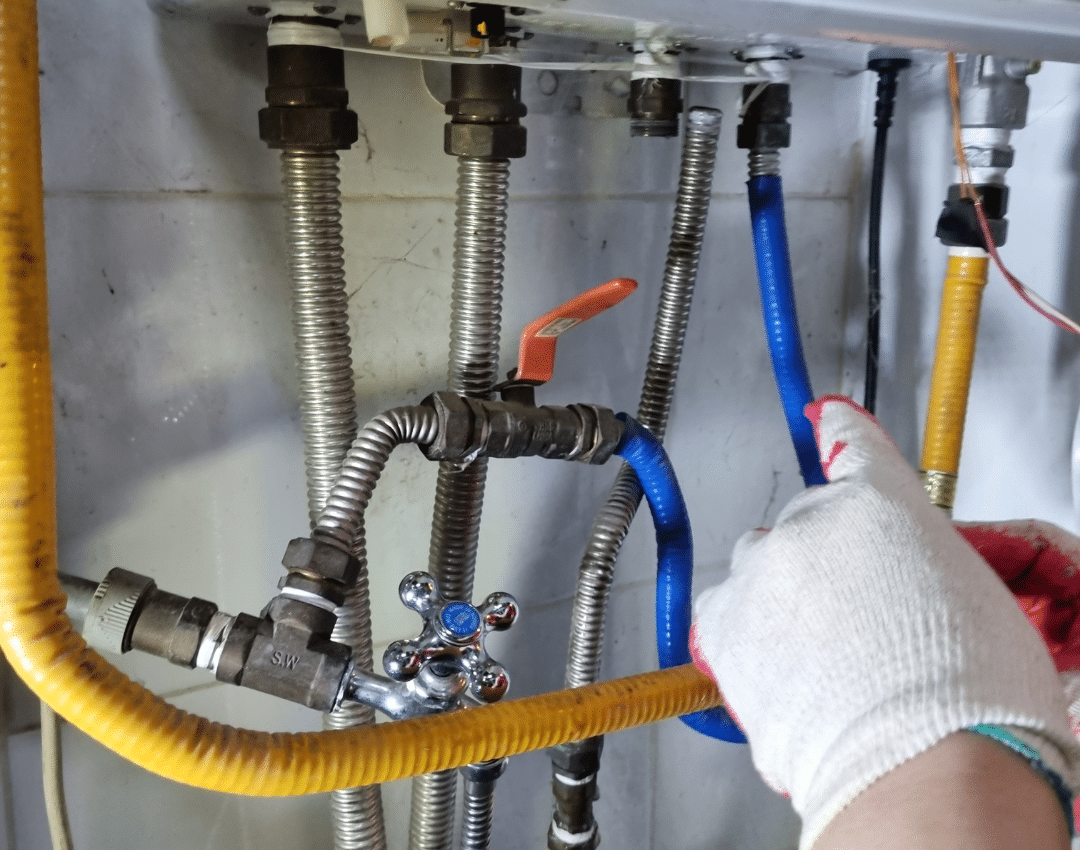
The expansion vessel is a small tank, usually inside the boiler, with a rubber diaphragm and a cushion of pressurised air on one side. When the water heats and expands, it pushes against that cushion instead of pushing the system pressure sky-high.
Over the years the air cushion seeps away or the diaphragm splits. With no cushion, the pressure swings violently: it spikes when the heating runs, the relief valve dumps the excess outside, and by morning the cooled system reads low. From the sofa it looks exactly like a leak. It is really the system throwing water overboard every evening, then showing you the shortfall at dawn.
The classic signs of a flat vessel are a gauge that swings high when hot and low when cold, and a drop that follows heavy heating use rather than time. Recharging or replacing a vessel is a job for a Gas Safe registered engineer, since it means working on the boiler.
The pressure relief valve and the pipe outside
Every sealed system has a pressure relief valve that opens if the pressure climbs too high, discharging through a small copper pipe on an outside wall. Two faults show up here. A flat expansion vessel forces the valve to open every time the system heats, as above. And a valve that has opened a few times often fails to reseat perfectly afterwards, then dribbles constantly, day and night.
Go outside and find that pipe, usually at knee height near the boiler’s wall. Check it on a dry day. A drip, a green stain on the copper, or a wet patch and tide mark on the wall below means your missing water is leaving right there. Cable-tie a small plastic bag over the end overnight if you want proof by morning.
If the boiler checks out: the small hidden leak
Here is the uncomfortable truth about overnight drops. Once the expansion vessel and relief valve are ruled out, the remaining explanation is a leak, and the overnight-only pattern usually means it is a small one. A pinhole weeping a few hundred millilitres a night will barely move the gauge across a busy day but shows clearly across eight silent hours of cooling.
Small heating leaks hide well. The water is dosed with dark inhibitor, it escapes warm so some of it evaporates, and the most common escape points are under floors or inside boxed-in pipe runs. Months can pass before a stain, a lifted board or a musty smell gives it away, and by then the joist below has been wet the whole time. Warm patches on the floor are a strong clue, and we cover that scenario in our guide to a central heating pipe leaking under the floor.
Rather than wait for visible damage, a professional survey finds these leaks while they are still small. We section the system, watch which circuit loses pressure, then pinpoint the escape with thermal imaging or tracer gas. The full method is in our guide on how to find a leak in a central heating system. If you would rather hand the whole diagnosis over, call us on 07700 152 467 and we will trace it without lifting a single board on a guess.
Checks worth doing before you call anyone
Your ten-minute morning inspection
- Cold gauge reading at the same time daily, photographed for three or four days
- The discharge pipe on the outside wall: drips, stains or a filled bag test
- Every radiator valve and bleed plug, checked with dry tissue
- Under the boiler: newspaper left overnight shows any drip by morning
- Floors near pipe runs: warm patches, lifting boards, musty smells
- Ceilings below upstairs radiators for new stains or bubbling paint
One thing we would rather you avoided is pouring in a liquid leak sealer to make the topping-up stop. On a heating circuit it sometimes buys time, but it can clog the boiler’s heat exchanger, and it hides a fault that keeps wetting your floor structure. We have set out the honest trade-offs in our article on whether central heating leak sealer works.
On insurance: if a hidden leak has caused damage, most buildings policies include trace and access cover, which pays for finding the leak and making good the access. MoneySuperMarket, citing Defaqto, puts it at 94% of policies, typically capped between £5,000 and £10,000. Keep your gauge photographs, because they help evidence when the loss started.
Frequently asked questions
Is it normal for boiler pressure to drop slightly overnight?
A small dip on a cold morning is normal, because the water contracts as it cools. The test is whether it recovers by itself once the heating runs. If the gauge returns to its usual figure without you touching the filling loop, no water has left and nothing is wrong.
How much overnight pressure drop means a leak?
Compare cold readings against cold readings at the same time each morning. Any steady fall between them means water is leaving the system, because contraction cancels out. A consistent slide of the same amount every night is the classic signature of a small, constant leak somewhere on the circuit.
Can the expansion vessel cause pressure loss without a leak?
Yes, and it is one of the most common causes. A flat vessel lets the pressure spike each time the heating runs, the relief valve dumps the excess water outside, and the cooled system reads low by morning. The water loss is real, but the pipework itself is sound.
Why does the drop only happen overnight and not during the day?
Daytime boiler cycling keeps the system warm, so the gauge rarely shows a true cold reading, and a small loss hides inside those swings. Overnight the system fully cools and sits untouched for hours, so both contraction and any genuine escape finally show up on the morning gauge.
Should I keep topping the boiler up every morning?
As a short-term measure it keeps the heating alive, but every top-up adds fresh oxygenated water that accelerates corrosion inside radiators and the boiler. Treat repeated topping up as a symptom to investigate within weeks, not a routine to live with through the winter.
Speak to MCR Leak Detection
If the morning gauge keeps falling and the boiler checks out, a small hidden heating leak is the likely cause. Our engineers trace them non-destructively across Scotland, 24/7, before the damage spreads.
Related reading
- Boiler Losing Pressure? Causes and What to Do Next
- How to Repressurise a Boiler (and When You Shouldn’t)
- How to Find a Leak in a Central Heating System
- Signs of an Underfloor Heating Leak (and What to Do Next)
Or learn more about our water leak detection across Scotland.