

Usually, yes, but only for sudden escapes of water. Buildings insurance pays for the damage a leak causes, and most policies add trace and access cover to pay for finding it. What it will not pay for is the repair of the worn pipe itself, or damage that built up gradually while a slow leak went unnoticed.
Does Home Insurance Cover Water Leaks? Escape of Water Explained
Water leaks sit in a strange corner of home insurance. Ask “does home insurance cover water leaks” and the honest answer is yes, no and it depends, all at once. The damage is usually covered. The burst pipe itself usually is not. And a slow leak that dripped away behind a wall for a year can fall foul of an exclusion most people never read.
We spend a lot of time on jobs where the insurance claim matters as much as the leak. This guide explains what a typical policy pays for, where the gaps are, and what you can do to keep a claim on track. It is general guidance, not advice on your specific policy, so always check your own wording.
What’s in this guide
What “escape of water” actually means
Insurers group leak damage under one label: escape of water. It covers water getting out of the places it is meant to stay, so a burst pipe, a failed washing machine hose, an overflowing tank, a leaking radiator or a split joint under the bath. Rainwater getting in through the roof is a different peril, and flooding from outside is different again.
The word that matters in most policy wordings is sudden. A pipe that bursts on a Tuesday and soaks the kitchen ceiling is a textbook escape of water claim. A joint that has wept slowly into the floor for eighteen months is a harder conversation, and we cover why below.
What a typical policy covers
Cover splits across the two halves of home insurance:
- Buildings insuranceDamage to the structure and fixed parts of the home: ceilings, walls, plaster, fitted kitchens, flooring and decoration ruined by the water. If a ceiling comes down or a floor swells, this is the section that responds.
- Contents insuranceYour belongings: carpets, rugs, furniture, electricals and anything else the water reached that is not bolted to the building.
- Trace and accessThe cost of finding the leak and making good the hole cut to reach it. This is the part most relevant to what we do, and it gets its own section below.
- Alternative accommodationMany policies contribute to somewhere to stay if the house is uninhabitable while it dries out.
What is usually not covered
This is where claims go wrong, so it is worth being blunt.
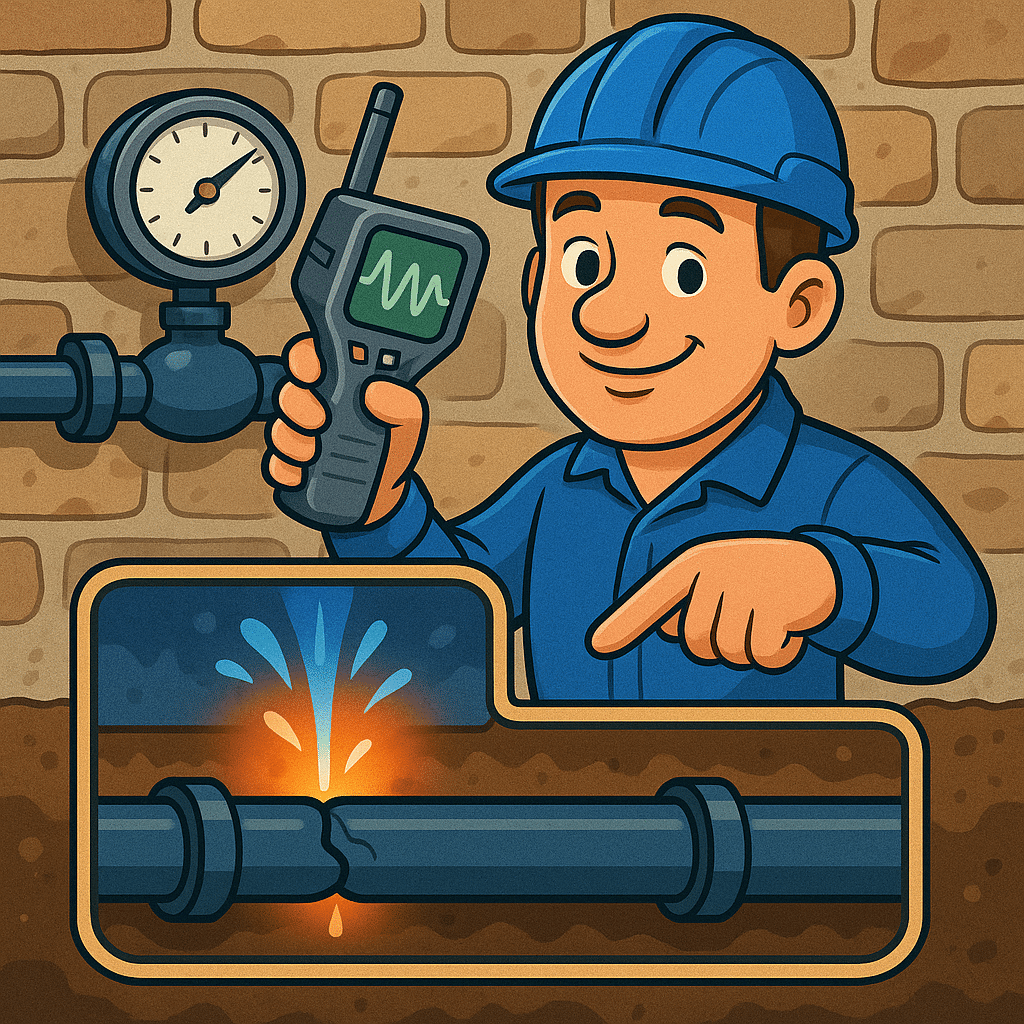
- The failed part itselfRepairing or replacing the pipe, joint, valve or appliance that leaked is normally your own cost. Insurance covers the damage the water did, not the plumbing fault that caused it.
- Gradual damageMost policies exclude damage that happened slowly over time. If a leak clearly ran for months, an insurer can argue the loss was gradual rather than sudden. Our guide to slow leaks and insurance covers this in detail.
- Wear, tear and poor maintenanceCorroded pipework, perished seals and long-ignored drips are treated as maintenance you should have dealt with.
- Unoccupied homesLeave a property empty beyond the number of days set in your policy and escape of water cover is often restricted or removed.
None of this means a slow leak claim always fails. It means the sooner a hidden leak is found and stopped, the stronger your position. If you suspect one, do not sit on it. Learn the signs of a hidden water leak and act on them.
Trace and access: the cover that finds the leak
Damage repair is only half the problem. Before anyone can fix a hidden leak, someone has to find it, and that is what trace and access cover pays for: locating the leak and making good whatever had to be opened up to reach it.
MoneySuperMarket, citing Defaqto, reports that 94% of buildings policies include it, with limits typically between £5,000 and £10,000. The wording matters again here: it pays for finding the leak and reinstating the access, not for repairing the pipe. We explain how the cover works claim by claim in our guide to trace and access cover.
In practice this is the cover that pays for a professional detection survey. A specialist pinpoints the leak with thermal imaging, acoustics or tracer gas, opens up one small area, and produces a report your insurer can rely on. That beats paying a contractor to chase the leak through trial and error, then arguing about who funds the redecoration.
Mid-claim and not sure the leak has even been found correctly? Call us on 07700 152 467 and we will locate it before another wall gets opened.
Excesses, and whether to claim at all
Escape of water often carries its own excess, and it is frequently higher than the standard policy excess because insurers see so many of these claims. Check your schedule for a separate escape of water figure before you decide anything.
That figure shapes the decision. If the damage is a stained patch of ceiling and a morning’s painting, paying an excess and recording a claim against the property may not be worth it. If a ceiling is down, floors are swollen and rooms need drying out, claiming is usually the right call. For the step-by-step process, see our walkthrough of making a water leak insurance claim.
The Scottish twist: your water bill will not warn you
In England, a metered household often discovers a leak through a shock water bill. Most Scottish households never get that warning, because water charges are collected through council tax and homes are unmetered. Scottish Water confirms that a leak does not raise a household water bill here.
That matters for insurance. With no bill to flag it, a hidden Scottish leak tends to run longer before anyone notices, and longer-running leaks push claims towards the gradual damage exclusion. The first sign is often the damage itself: a damp patch, a musty smell, a dropping boiler pressure gauge. Treat those signs as the warning your bill will never give you.
How to protect your claim
If you find a leak, do these before anything else
- Stop the water at the stop valve and, if needed, drain the system
- Photograph everything before you move or dry anything
- Report the claim promptly and note who you spoke to
- Keep receipts for emergency work and anything you buy to limit damage
- Get the leak professionally located and ask for a written report
The detection report earns its keep twice. It shows the insurer exactly where the leak was and what access was required, and it dates the discovery, which helps counter any suggestion that you ignored the problem. We cover what goes into one in our guide to leak detection reports for insurance.
Frequently asked questions
Does home insurance cover the cost of finding a leak?
Usually, yes. Trace and access cover pays for locating the leak and making good the access, and MoneySuperMarket, citing Defaqto, reports 94% of buildings policies include it. Limits commonly sit between £5,000 and £10,000. Check your schedule for the exact figure before commissioning work.
Does insurance pay to repair the leaking pipe itself?
Normally, no. The pipe, joint or appliance that failed is treated as a maintenance cost, so the repair comes out of your own pocket. The policy responds to the damage the escaping water caused: ceilings, walls, floors, decoration and contents, subject to your excess.
Will a slow, long-running leak be covered?
It is harder. Most policies exclude gradual damage, and a leak that ran unnoticed for months can be argued into that exclusion. Acting quickly once signs appear, and getting the leak professionally located and documented, gives you the best chance of a fair settlement.
Is there a separate excess for water leak claims?
Often, yes. Many insurers apply a specific escape of water excess that is higher than the standard policy excess. It is printed on your policy schedule. Weigh that figure against the scale of the damage before deciding whether a claim is worthwhile.
Do I need a leak detection report for my claim?
Insurers increasingly ask for one, especially where trace and access cover is being used. A professional report pinpoints the leak, records the moisture damage found and shows the access was justified. It usually speeds the claim up rather than slowing it down.
Speak to MCR Leak Detection
If a leak is damaging your home and a claim is looming, we pinpoint it non-destructively and provide a clear written report your insurer can work with. Scotland-wide, 24/7.
Related reading
- What Is Trace and Access Cover? Home Insurance Explained
- How to Make a Water Leak Insurance Claim (Step by Step)
- Slow Water Leaks and Insurance: What’s Covered and What’s Not
- Who Pays When There’s a Water Leak? Owner, Neighbour or Scottish Water
Or learn more about our water leak detection across Scotland.