

Stop the water, photograph everything, then call your insurer before committing to major work. Use trace and access cover to pay for finding a hidden leak, keep every receipt, and remember the split: insurance covers the damage, not the repair of the pipe that failed. Prompt action protects the claim.
How to Make a Water Leak Insurance Claim (Step by Step)
A water leak insurance claim is really two jobs at once. There is the leak itself, which needs found and fixed, and there is the paper trail, which decides how much of the damage someone else pays for. Handle the first well and the second usually follows. Handle it badly, dry everything, bin the evidence, patch the ceiling, and you can turn a solid claim into an argument.
We work alongside insurance claims every week, providing the detection surveys and reports that loss adjusters ask for. This is the process we would follow in your position, step by step.
What’s in this guide
The seven steps, in order
Step 1: Stop the water and make the property safe
Shut the stop valve, isolate electrics near the water, and contain what you can. Insurers expect you to limit the damage, so emergency action is not just sensible, it protects the claim. If the leak is active and dramatic, our burst pipe guide covers the first ten minutes.
Step 2: Record everything before you tidy anything
Photos and video of the water, the damage, the affected rooms and the source if you can see it. Wide shots and close-ups. Note the date and time you discovered it. This five minutes of filming is the cheapest insurance evidence you will ever gather.
Step 3: Read your policy before you ring
Find three things in your schedule: the escape of water excess (often higher than the standard one), whether you have trace and access cover, and any conditions about approved contractors. Knowing these shapes every conversation that follows. Our guide to what home insurance covers on water leaks explains the jargon.
Step 4: Notify your insurer promptly
Report the claim as soon as you reasonably can, even if you do not yet know the full extent. Late notification is an avoidable own goal. Ask what they need from you, whether they are sending a loss adjuster, and whether you can instruct your own leak detection under trace and access cover. Note the claim reference and the name of everyone you speak to.
Step 5: Get the leak professionally located
If the source is hidden, a professional detection survey pinpoints it without exploratory demolition and produces the written report insurers ask for. Most policies fund this through trace and access cover. Keep the invoice; it forms part of the claim.
Step 6: Fix the leak, keep the parts if asked
The pipe repair itself is normally your own cost, but it needs done before drying and reinstatement start. Keep the plumber’s invoice, and if the insurer asks to see the failed section of pipe or fitting, keep it. It is evidence of a sudden failure rather than long-term neglect.
Step 7: Agree the reinstatement scope, then let drying finish
Damage repairs, drying, replastering and redecoration get agreed with the insurer or adjuster before work starts. Rushing paint onto a damp wall to close the job early is a false economy that comes back as a dispute.
What insurance pays for, and the split that confuses everyone
Escape of water cover pays for the damage water did to your building and contents. It does not normally pay to repair the failed pipe, joint or appliance, that is treated as maintenance. Sitting between the two is trace and access, the cover that pays to find a hidden leak and make good whatever was opened to reach it.
MoneySuperMarket, citing Defaqto, reports that 94% of buildings policies include trace and access, with limits usually between £5,000 and £10,000. We break the cover down fully in our guide to trace and access cover.
Dealing with the loss adjuster
On larger claims the insurer appoints a loss adjuster to inspect the damage and agree the scope. Remember whose side they sit on: the adjuster works for the insurer. Be accurate, be organised, and do not guess at answers about when the leak started.
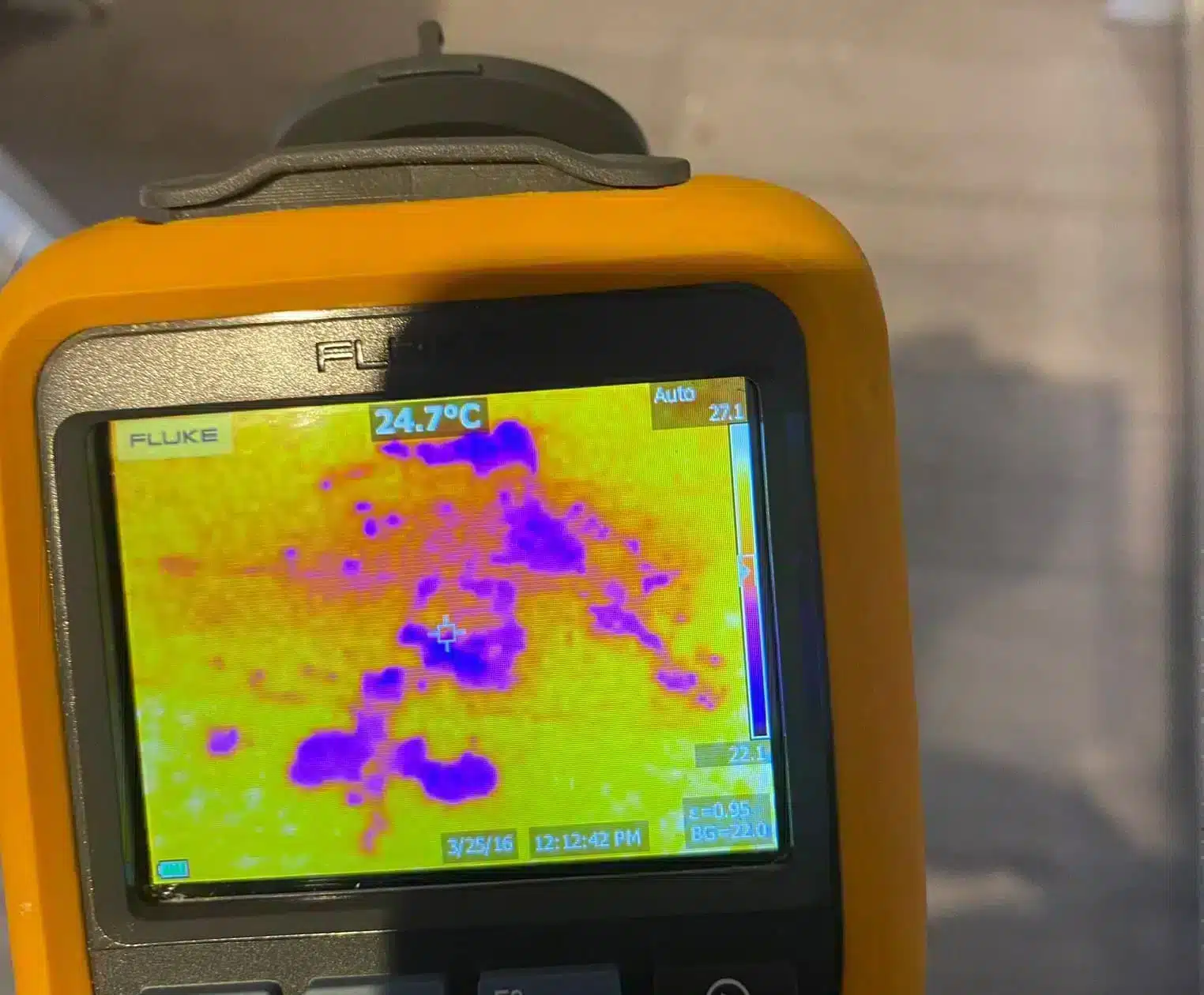
What strengthens your position at the adjuster visit:
- A detection reportAn independent survey showing exactly where the leak was, how it was found and what moisture damage it caused. It answers the adjuster’s hardest questions before they are asked. See what goes into a leak detection report.
- Your photo and video timelineDated evidence from the day of discovery beats memory every time.
- A simple claim fileReceipts, invoices, the claim reference and notes of every call, in one folder.
If the adjuster’s account of the leak does not match what you saw, or the source was never properly confirmed, you can commission your own survey. Call us on 07700 152 467 and we will establish where the water actually came from before the scope gets signed off.
Why a water leak insurance claim gets refused
- Gradual damageThe big one. Policies cover sudden escapes of water, and damage that built up over months can be excluded. Acting quickly on the first signs, and documenting when you discovered the problem, is your best defence. Our article on slow leaks and insurance covers this exclusion in depth.
- Wear, tear and lack of maintenanceCorroded pipework and long-ignored drips get classed as maintenance failures. Fix small problems when they appear, and keep evidence that you did.
- Late notificationSitting on a claim for weeks gives an insurer room to argue the damage worsened on your watch. Report promptly, even with incomplete information.
- UnoccupancyMost policies restrict escape of water cover once a home is empty beyond a set number of days. If you have an empty property, check this clause before winter, not after.
- Guessed answersSaying “it has probably been leaking for ages” on the first phone call can haunt a claim. If you do not know, say so, and let the evidence establish the timeline.
The Scottish twist: no water bill warning
In metered England, a hidden leak often announces itself through a shock water bill. Most Scottish households pay for water through council tax and have no meter, and Scottish Water confirms a leak does not raise a household bill here. No bill, no early warning.
For claims, that cuts two ways. Scottish leaks tend to run longer before discovery, which pushes towards the gradual damage argument. So the moment you notice a damp patch, a musty smell or a boiler that keeps losing pressure, the clock is running. Investigate, document the discovery date, and get the source confirmed quickly.
Frequently asked questions
Should I claim for a small water leak at all?
Weigh the damage against your escape of water excess, which is often higher than the standard excess. A stained ceiling patch may cost less to repair than the excess plus the effect on future premiums. Serious damage, soaked floors or a collapsed ceiling almost always justify claiming.
Do I need to wait for the insurer before fixing the leak?
No. You are expected to stop the damage getting worse, so emergency work should happen straight away. Just record everything first, keep all receipts and keep any failed parts. What you should agree in advance is the reinstatement work, the drying, replastering and redecoration.
Who pays for finding the leak?
Usually your insurer, through trace and access cover, which MoneySuperMarket, citing Defaqto, reports is included in 94% of buildings policies. It pays to locate the leak and make good the access, typically up to £5,000 to £10,000. The repair of the pipe itself normally stays your cost.
What if my water leak claim is refused?
Ask for the refusal in writing with the specific policy wording relied on. Then challenge it with evidence: a detection report, your dated photos and proof of prompt action. If the insurer will not move, you can escalate through their formal complaints process and then to the independent ombudsman.
How long does a water leak insurance claim take?
Simple claims with clear evidence can settle in a few weeks. Larger ones run longer because drying alone can take weeks before reinstatement starts, and adjuster visits add lead time. The fastest claims are the well-documented ones where the leak source was confirmed early.
Speak to MCR Leak Detection
A strong claim starts with knowing exactly where the leak is. We locate hidden leaks non-destructively across Scotland, 24/7, and provide the written report your insurer and adjuster will ask for.
Related reading
- Does Home Insurance Cover Water Leaks? Escape of Water Explained
- What Is Trace and Access Cover? Home Insurance Explained
- Why Insurers Ask for a Leak Detection Report (and What’s in One)
- Slow Water Leaks and Insurance: What’s Covered and What’s Not
Or learn more about our water leak detection across Scotland.