

Turn the stopcock off, open the cold taps to drain the pipes, and switch off electrics in any soaked area at the consumer unit. Move what you can, catch the rest in buckets, and photograph everything before you tidy up. Then work out whose pipe it is before you pay anyone to dig.
Burst Water Pipe? What to Do in the First 10 Minutes
A burst water pipe at mains pressure can put hundreds of litres into your home in an hour. The difference between a soggy carpet and a collapsed ceiling is rarely luck. It is how fast the water was stopped and drained. So here is the drill, in the exact order to do it, followed by the Scottish responsibility rules that decide who pays when the burst is outside.
If the water is coming through a ceiling from a flat or floor above, start with our guide to water coming through the ceiling as well, because piercing the bulge safely is its own job.
What’s in this guide
Burst water pipe: what to do in the first 10 minutes

1. Stopcock off
The internal stopcock is usually under the kitchen sink, in a hall cupboard or where the mains enters the house. Turn it clockwise until it stops. If it is seized or you cannot find it, use the outside stop valve at the property boundary. Never used yours? Our guide to finding your stopcock is worth reading before you ever need it.
2. Open the cold taps
Open every cold tap in the house and flush the toilets. This drains the pipework down fast, so the burst stops flowing minutes sooner than it otherwise would.
3. Kill wet electrics
If water has reached sockets, light fittings or the consumer unit, switch off the affected circuits, or the whole board if in doubt. Do not touch anything electrical that is already wet; stand somewhere dry and use the breakers.
4. Switch off the boiler and heating
With the mains off, the heating system and any hot water cylinder should not be left running. Switch the boiler off at its control or spur until the repair is done.
5. Contain and rescue
Buckets and basins under active drips, towels rolled against door thresholds, furniture lifted onto blocks or moved out. If a ceiling below the leak is bulging, place a bucket, then pierce the centre of the bulge with a screwdriver to let the water through in a controlled stream. A drained ceiling is often saveable. A collapsed one is not.
6. Photograph everything
Before any clean-up, photograph and video the burst, the standing water and every damaged item, with timestamps. Your insurer will ask, and evidence gathered in the first hour is worth far more than a description given a week later.
Once the flow has stopped
With the water off, the job splits in two: fix the pipe, and dry the building. For a visible burst, a plumber can repair the section the same day. If water was escaping somewhere you cannot see, perhaps you only found the burst because a ceiling let go, get the escape point confirmed before repairs close everything back up. We locate hidden bursts non-destructively; call 07700 152 467 and we will pinpoint it before anyone opens a wall on a guess.
Drying matters more than people expect. Soaked joists, insulation and plaster hold water for weeks, and mould follows. Keep the area ventilated, lift wet floor coverings, and if the soaking is substantial, ask your insurer about professional drying equipment early, because it is routinely covered as part of the claim.
Bursts outside: whose pipe is it?
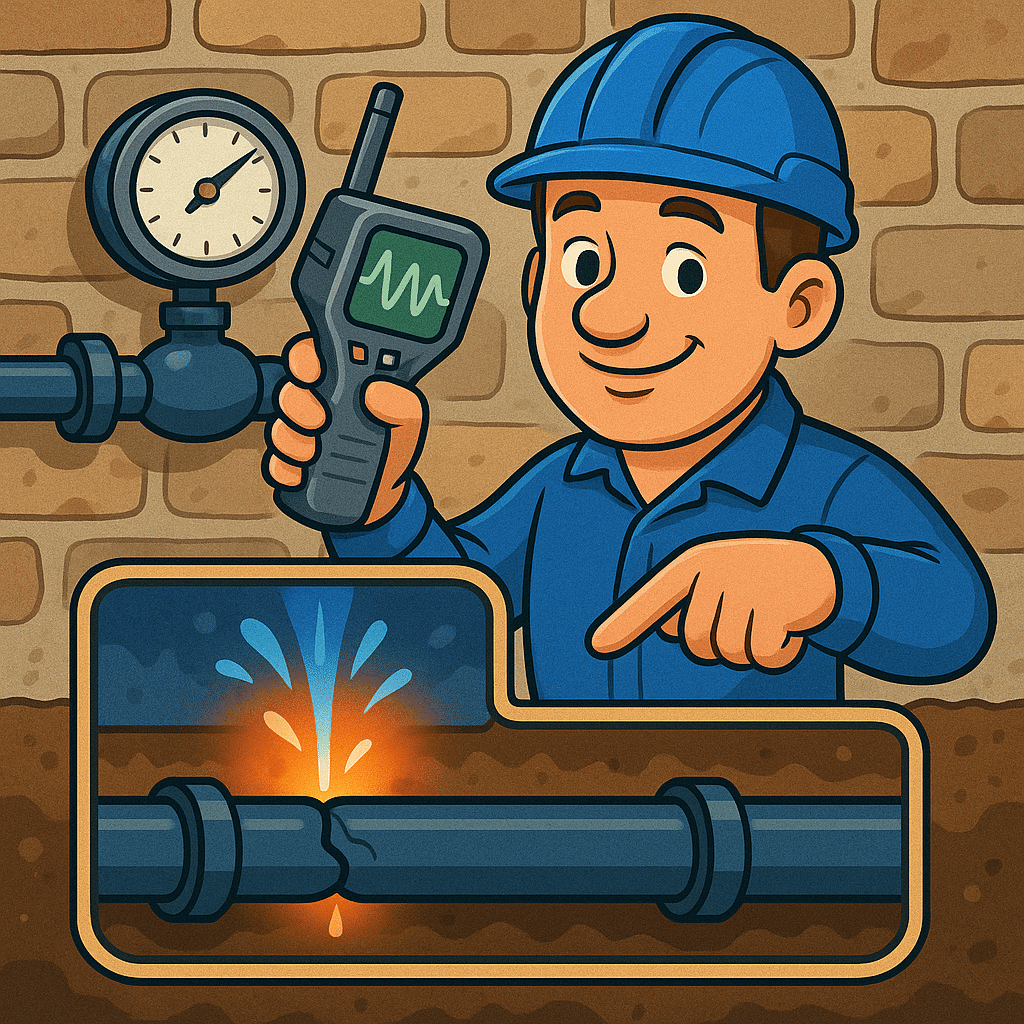
If the burst is in the street, the garden or the driveway rather than inside the house, responsibility follows the pipe. In Scotland the split works like this: Scottish Water owns the water main, the communication pipe up to your property boundary and the boundary stopcock. You own the supply pipe from the boundary into the house, plus all the internal plumbing, and that includes the section running under your garden, driveway or monoblock.
So a burst in the road or pavement is Scottish Water’s job to fix, and you should report it to them. A burst between your boundary and your front door is yours, and under the Water (Scotland) Act owners are legally obliged to repair supply pipe leaks; Scottish Water can serve notice, carry out the repair and charge the owner if a leak is left running.
Flats and older terraced houses often share a single supply pipe with the neighbours, which makes the repair a joint responsibility. Scottish Water’s pipes FAQ explains the shared arrangement, and our guide to who is responsible for water pipes in Scotland works through the common cases, including the assisted repair Scottish Water may offer through its supply pipe repair policy.
Evidence for your insurer
Escape of water is one of the most common home insurance claims, and the ones that settle smoothly share the same feature: good evidence from day one. Keep the burst section of pipe if it is cut out, since it shows the cause. Keep every photograph and video. Note the date and time you found the burst, when you shut the water off, and who you called.
Your claim evidence pack
- Photos and video of the burst, standing water and damage, timestamped
- The cut-out section of failed pipe, if the plumber removes it
- Invoices and reports from the plumber and any detection survey
- A dated list of damaged items, with rough values
- Notes of every call to the insurer, with names and reference numbers
If the burst was hidden and had to be traced, most buildings policies include trace and access cover, which MoneySuperMarket, citing Defaqto, reports appears in 94% of policies, typically capped between £5,000 and £10,000. It pays for locating the leak and making good the access. Our guide on claiming for a water leak on insurance walks through the process end to end.
Why pipes burst in Scotland, and when
The honest answer is winter. Water expands as it freezes, splits the pipe, and the burst shows itself during the thaw. Scottish Water dealt with around 3,100 bursts on its network in winter 2023/24, and over 30% of winter bursts happen on customer property, the side of the boundary you are responsible for. The rest of the year, bursts come from corrosion in older copper and steel, failed compression joints, nails through pipes during DIY, and ground movement working on buried supply pipes.
Prevention is mostly a winter job: lag the exposed runs, keep background heat on during hard frost, and deal with a freeze properly before it becomes a burst. We cover the thawing drill in frozen pipes: how to thaw them safely.
Frequently asked questions
Where is my stopcock likely to be?
Most Scottish homes have the internal stopcock under the kitchen sink, in a hall or utility cupboard, or where the mains pipe enters the building. Flats sometimes have it on the landing or in a shared close. There is also an outside stop valve at the property boundary, usually under a small cover.
The stopcock is off but water keeps coming. Why?
The pipes and any storage tanks are still draining down, which can take several minutes. Opening all the cold taps speeds it up. If strong flow continues long after that, the stopcock may not be closing fully, or the burst may be on a section before the stopcock, so use the outside stop valve as well.
Who do I call first: a plumber, my insurer or Scottish Water?
Stop the water yourself first, since nobody arrives faster than your own hand on the stopcock. Then call a plumber for a visible burst, or a leak detection engineer for a hidden one. Report bursts beyond your boundary to Scottish Water. Notify your insurer the same day if there is meaningful damage.
Will a burst pipe raise my water bill in Scotland?
For most households, no. The majority of Scottish homes are unmetered and pay for water through council tax, so a burst does not inflate a bill the way it would in a metered English home. Metered businesses are different, and can apply for a burst allowance through their licensed provider.
Is a burst under the garden or driveway my problem?
Usually yes. The supply pipe from the property boundary to the house belongs to the owner, including where it runs under gardens, paths and driveways. Scottish Water is responsible up to and including the boundary stopcock. Shared supply pipes in flats and terraces split the cost between the owners they serve.
Speak to MCR Leak Detection
Water stopped but you cannot see where it was escaping? We locate hidden and underground bursts non-destructively across Scotland, 24/7, and provide the report your insurer will want to see.
Related reading
- Frozen Pipes: How to Thaw Them Safely and Prevent a Burst
- Where Is My Stopcock? How to Shut Off Your Water in an Emergency
- Water Coming Through the Ceiling: Emergency Steps That Limit Damage
- Who Is Responsible for Water Pipes in Scotland?
Or learn more about our water leak detection across Scotland.