

The most reliable signs of a hidden water leak are damp patches, a musty smell, boiler pressure that keeps dropping, warm spots on floors and the sound of running water when everything is off. One sign alone can have another cause. Two or more together usually mean water is escaping, and the leak should be located before it does real damage.
12 Signs of a Hidden Water Leak in Your Home
Hidden leaks are patient. A pinhole in a heating pipe under a solid floor can weep for months, quietly soaking screed and joists while the room above looks fine. By the time most people call us, the leak has been running for weeks and the visible damage is only the tip of it.
The good news is that leaks almost always leave clues. Because most Scottish households are unmetered and pay for water through council tax, there is no rising bill to warn you, so knowing the signs of a hidden water leak matters more here than anywhere else in the UK. Here are the twelve we look for on every survey, roughly in the order homeowners tend to notice them.
Jump to a sign
- 1. Damp patches and stains
- 2. A musty smell
- 3. Dropping boiler pressure
- 4. Warm spots on the floor
- 5. The sound of running water
- 6. Mould in odd places
- 7. Low water pressure
- 8. Swollen or lifting flooring
- 9. Peeling paint and bubbling plaster
- 10. Lush or soggy ground outside
- 11. Tide marks and salt deposits
- 12. Radiators with cold spots
1. Damp patches and stains that come back
The classic sign, and the most misread one. A brown ring on a ceiling, a dark patch at skirting level or a stain that returns after redecorating all point to water arriving from somewhere it should not. The catch is that water travels. It runs along joists, pipes and the back of plasterboard, so the stain is rarely directly below the leak. If a patch keeps growing or reappearing, treat it as live. Our guide to damp patches with no obvious leak explains how to tell a leak from condensation and penetrating damp.
2. A musty smell that will not air out
Damp materials feed mould and bacteria, and they give off a smell most people describe as earthy or musty. If one room smells damp no matter how often you open the windows, moisture is being topped up from somewhere. Smell is often the earliest warning of all, arriving before anything is visible.
3. Boiler pressure that keeps dropping
A sealed heating system loses meaningful pressure only if water is leaving it. If you are topping up the boiler every week, that water is going somewhere, usually into a floor or wall void. Keep a note of the gauge reading morning and evening for a few days. A slow, steady fall is the signature of a small heating leak. There are other causes, and our boiler pressure guide works through them, but repeated top-ups should never be treated as normal.
4. Warm spots on the floor
Hot water and heating pipes buried in solid floors are common in Scottish homes built or renovated from the 1970s on. When one leaks, the escaping hot water warms the slab above it. If your bare feet find a warm patch in the hall or kitchen that is nowhere near a radiator, take it seriously. This one sign locates more under-floor leaks than any other.
5. The sound of running water when everything is off
Turn off every tap and appliance on a quiet evening and listen near pipework. A faint hiss, rush or ticking that never stops is pressurised water escaping. If the noise stops when you close the stopcock, you have confirmed a mains-side leak in one step.
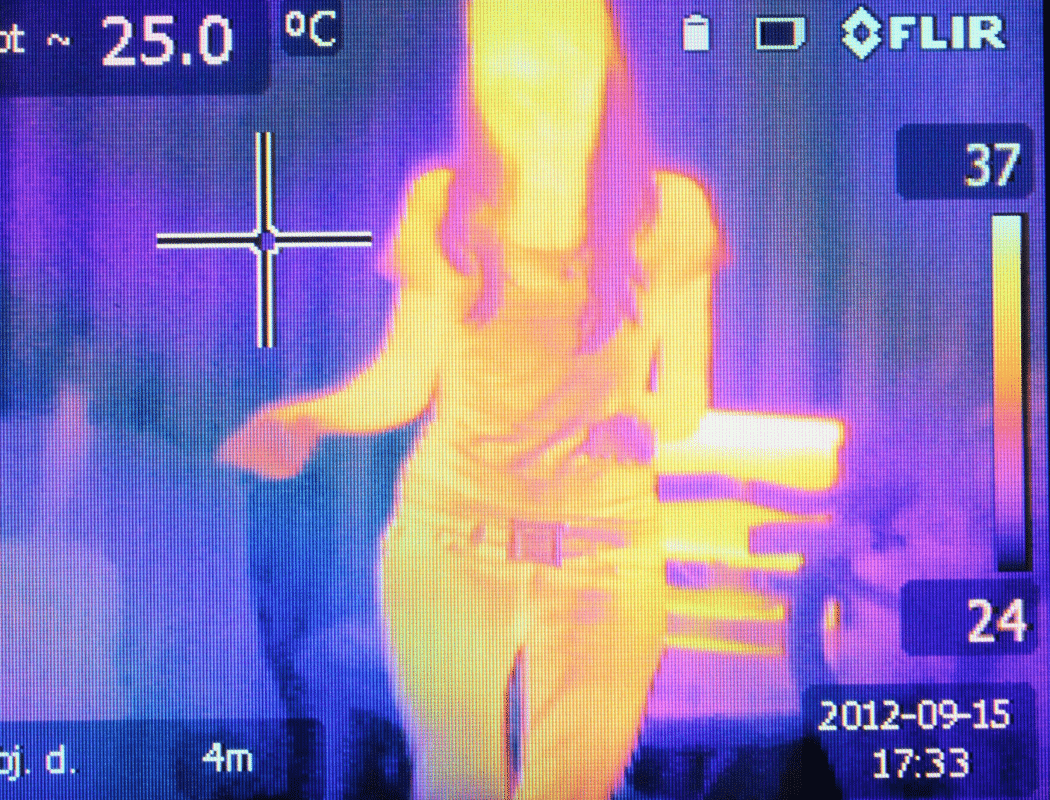
This is roughly the point where guesswork stops paying. A thermal imaging camera shows temperature changes caused by hidden moisture, and acoustic equipment turns that faint hiss into a precise location.
If you have ticked two or more signs on this list, call us on 07700 152 467 before opening anything up. Locating the leak first means one small repair hole instead of several exploratory ones.
6. Mould growing in odd places
Condensation mould favours cold corners, window reveals and bathroom ceilings. Leak mould turns up in places condensation cannot explain: the middle of a wall, inside one cupboard, along one run of skirting. Location is the clue. Mould needs a constant moisture supply, so mould in an unusual spot means water is arriving there constantly.
7. Low water pressure at taps or the shower
A drop in pressure across the whole house, when neighbours are unaffected, can mean your supply pipe is losing water before it reaches you. A gradual decline over weeks fits a growing leak. A sudden drop fits a burst. Either way, if pressure has changed and Scottish Water reports no work in your area, the pipe between the boundary and your kitchen tap is the prime suspect.
8. Swollen, lifting or creaking flooring
Timber and laminate move when they get wet. Boards that cup at the edges, laminate that lifts or peaks at the joints, or a floor that has recently started creaking underfoot are all absorbing moisture from below. Solid floors show it differently: dark patches in the screed or tiles that sound hollow when tapped.
9. Peeling paint and bubbling plaster
Moisture migrating through a wall pushes paint and wallpaper off from behind. Blistering emulsion, flaking paint on one patch of wall or plaster that sounds hollow and crumbles at the surface all say the wall is wet inside. On lime-plastered stone walls, common in older Scottish housing, the surface may just feel cold and slightly soft.
10. Lush grass or soggy ground outside
Outside leaks feed the ground above them. A stripe of noticeably greener grass, moss thriving between monoblock setts, or a patch of driveway or path that stays wet in dry weather usually sits over a leaking supply pipe. Remember that in Scotland the pipe from the boundary to the house belongs to the homeowner, as Scottish Water sets out, so this one is yours to fix. Our guide to underground water leaks covers what to do next.
11. Tide marks and white salt deposits
As leaked water dries, it leaves minerals behind. White, powdery deposits on brick or plaster, or faint brown tide lines that mark how far a patch once spread, show moisture has been cycling through the material for some time. Fresh tide marks around an old stain mean the leak is still active.
12. Radiators with persistent cold spots
Corrosion inside a heating system produces sludge, and corrosion is what eventually opens pinholes in pipework and radiators. If radiators need bleeding constantly or stay cold at the bottom even after bleeding, the system is corroding somewhere. Paired with pressure loss, it is a strong pointer to a heating circuit leak.
Spotted signs of a hidden water leak? Do this next
Do not start with a crowbar. Note which signs you have and where, run the simple checks in our guide on how to find a water leak, and photograph any visible damage for your insurer. Then get the leak located precisely. Non-destructive detection finds the spot with thermal imaging, acoustic listening and tracer gas, so the repair means one small opening rather than a demolition hunt. MCR Leak Detection does exactly this across the whole of Scotland, 24/7.
Think your home is quietly leaking?
Our engineers confirm and pinpoint hidden leaks without pulling your home apart, anywhere in Scotland. Tell us which signs you have spotted and we will tell you what they mean.
Frequently asked questions
How long can a water leak go unnoticed?
Months, sometimes years. Small heating leaks under solid floors and supply pipe leaks under gardens are the worst offenders because nothing visible changes for a long time. In unmetered Scottish homes there is no water bill warning either, so physical signs are usually the first and only alert.
Is one damp patch enough to justify a leak survey?
Not always. A single patch can be condensation or rain penetration, especially on an exposed wall. Watch it for a week or two. If it grows, returns after drying or appears alongside another sign such as pressure loss, a survey is worth it and will settle the question.
Why does my home smell damp but show no marks anywhere?
Smell travels through voids faster than staining appears on surfaces. A leak under a floor or inside a boxed-in pipe run can make a room smell musty long before anything shows. Moisture meters and thermal imaging can check inside those hidden areas without opening them.
Will my water bill go up if I have a leak in Scotland?
For most households, no. Scottish homes are generally unmetered, with water charges collected through council tax, as explained in Scottish Water’s leakage FAQs. The cost of an ignored leak arrives as property damage instead, which is usually far more expensive.
Can a leak cause damage even if the water dries up each day?
Yes. Intermittent wetting and drying is actually harder on materials than constant damp. It cycles timber through swelling and shrinking, draws salts through plaster and feeds mould each time moisture returns. A leak that only shows when the heating runs still needs locating.
Related reading
- How to find a water leak: 10 ways to track it down
- How to find a water leak in a wall or ceiling
- How thermal imaging finds hidden water leaks
- Water coming through the ceiling: emergency steps
Or learn more about our water leak detection service across Scotland.