
Non-destructive leak detection means finding the exact point of a hidden leak before anything is opened up, using acoustic listening, thermal imaging, tracer gas and moisture mapping. Instead of ripping out floors and walls to hunt for a pipe, you get one small, accurate opening, and the locating cost is often covered by trace and access insurance.
Non-Destructive Leak Detection: What It Means for Your Home
There are two ways to find a leaking pipe. The old way is to follow the damp and start opening things: lift the laminate, pull the skirting, chase the wall, break out a strip of concrete. Sometimes the third or fourth hole finds the pipe. The other way is non destructive leak detection: use instruments to pinpoint the leak first, then make one opening exactly where the repair is needed.
This article explains what the term actually covers, what the pinpoint-first approach saves you in money and mess, the methods behind it, and where your buildings insurance fits in.
What this guide covers
What non-destructive leak detection means
Non-destructive means the search itself does no damage. Every method in the survey works from outside the pipe and outside the building fabric: listening through the surface, reading temperature through flooring, sensing moisture inside a wall, or tracing gas as it rises through screed. Nothing is cut, lifted or broken to find the leak.
The result is a marked point, usually with photographs, readings and a written explanation of what was found. Only then does anyone decide what to open, and that opening is a repair access, not a search party.
The old way: exploratory demolition
Water is misleading. It runs along pipes, joists and membranes and appears somewhere else entirely, which is why the stain on the ceiling is rarely under the leak. We cover that in detail in our guide to finding a leak in a wall or ceiling.
Exploratory work that chases the stain tends to go the same way each time. The first hole finds a wet joist but no pipe. The second finds the pipe, dry. The third finds the right run but the wrong end of it. By the time the leak turns up, the job includes replacing flooring, replastering and redecorating rooms that never needed touching. On a solid floor it can mean broken-out concrete. On a monoblock driveway it can mean a trench through the blocks. Every one of those holes has to be made good, and the making good usually costs more than the search.
What pinpointing saves you
Some sourced numbers put the comparison in context:
A professional survey is not cheap, and we will not pretend otherwise. ADI Leak Detection lists investigations from £595 plus VAT, and Ideal Response puts the typical range at £550 to £1,250. But weigh that against exploratory demolition: new flooring, plastering, decoration, skip hire and days of disruption, with no guarantee the first few holes find anything. Pinpointing first means the destructive work is one opening in the right place. Our leak detection cost guide covers the pricing factors in more depth.
The methods behind it
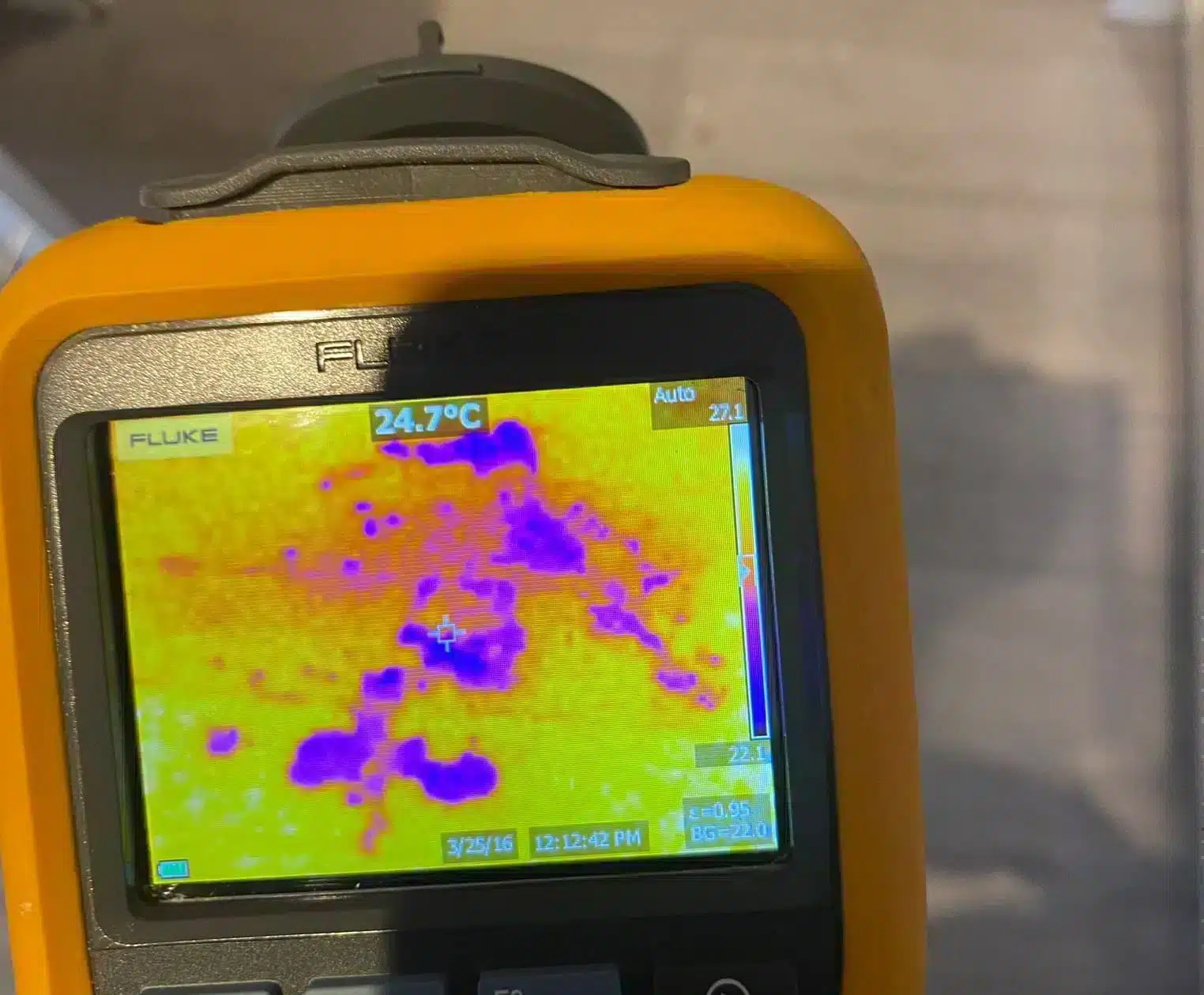
No single instrument finds every leak, so a non-destructive survey draws on a toolkit and picks the right combination for the job:
- Acoustic listeningGround microphones and correlators hear the hiss of pressurised water escaping, even under driveways and roads. See our guide to acoustic leak detection.
- Thermal imagingA thermal camera reads surface temperature differences left by leaking hot pipes or evaporating moisture, covered in how thermal imaging finds leaks.
- Tracer gasA safe hydrogen and nitrogen mix is injected into the drained pipe and detected where it rises at the leak. Ideal for plastic pipe and underfloor heating.
- Moisture mappingMeters profile how damp moves through walls and floors, separating a live leak from condensation or old staining. Our moisture meter guide explains the readings.

Method choice depends on the pipe material, depth, pressure and surface. A copper main under a lawn suits acoustic work. A plastic heating loop in screed calls for tracer gas. A warm patch on a chipboard floor is a thermal job first. On most surveys we layer two or three methods so the second confirms what the first suggests before anything is marked for repair.
If you are staring at a damp patch right now and want it located rather than guessed at, call us on 07700 152 467 and we will talk you through the right survey for your property.
What happens once the leak is found
Locating is half the story. The industry term for the full job is trace and access: trace the leak, then make the access needed to expose the pipe for repair, and make good afterwards. That is a defined piece of work with its own insurance meaning, which we unpack in what is trace and access.
Because the location is known before the first cut, the access is small and deliberate: a lifted section of boards, a neat core through screed, a single excavation over the marked point. You also get a report recording where the leak is, how it was found and what the readings showed. Insurers ask for exactly this kind of evidence when a claim follows.
The insurance angle
Most buildings policies include trace and access cover, which pays the cost of locating a hidden leak and making good the access, though not the pipe repair itself. MoneySuperMarket, citing Defaqto, reports that 94% of buildings policies include it, with typical limits of £5,000 to £10,000. Check your policy wording before you book a survey; if cover is there, the survey and the making good may cost you no more than your excess. Our guide to trace and access cover explains how to use it in a claim.
When some opening-up is still needed
Honesty matters here. Non-destructive methods pinpoint the leak, but the repair still needs the pipe exposed, so there is always some opening at the end. And occasionally the instruments narrow the search to a small zone rather than a single point, for example on very deep pipes or heavily sealed floors, where a small inspection opening settles it. The difference from the old approach is scale: one planned access instead of speculative demolition across a room. A survey that ends with one neat hole in the right place is the method working, not failing.
Speak to MCR Leak Detection
Our engineers pinpoint hidden leaks without wrecking floors, walls or driveways, anywhere in Scotland, 24/7, with a report your insurer can use.
Frequently asked questions
Is non-destructive leak detection really damage-free?
The search is. Listening, thermal imaging, moisture mapping and tracer gas all work without cutting or lifting anything. The eventual repair still needs one access point to expose the pipe, but it is a single planned opening at the marked location rather than a series of exploratory holes.
Does it work under concrete floors and driveways?
Yes. Acoustic microphones hear leaks through concrete and monoblock, tracer gas rises through screed and paving joints, and thermal imaging picks up heating leaks under solid floors. These surfaces are exactly where pinpoint location earns its keep, because breaking them out on a guess is expensive.
Will my insurer pay for the survey?
Often, yes. Around 94% of buildings policies include trace and access cover according to MoneySuperMarket, citing Defaqto, typically capped between £5,000 and £10,000. It pays for locating the leak and making good the access, not the pipe repair. Check your wording or ask your insurer before booking.
How long does a non-destructive survey take?
Most domestic surveys take between two hours and half a day. Jobs needing tracer gas run longer because the pipe has to be drained, injected and refilled. Complex properties or multiple suspect systems can need a full day. You get the findings and the marked location before we leave.
What if the leak turns out to be condensation instead?
That is a useful result, not a wasted visit. Moisture mapping separates live leaks from condensation and old water staining, so you avoid paying for plumbing work you never needed. The report states what the damp actually is, which matters for insurance and for choosing the right fix.
Related reading
- What is trace and access? The method explained
- What is trace and access cover? Home insurance explained
- Tracer gas leak detection: how it works and when it’s used
- How much does leak detection cost? UK and Scotland price guide
Or start at the hub: professional leak detection across Scotland.