

In Scotland, Scottish Water owns the water main and the communication pipe up to your boundary. You own the supply pipe from the boundary stopcock to the house, and leaks on it are your responsibility to repair. Professional detection pinpoints the burst with acoustic correlation and flow testing, so the repair needs one small hole, not a trench.
Mains Water and Supply Pipe Leaks: Detection and Repair
A leak on the pipe between the street and your house rarely announces itself indoors. It runs underground, under the garden or the driveway, so the first hint is usually a wet patch that never dries, a drop in pressure at the taps, or a faint hiss at the stopcock when every appliance is off.
This guide explains how mains water leak detection works in practice: who owns each section of pipe in Scotland (this matters more than most homeowners expect), the checks you can make yourself, how engineers pinpoint a burst without digging, and what the repair looks like once the leak is marked on the ground.
What this guide covers
Who owns which pipe in Scotland
Every property on the public network is fed by three sections of pipe, and the ownership split decides who repairs what. Scottish Water’s guidance sets it out: Scottish Water owns the water main in the street, the communication pipe that runs from the main to your property boundary, and the boundary stopcock. Everything after that (the supply pipe from the boundary into the house, plus all internal plumbing) belongs to the property owner, even where it runs under a lawn or a monoblock drive.
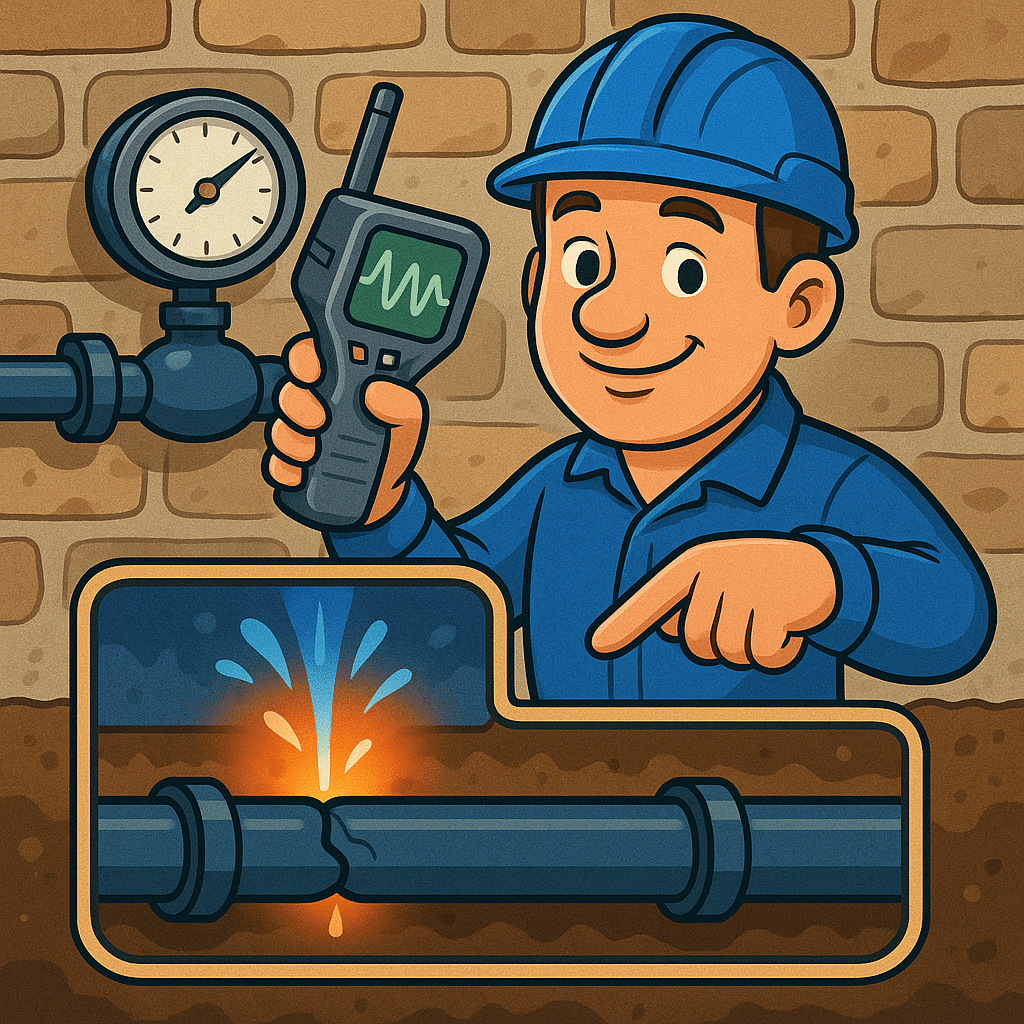
There is a wrinkle that catches out flat owners and anyone in an older terrace. Scottish Water’s pipes FAQ explains that these properties usually share a single supply pipe, which makes responsibility for a leak on it joint between the neighbours it serves.
Ownership carries a legal duty with it. Under the Water (Scotland) Act, owners are obliged to repair supply pipe leaks. Citizens Advice Scotland notes that Scottish Water can serve notice, carry out the repair itself and charge the owner if a leak is left unfixed.
We cover the full split, with the awkward cases, in our guide to who is responsible for water pipes in Scotland.
Signs of a mains or supply pipe leak
Because the pipe is buried and permanently pressurised, a supply pipe leak runs constantly, day and night. That constancy is what produces the classic signs:
- A wet or lush patch outsideGrass that stays green in a dry spell, moss along one line of the lawn, or damp monoblock joints that never dry out. Our article on wet patches in the garden or driveway covers this sign in detail.
- Lower pressure at the tapsWater escaping before it reaches the house leaves less pressure for the kitchen tap, especially when another outlet runs.
- A hissing stopcockWith everything in the house switched off, put your ear near the internal stop valve. A steady hiss means water is still moving through the pipe.
- Sunken or lifted pavingEscaping water washes out the fine material under slabs and blocks. A dip that appears along the pipe route is worth taking seriously.
- A note from Scottish WaterNetwork leakage teams survey with listening equipment and sometimes trace a loss to a private supply pipe before the owner notices anything.
Sources: Scottish Water winter readiness figures and MoneySuperMarket trace and access guide.
Checks you can make before calling anyone
In England the standard advice is to watch the water meter. That advice fails here. Most Scottish households pay for water through council tax and have no meter at all, as Scottish Water’s leakage FAQ confirms, so a leak will not show up on any bill. You need the pressure-and-sound version of the test instead.
Step 1: Shut the internal stop valve
Close the stopcock inside the house (usually under the kitchen sink) and confirm the kitchen cold tap stops running. Now no water should be entering the property.
Step 2: Listen at both ends
With the house isolated, listen at the internal stopcock, then at the boundary stopcock outside if you can access it. A continuing hiss or rush means water is still flowing through the supply pipe with nowhere legitimate to go. That is a leak between the boundary and your internal valve.
Step 3: Walk the pipe route
The supply pipe usually runs in a fairly straight line from the boundary stopcock to the point where the rising main enters the house. Walk that line looking for damp, moss, subsidence or unusually soft ground.
These checks tell you whether a leak exists and roughly which side of the boundary it sits on. What they cannot do is tell you where along a 15 metre buried pipe the water is escaping, and that is the question the repair depends on. For the full DIY sequence, see our guide on checking for a leak when your home has no meter.
How mains water leak detection pinpoints the burst
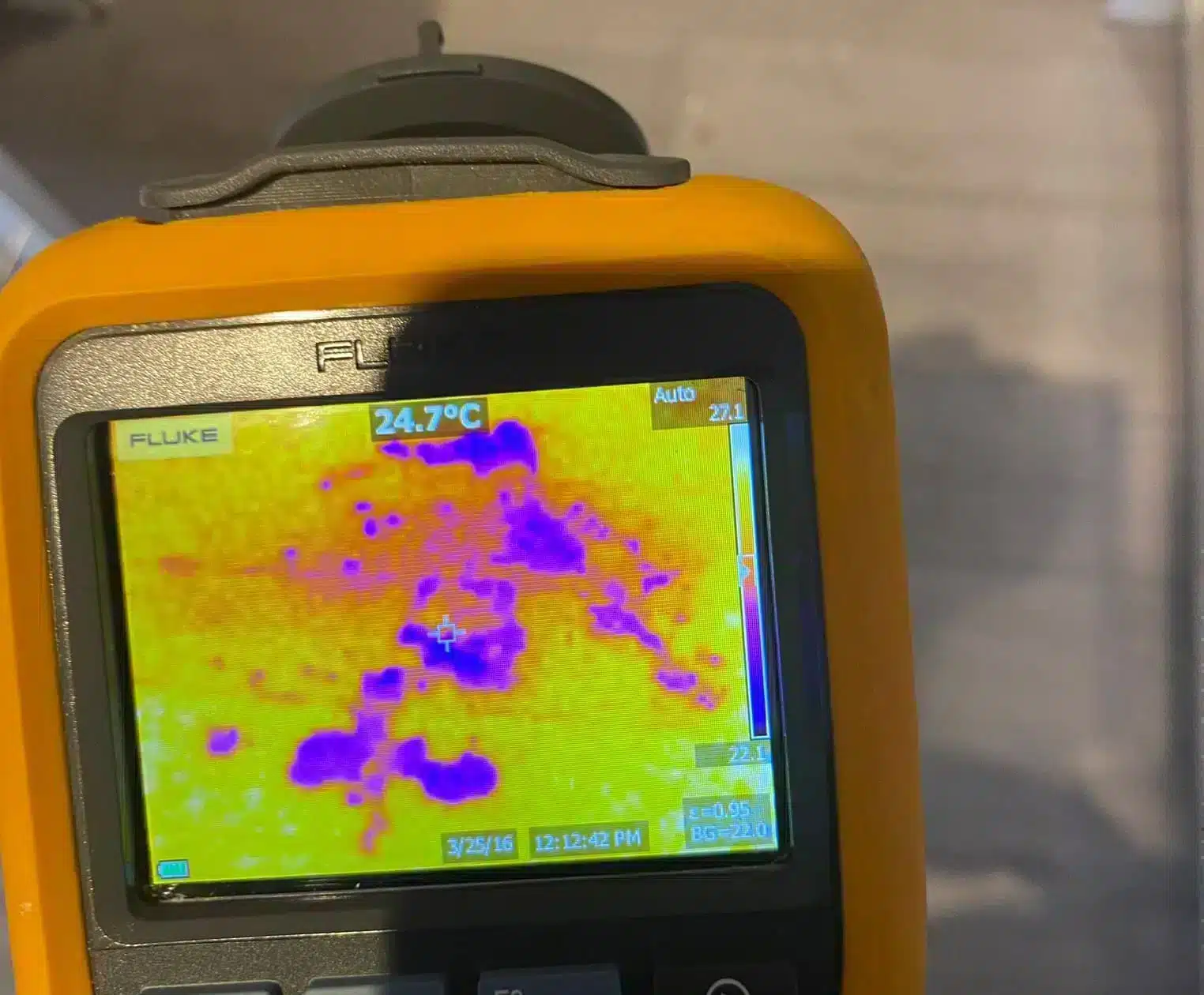
Pressurised water forced through a split makes noise, and that noise travels along the pipe wall for a surprising distance. Acoustic detection is built on that fact. A ground microphone moved along the pipe route picks up the leak sound through soil, tarmac or block paving, and the signal peaks directly above the escape point.
On longer runs and mains, engineers use leak noise correlation: two sensors are placed on the pipe at fittings either side of the suspected leak, and the equipment compares how long the leak sound takes to reach each one. That time difference places the leak to within a very short window, before anyone touches a spade.
Our article on acoustic leak detection explains the listening kit in more depth.
Two supporting methods matter on supply pipes. Flow and pressure testing at quiet hours (the same principle behind the night flow tests used on the public network, when legitimate use is near zero and any continuing flow stands out) proves the size of the loss and confirms which section of pipe is losing water. And where the pipe is plastic, which carries sound poorly, tracer gas takes over: the pipe is charged with a harmless hydrogen-nitrogen mix that rises through the ground and registers on a surface probe directly above the split.
The result of a proper survey is not a shrug and a suggestion. It is a mark on the ground, a measured depth estimate and a written report. If you would rather have that than an excavated driveway and crossed fingers, call us on 07700 152 467 and we will pinpoint it first.
Repairing the pipe: moling vs excavation
Once the leak is marked, there are two sensible ways to fix it, and the right one depends on the pipe’s age and material.
Targeted excavation suits a sound pipe with a single failure. A small hole is dug at the marked point, the damaged section is cut out and replaced or clamped, and the surface is reinstated. Because detection has already done the finding, the hole is the size of a repair, not a search.
Moling suits a pipe that has reached the end of its life: old lead, corroded galvanised steel, or a supply that has now burst more than once. A pneumatic mole is launched from a small entry pit, punches a bore under the garden or driveway to an exit pit, and pulls a brand new MDPE pipe through behind it. The surface between the two pits is untouched, which is what makes moling popular under the monoblock driveways so common across Scotland.
| Situation | Sensible repair |
|---|---|
| Single split on a sound, modern pipe | Pinpoint, small dig, section replacement or clamp |
| Lead or galvanised supply pipe leaking | Full renewal, moled where ground and layout allow |
| Second or third burst on the same pipe | Full renewal; repeated clamps are false economy |
| Shared supply pipe serving several homes | Joint decision with neighbours; detection report identifies the failing section first |
Repeated repairs on a tired pipe deserve an honest word: a clamp on a corroded main is a patch on a pipe that has already told you its plans. If the metal is failing in one place, it is usually failing elsewhere too, and renewal works out cheaper than three emergency callouts.
Who pays for detection and repair
If the leak sits on your supply pipe, the repair cost is yours, but three things soften it. First, Scottish Water may offer an assisted supply pipe repair under its supply pipe repair policy, so it is worth asking before committing to private work, particularly if Scottish Water flagged the leak. We explain that process in our article on what happens when Scottish Water says you have a leak.
Second, home insurance usually helps with the finding, if not the fixing. Trace and access cover pays for locating the leak and making good the access afterwards, and MoneySuperMarket reports that 94% of buildings policies include it, typically with limits of £5,000 to £10,000. Our guide to trace and access cover covers how to use it in a claim.
Third, businesses on metered supplies can claim back some of the lost water. Licensed Providers such as Business Stream operate a Burst Allowance scheme: policy allows up to nine months’ allowance for biannually read meters and a 50% water-and-waste allowance for private leakage, with evidence including the repair date, a detection or plumber’s report and two meter readings taken a week apart after the repair.
Frequently asked questions
Who is responsible for a leak under my driveway?
You are, in almost every case. Scottish Water’s responsibility ends at the boundary stopcock; the supply pipe from there to the house belongs to the property owner, including where it runs under gardens, paths and driveways. Under the Water (Scotland) Act, owners are obliged to repair leaks on it.
How do I know if the leak is on my side or Scottish Water’s?
The boundary stopcock is the dividing line. Leaks between the water main and that stopcock are Scottish Water’s to fix; leaks after it are the owner’s. A detection survey establishes which side the escape sits on, and that evidence saves weeks of back and forth if responsibility is disputed.
Will a mains leak increase my water bill in Scotland?
Not for most households. The majority of Scottish homes are unmetered and pay for water through council tax, so a leak wastes water without changing the bill. Metered businesses are different: every lost litre is charged, which is why Licensed Providers offer a Burst Allowance once the leak is repaired and evidenced.
Can a supply pipe leak be fixed without digging up the whole drive?
Usually, yes. Acoustic correlation or tracer gas narrows the leak to a small window, so a single repair-sized hole is dug rather than a trench. Where the pipe needs full replacement, moling pulls a new pipe underground between two small pits and leaves the surface between them intact.
Does home insurance pay for finding a mains leak?
Most buildings policies include trace and access cover, which pays for locating the leak and reinstating whatever had to be disturbed to reach it, typically up to £5,000 or £10,000. The repair of the pipe itself is normally excluded, so expect to fund that part yourself.
Related reading
- How to Find an Underground Water Leak (and Who to Call)
- How to Trace Underground Water Pipes Before You Dig
- Shared Supply Pipes in Scottish Flats and Terraces: Who’s Responsible?
MCR Leak Detection provides water leak detection across Scotland, from city tenements to rural supply pipes.
Speak to MCR Leak Detection
Suspect a leak between the street and your house? We locate mains and supply pipe leaks non-destructively, anywhere in Scotland, 24/7, and mark the exact dig point before anyone breaks ground.