
Thermal Imaging Leak Detection Across Scotland
Our FLIR infrared cameras pick up the temperature changes that hidden water leaves behind walls, beneath floors and above ceilings. That lets us put a marker on the leak without cutting, drilling or lifting anything in your property.
Watch Your Leak Show Up On Screen
A thermal camera shows us the leak in minutes. Nothing gets drilled and nothing gets damaged.
📞 Get A Free Quote: 07700 152 467When Thermal Imaging Is The Right Call
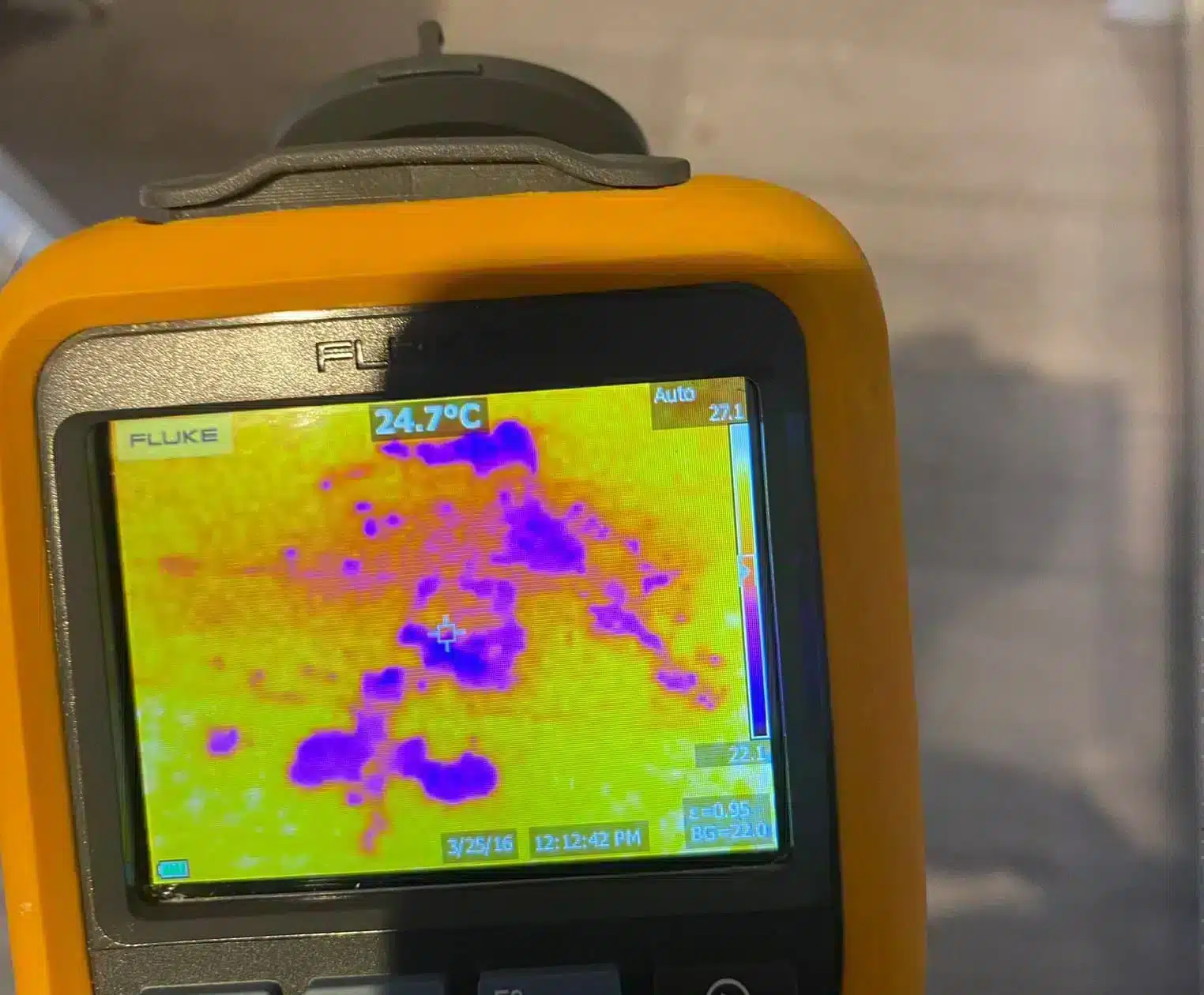
When damp keeps appearing with no obvious cause, or you suspect water is moving behind a wall or under a floor, infrared is the cleanest way to find out. The camera picks up what your eyes cannot, so nobody has to break into the fabric of the building on a hunch. You skip the exploratory holes and go straight to the source.
The FLIR cameras we carry at MCR Leak Detection register tiny shifts in surface temperature wherever water is present. That matters in Scotland, where thick stone walls, layered construction and awkward pipe runs can defeat older ways of finding a leak.
Damp Patches With No Source
A wet mark on a wall with nothing obvious feeding it usually means water travelling behind the surface. The camera follows that trail back to where the leak starts.
Stains Spreading Across A Ceiling
Marks on a ceiling normally point to a bathroom or a pipe run overhead. We scan through the floor void and follow the water back to where it began.
Odd Cold Areas On Walls Or Floors
Where water sits, surfaces run cooler. The camera makes those anomalies obvious straight away and marks out where the hidden leak is likely to be.
Leaks Under Baths And Shower Trays
Few leaks are harder to reach than the ones under a bath or tray. Infrared finds the moisture with every tile and panel still in place.
Underfloor Heating Playing Up
Cold zones in the floor or steady pressure loss both suggest a circuit leak. We image the whole loop and mark exactly where it is failing.
Older Scottish Buildings
Tenements and period homes hide pipework deep in stone and lath. Infrared reads through those layers where other methods struggle to reach.
Important: A leak found early is a cheap leak. Escaping water rarely stays where it started; it tracks along joists and cavities, which is why opening walls on guesswork costs so much. A quick thermal scan confirms where moisture is and which way it is heading before any repair decision gets made.
Request A Free Thermal Survey Quote
Infrared leak detection anywhere in Scotland. Send us the details for a price.
How An Infrared Camera Finds A Water Leak
Every object gives off infrared radiation, and a thermal camera turns that into a picture. When water gets out of a pipe it cools or warms the material around it, and those shifts appear on screen as a colour-coded heat map. What no eye can see becomes plain on the display, which is why we reach for the FLIR kit first on hidden leaks.
A little background helps explain why we rate this method so highly. The cameras resolve differences as fine as 0.1°C, which is enough to expose moisture patterns that no conventional inspection would ever pick up.
Reading Temperature Contrast
Escaped water changes how warm the surrounding material reads. Mains water shows as cooler blue zones, while losses from central heating systems glow red and orange, so the leak area stands out at a glance.
Capturing Long-Wave Infrared
FLIR sensors read the long-wave band, 8 to 14 micrometres, that every surface emits. From that we build a heat map of walls, floors and ceilings without touching any of them, and any moisture pattern sits plainly within it.
Live Thermal Video
Because the feed is live, we can watch moisture spread as it happens. That separates the original leak point from secondary wet areas and shows how far the damage has already run through the building.
On-Camera Image Processing
The cameras sharpen temperature contrast automatically, which drags even faint leaks into view. Switching palettes and scales lets us tune the picture to the type of leak and the conditions in each room.
Spot Temperature Readings
As well as the picture, the camera records an exact temperature for any point in frame. Those numbers back up what the image shows, grade how wet the area is, and go straight into insurance paperwork and repair plans.
Cross-Checking With Other Tools
We pair the camera with moisture meters and other instruments so nothing slips through. That layered check matters most on underfloor heating systems and pipe runs buried out of reach.
All of this suits Scottish buildings well. Stone tenements, timber-frame new builds and large commercial units each throw up their own obstacles, and in every case the camera hands us visual proof of the leak position with nothing broken open to get it.
What Happens During A Thermal Survey
Every survey runs to the same tested routine, so nothing gets missed and your home stays tidy. Good kit only gets you halfway; the other half is an engineer who knows how to read what the camera is showing.
Talk Through The Problem
First we ask about the symptoms, the layout, where the water and heating runs are, and which areas worry you. We set out how the camera will help on your particular job and give you a fixed price before any work begins.
Set Up The Temperature Contrast
A thermal image is only as good as the contrast in it, so we might turn up the heating or run hot water through the system first. Sharper differences make the leak easier to see, and we keep you posted on why each step matters.
Scan Every Suspect Surface
With the FLIR camera we work across walls, ceilings, floors and around fittings in a set pattern. Anomalies appear on the screen as we go, flagging up wherever moisture is changing the surface temperature.
Read The Patterns Properly
Not every cool patch is a leak. Our thermographers separate live leaks from old damp and from harmless temperature quirks, then walk you through the images on screen so you can see the evidence for yourself.
Confirm With A Second Method
Before we commit to a location we back the camera up with moisture meters, and with acoustic listening devices where useful. Insurance claims in particular need that double-checked certainty, and we make sure you have it.
Hand Over A Full Report
You receive thermal images, standard photographs, moisture readings and the exact leak position in one document that satisfies insurers, along with our repair advice. Where opening-up work is needed, our trace and access service takes it from there.
Put A Thermal Camera On The Problem
Infrared surveys that find the leak with your walls untouched. Straight answers, fast.
Why Book Your Thermal Survey With MCR Leak Detection
Jobs We Regularly Use Thermal Imaging For
Infrared earns its place on a huge range of leak and damp problems, and our engineers have pointed these cameras at thousands of Scottish jobs, from a single weeping joint to moisture tracking through a whole building. Each job type calls for its own scanning approach and its own experienced eye on the images.
Bathrooms And Showers
Behind tiling, under trays and around bath seals, the camera finds the wet path through walls and floors with every tile and fixture left exactly where it is.
Central Heating Circuits
Hot water makes a strong thermal signature, which makes heating system leaks ideal camera work. We follow the pipe runs through the structure and pick out failing radiator joints, manifolds and buried sections.
Underfloor Heating Loops
For underfloor heating leaks nothing beats infrared. The camera draws the whole pipe layout on screen and shows the cold spots where water is getting out, with the floor untouched.
Flat Roofs And Ceilings
Rain that gets in through a flat roof wanders sideways long before it stains a ceiling. We trace the moisture trail back to the actual entry point so the repair lands in the right place.
Commercial Premises
On commercial buildings we scan whole floors and facades in one visit, flag every leak source and map the moisture, so your business barely notices we were there.
Listed And Period Buildings
Where a building is listed or simply irreplaceable, infrared lets us examine stone walls, old plaster and timber without disturbing any of it, and still come away with the answers.
Damp That Is Not A Leak
Rising damp, penetrating rain and condensation each leave a different heat pattern from a pipe leak. The survey tells you which problem you actually have, so you end up fixing the right one.
Snagging New Builds
Before you sign off a new home, a thermal pass exposes plumbing leaks, missing insulation and other defects the builder needs to put right while they still can.
Whatever the building throws at us, our thermographers know how to read it. Where a case calls for it we bring in tracer gas detection alongside the camera, so the leak gets found whichever way it tries to hide.
Where We Carry Out Thermal Surveys
MCR Leak Detection runs infrared surveys the length of Scotland. Every region builds differently, and our engineers know the local construction quirks in each area we cover.
Major Cities: Fast-response thermal imaging teams working across Edinburgh and Glasgow.
Central Scotland: Regular thermal survey work in Stirling, Falkirk, and West Lothian.
Arrange Your Thermal Imaging Survey
Find the leak behind the wall without touching the wall
Get That Hidden Leak Found
Every day a concealed leak runs, the repair bill grows. A thermal survey shows what is going on behind walls, under floors and above ceilings, and it does so without leaving a mark.
Why Thermal Imaging Changed Leak Detection
Before infrared, finding a hidden leak meant educated guesses and broken plaster. Now the camera shows temperature evidence no eye could catch: where water escapes, where it travels and how far it has spread. The guessing, and the exploratory damage that went with it, is gone.
Scotland gives leaks plenty of help. Freeze-thaw winters and driving rain find every weakness in a building, and the resulting leaks often sit in the least reachable spots. The camera reads through layer after layer of construction regardless, in a Victorian tenement, a timber-frame semi or a commercial unit alike.
What clients value most is speed and certainty. A few minutes of scanning shows where water sits, which way it moves and where it began. Insurers get clear photographic proof for the claim, and the repair team gets sent to the right spot the first time rather than the third.
The team at MCR Leak Detection works with current FLIR cameras and proper thermography training behind them. Operating the camera is the easy part; knowing what a given pattern means in a given Scottish building is where the experience counts, and that is what gets your leak found accurately.
Find it on camera, fix it once. Speak to our thermal team today and let infrared do the hard work of protecting your property.