
Pressure Gauge Keeps Dropping? We Can Help Today
Small leaks get worse, never better. Speak to a heating leak engineer now.
📞 Get A Free Quote: 07700 152 467How to Tell Your Heating System Is Leaking
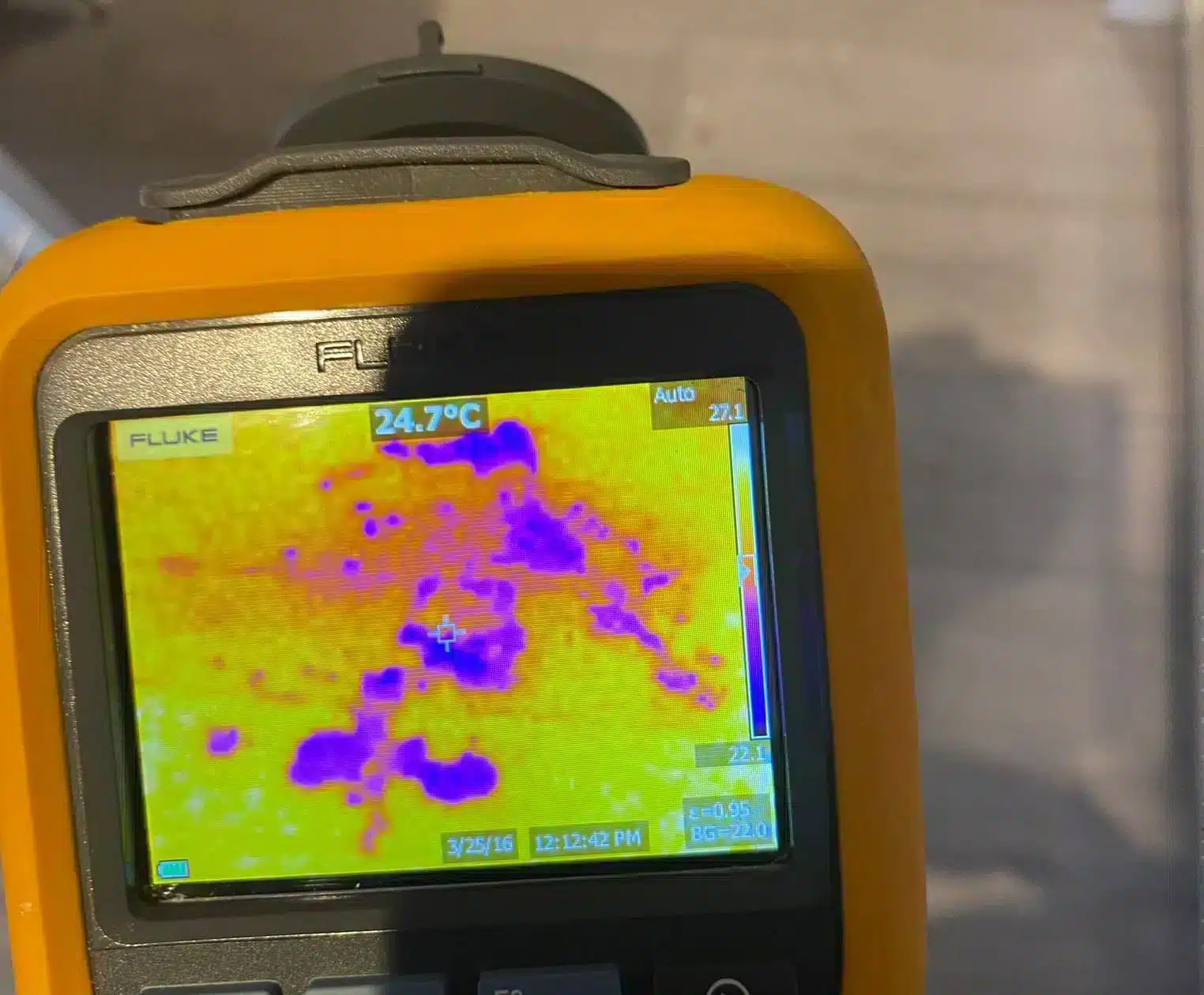
A heating leak left alone costs you twice: wasted energy while it runs, then repair bills once the water has done its work. It can also knock the system out just when you need it. Catching the early signs keeps both costs in check and gets the heating back to full strength sooner.
We see the same faults week in, week out across Scotland, in everything from tenement flats with ageing radiator circuits to new builds running underfloor loops. The pattern never changes: the earlier the leak is found, the smaller the bill.
Pressure Needs Topping Up Constantly
Repressurising the boiler every week, or every morning, means water is leaving the circuit somewhere. That escape point can be found without guesswork.
Unexplained Damp Beside Radiators
A wet patch on plaster or flooring close to a radiator usually traces back to a weeping valve, a failed joint, or pipework hidden inside the wall behind.
Radiators That Heat Unevenly
If bleeding has not cured a cold radiator, escaping water may be starving the circuit and stopping hot water circulating the way it should.
Water Sounds Where There Should Be None
A faint hiss or a steady drip coming from inside a wall or floor is often pressurised water finding its way out of the heating pipework.
Marks Appearing on Ceilings Below
Brown rings or damp staining on a downstairs ceiling point to heating pipes leaking somewhere in the floor void directly overhead.
Error Codes and Repeated Lockouts
When pressure falls too far, modern boilers shut down and flash a fault code. Persistent low-pressure lockouts nearly always mean the circuit is losing water.
Worth knowing: a leaking heating system costs more to run, damages the building around it, and can fail altogether. Through a Scottish winter that is not a risk worth carrying, so have the leak found while it is still small.
Request a Free Heating Leak Survey Quote
Engineers across Scotland. One fixed price, agreed before we start.
The Methods We Use to Find Heating Leaks
Heating circuits hide their faults well, so finding them takes proper kit and an engineer who knows how to read it. We bring several detection methods to every job and apply whichever combination the property calls for, whether the fault sits in a radiator, the boiler, or a buried pipe run.
No two leaks behave the same way, so we never lean on one instrument. The engineer selects the mix of methods that suits your system and confirms the location before anything gets opened up.
Thermal Camera Surveys
Escaping hot water changes the temperature of whatever it touches. Our thermal imaging cameras pick up those patterns through plaster and flooring, showing where heat is bleeding out of the circuit with nothing taken apart.
System Pressure Testing
Charging the circuit and watching how quickly the pressure falls tells us two things at once: that a leak genuinely exists, and roughly how severe it is. From there we know whether we are chasing a slow weep or a serious escape.
Tracer Gas Tracing
Where a leak refuses to show itself, in underfloor heating systems or pipe buried deep, we add a harmless hydrogen and nitrogen blend to the circuit. The gas rises through the fault and our detectors read it at the surface.
Acoustic Listening Equipment
Water under pressure makes a distinctive noise as it escapes. With professional acoustic equipment we follow that sound through walls, solid floors and buried runs until we are standing directly over the leak.
Camera and Endoscope Checks
A slim flexible camera lets us look directly inside wall cavities, floor voids and other awkward corners. It gives visual proof of a leak without pulling the building apart to get eyes on the pipe.
Moisture Mapping
Moisture meters chart how far water has travelled through the structure and let us follow the damp trail back to its origin. They also show you, and your insurer, exactly what the leak has affected.
Between these methods there is nowhere for a heating leak to hide. We have surveyed everything Scottish housing can offer, from cast iron radiator runs in Victorian villas to combi systems in brand new estates.
What Happens During a Heating Leak Survey
Every survey runs to the same tested routine. Working in order keeps disruption low and means the leak gets found right first time rather than by trial and error.
Initial Fact Finding
First we talk. When did the pressure start dropping, how is the system laid out, and what has already been tried? Those answers shape where we look first and which equipment comes off the van.
Walk-Round Inspection
Next comes a careful look at everything visible: radiators, valves, joints and exposed pipe. Plenty of leaks announce themselves at the usual suspects, so we rule those out before the instruments come out.
Confirming the Loss
The circuit is isolated and pressurised so we can watch how fast it falls. The rate of loss proves the leak is real and hints at whether there is one escape point or several.
Targeted Detection Work
Now the specialist kit earns its keep. Thermal camera, listening equipment or tracer gas, whichever the evidence points to, applied methodically across the property until the signal leads us to the source.
Marking the Exact Spot
Once found, the position is marked and we show you the reading that proves it. Before any repair starts you will know precisely where the water is going and why the gauge keeps falling.
Report and Next Steps
You receive a written report with photographs, findings and repair advice, prepared to the standard insurers ask for when claims follow. If you want the fault fixed as well, we can arrange that or handle the repair ourselves.
Put an End to the Pressure Drops
Heating leak surveys across Scotland, carried out quickly and confirmed precisely.
What Makes MCR Leak Detection the Right Call
Heating Faults We Trace Every Week
Scottish weather and ageing housing stock are hard on heating circuits. Freeze-thaw cycles, tired fittings and buried pipe each produce their own leak patterns, and over the years we have traced every one of them.
Pressure Loss in Combi Boilers
When a combi will not hold pressure, the culprit is often a weeping heat exchanger or a relief valve passing water. We establish which before anyone starts swapping parts on spec.
Weeping Radiator Valves
Thermostatic valves (TRVs) and lockshields loosen and fail with age, dripping quietly onto the floor below. We catch these early, before the boards underneath begin to rot.
Faults in Underfloor Loops
A split in underfloor heating pipes is awkward to reach by nature. Tracer gas lets us mark the exact point, so only a small patch of floor ever needs lifting.
Manifold and Zone Valve Trouble
Zoned systems add valves, actuators and manifold joints, and every one is a potential escape point. We test circuit by circuit until the failing component shows itself.
Pipes Chased Into Walls
Older Scottish homes often carry heating pipe inside solid walls. Our equipment finds the leak through the plaster, keeping cornicing and period finishes intact.
Splits From Winter Freezing
When a hard frost splits a pipe, the visible burst is rarely the only casualty. We check the whole run and flag every weakened section before the next cold snap arrives.
Larger Commercial Circuits
Schools, offices and industrial units run commercial heating installations on a different scale. We survey them across Scotland with equipment sized for the job.
Pipes Cast Into Concrete
Heating pipe set into slab or screed calls for dedicated slab leak detection. We find the fault first, so breaking out concrete stays limited to one small area.
If your system has developed a fault not listed here, the odds are we have still seen it before. Our trace and access service then opens the smallest possible route to the pipe for repair.
Arrange Your Heating Leak Survey
Get the pressure loss stopped and the system running as it should
Get That Heating Leak Found Now
A leaking circuit will not fix itself, and winter is no time to lose your heating. Call MCR Leak Detection and we will locate the fault fast and set the repair in motion.
Why Speed Matters With Heating Leaks
Heating in Scotland is not optional. Through the long months of cold, a working system protects both the building and the people living in it, so any leak that threatens it needs to be treated seriously.
The damage from an unfound leak compounds daily. A dropping gauge this week becomes soaked insulation next month, then rotten joists, lifted flooring, mould and a repair bill many times what early detection would have cost you.
Because heating circuits run under pressure, even a pinhole pushes out a surprising volume of water. Litres a day can soak into the fabric of a building from a fault far too small to see.
We know a failing heating system is stressful, so we keep things simple: quick attendance, one fixed price, and a survey that does not stop until the leak is found, all without your home turning into a building site.
The sooner the leak is found, the less it costs you. Ring our heating leak team today and get your circuit back to holding steady pressure.