

Pipe corrosion is a slow electrochemical attack on metal pipework, and it is why old pipes eventually leak. In copper it forms pinhole leaks that mist water into walls and floors for months before anything shows. Scotland’s soft water offers no protective scale, so green staining, crusty joints and weeping fittings deserve action, not paint.
Pipe Corrosion: Why Pipes Eventually Leak
Every metal pipe in your house is slowly turning back into the minerals it was refined from. That is all pipe corrosion is: metal reacting with water, oxygen and whatever else touches it, one microscopic layer at a time. Most of the time the process is so slow it does not matter. Sometimes it concentrates on one spot, and then a pipe that looked fine for forty years springs a leak the size of a pin.
We find corrosion behind a large share of the hidden leaks we trace in Scottish homes, and it is rarely a surprise to us, because the warning signs were usually visible for months. This guide explains how corrosion eats pipes, why Scottish water chemistry matters, and which early signals are worth acting on before the ceiling comes down.
What’s in this guide
What corrosion actually does to a pipe
Corrosion needs three things: metal, moisture and an electrical imbalance. Give it those and it sets up millions of tiny battery cells on the pipe surface, each one dissolving metal at one point and depositing it at another. On steel the product is rust. On copper it is the blue-green crust you see on old fittings and church roofs.
The attack comes from both directions. Inside the pipe, the water itself does the work, helped along by dissolved oxygen, acidity and debris left from installation. Outside the pipe, damp walls, wet insulation, chemically aggressive screed and contact with other metals all corrode the pipe wall inwards. A copper pipe chased into a solid floor without a protective sleeve is a classic slow failure we get called to years after the builder left.
Pinhole leaks: corrosion’s favourite trick
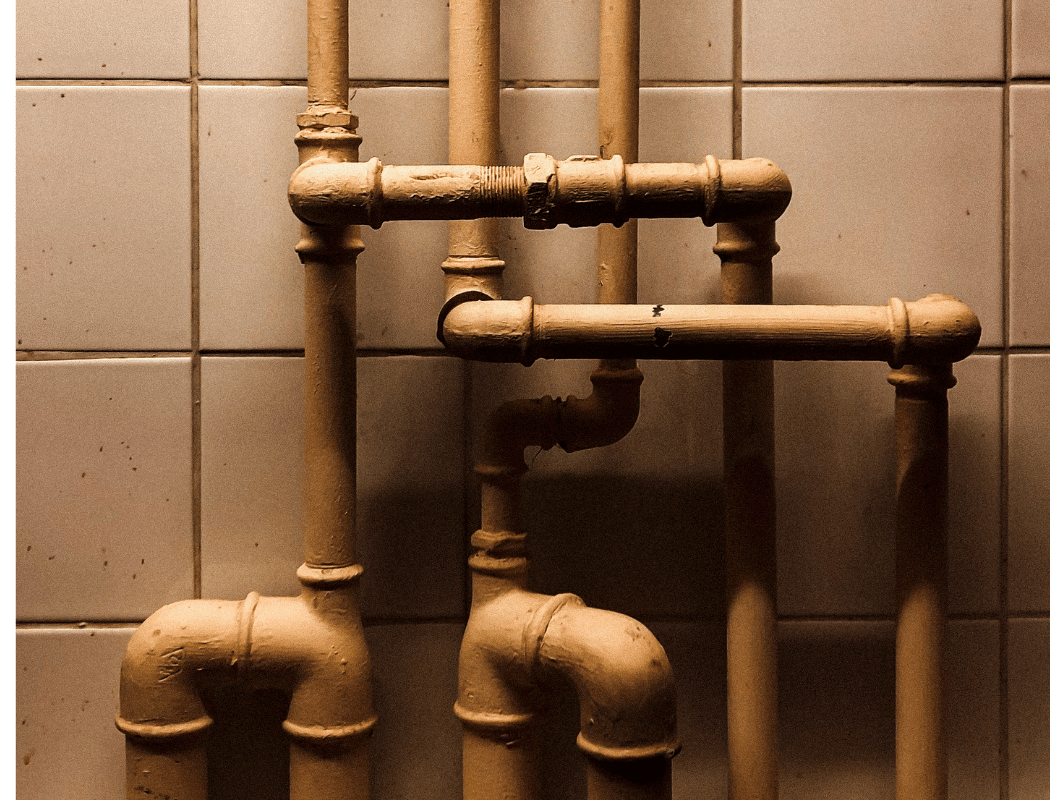
General corrosion thins a pipe evenly and takes generations to matter. Pitting corrosion is different. For reasons that come down to water chemistry and surface imperfections, the attack concentrates on single points and drills them, leaving the rest of the pipe untouched.
The result is the pinhole leak, and it is uniquely sneaky. The hole is often smaller than a pin, so the pipe does not gush. It mists. A fine spray or steady weep soaks the surrounding timber, plaster or screed for weeks or months, and the first visible evidence is a stain, a smell or a boiler losing pressure rather than any sound of running water.
Worse, pinholes rarely travel alone. The chemistry that drilled the first hole is at work along the whole run, so a second and third often follow. When we pinpoint a pinhole for a customer, we say so honestly: this repair fixes the leak, not the pipe’s chemistry.
Soft Scottish water and your pipes
In hard-water areas of England, kettles fur up, but the same limescale lays down a thin chalky lining inside copper pipes that separates metal from water and slows corrosion from within. Scotland does not get that accidental protection. The Drinking Water Quality Regulator confirms that most drinking water in Scotland is classified as soft, because the hills our water runs off contain little chalk or limestone.
Soft, slightly acidic upland water is lovely to drink and kind to kettles, but it keeps bare metal in contact with moving water for the life of the pipe. That is one reason pinhole leaks in decades-old copper are a familiar find across Scottish housing stock. It is not a crisis, and millions of Scottish copper systems are quietly fine. It simply means age plus soft water is a combination worth respecting when the first weep appears.
Corrosion inside central heating systems
Sealed heating circuits corrode in their own particular way, and faster, because they mix metals. Copper pipe, steel radiator panels and brass fittings sharing the same water form exactly the electrical imbalance corrosion loves, with the steel radiators usually losing. The product is magnetite, the black sludge that settles in radiator bottoms and pipe low points, and the process both thins radiator walls from the inside and creates the debris that helps pitting along.
Every fresh top-up of the system brings new oxygen and feeds the reaction, which is why a system with a small hidden leak corrodes faster than a tight one, a vicious little circle. The defence is chemical: an inhibitor dosed into the system water coats the metal and starves the reaction, and a magnetic filter catches the sludge that has already formed. We cover the whole subject in our guide to central heating inhibitor. Weeping radiator valves are often the first place heating corrosion shows itself, and our article on the leaking radiator valve explains when a weep is a five-minute fix and when it is a symptom.
Early warning signs of pipe corrosion
Walk your visible pipework and look for these
- Green or blue-green staining on copper pipe or the wall behind it
- White, green or crusty deposits gathered around joints and fittings
- A joint that weeps enough to leave a tide mark but never a drip
- Rusty or black water when bleeding radiators
- Radiators cold at the bottom while hot at the top, a sludge signature
- Heating pressure that drifts down week after week
- A pinprick damp spot or stain on a ceiling below pipe runs
The crust deserves a special mention. A dry, crusty deposit on a fitting is the dried residue of a leak that is sealing itself with its own corrosion products. It has not healed; it is queueing. Scrape it off and you will usually find a weep restart within days, so treat crust as a flag for a proper repair, not a reassurance. If you spot several of the signs above together, run through our checklist of the signs of a hidden water leak, because visible corrosion and hidden escapes tend to arrive as a pair.
Repair, treat or replace: an honest order of operations
One corroded fitting or a single pinhole is a repair, not a re-plumb. Cut out the affected section, fit new pipe, and deal with whatever local cause you can see, such as a missing sleeve through masonry or wet insulation against the pipe. On heating systems, add the chemical defences at the same time: clean or flush the circuit, dose inhibitor and fit a magnetic filter. Cheap, boring and effective.
The calculation changes with the second and third failure on the same run. Repeated pinholes mean the pipe wall is failing generally, and each patch buys less time than the last. At that point, replacing the affected circuit costs less than the accumulating ceilings, and it is a planned job rather than an emergency one. Where the suspect run is buried and you cannot see its condition, that is our territory: thermal imaging shows what warm pipes are doing under floors, and our guide to thermal imaging leak detection shows the kind of evidence a survey produces. If corrosion has already put water where you can see it, call us on 07700 152 467 before opening anything up, and we will pinpoint the escape first.
Frequently asked questions
How long do copper pipes last before corrosion gets them?
There is no fixed lifespan. Plenty of Scottish homes run happily on copper from the 1960s, while an unlucky combination of water chemistry, flux residue and damp surroundings can drill a pipe in a couple of decades. Judge by behaviour rather than age: staining, crusty joints and repeat weeps are the pipe telling you where it stands.
Does soft water really corrode pipes faster?
Soft water does not lay down the limescale lining that hard water leaves inside pipes, so the metal stays in direct contact with the water for its whole life. Most drinking water in Scotland is classified as soft by the Drinking Water Quality Regulator, which is part of why pinhole leaks in older copper are a familiar Scottish find.
Can a corroded pipe seal itself?
Temporarily, yes. Corrosion products and minerals can crust over a weep and stop it dripping, which is exactly what the green or white deposits on old fittings often are. The seal is brittle and fails without warning, so treat a crusted joint as a repair waiting to happen rather than a problem solved.
Do plastic pipes corrode?
No. Plastic pipe is immune to corrosion, which is one of its genuine advantages. Its weaknesses lie elsewhere, mainly in fitting failures and mechanical damage. A mixed system still corrodes at its metal parts, and heating circuits with steel radiators need inhibitor whatever the pipework is made of.
Is central heating inhibitor really worth it?
Yes, and it is one of the cheapest pieces of insurance in the building. Inhibitor coats the metal surfaces inside the system and starves the corrosion reaction that creates sludge and pinholes. It needs topping up after any work that drains the system, and checking every year or two.
Speak to MCR Leak Detection
Stain on the ceiling, crust on the fittings, pressure drifting down? We trace corrosion leaks non-destructively across Scotland, 24/7, and tell you honestly whether the fix is a patch or a re-pipe.
Related reading
- Central Heating Inhibitor: Cheap Insurance Against Corrosion Leaks
- Leaking Radiator Valve? Causes, Quick Fixes and When to Worry
- Boiler Losing Pressure? Causes and What to Do Next
- 12 Signs of a Hidden Water Leak in Your Home
Or learn more about our water leak detection across Scotland.