
Tracer Gas Leak Detection Throughout Scotland
Some leaks defeat every standard method. Tracer gas is our answer: a safe hydrogen and nitrogen blend follows the water out through the fault and shows us exactly where it is. Buried pipes, underfloor heating, swimming pools, pipework nobody can reach, all located precisely with no digging and no damage.
When Tracer Gas Is the Right Tool
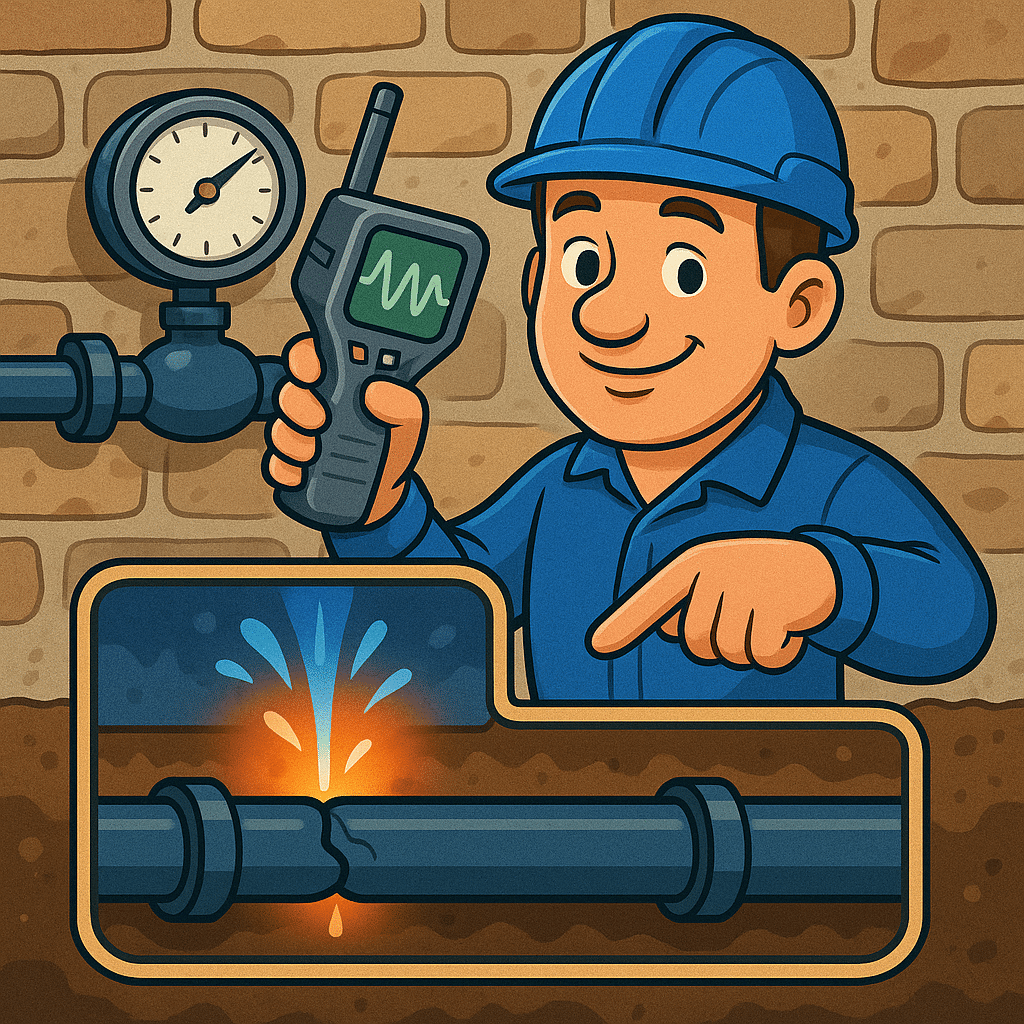
When a water leak refuses to show itself, tracer gas is the technique the trade reaches for. Deeply buried pipes, tangled underfloor systems and leaks that leave no visible clue are where it earns its keep. If water keeps disappearing and earlier surveys came back empty-handed, gas tracing very often ends the search.
At MCR Leak Detection, three decades of refining the method have taught us how to apply it to any building, Victorian tenement or brand-new commercial unit. Thousands of Scottish property owners have had a stubborn leak found this way.
Previous Surveys Drew a Blank
If thermal cameras and listening gear have both fallen short, gas takes the direct route: out through the fault and up to the surface, giving an answer you can dig on.
A Pool That Keeps Dropping
Losing more water than evaporation explains? Gas testing checks the shell, the pipework and the filtration circuit while the pool stays full.
Wet Underfloor Heating Faults
Nobody wants a finished floor lifted on a guess. Gas moves through the heating loops and escapes at even the smallest split, showing where to open up.
Buried Supply Pipe Trouble
The method of choice when a main runs under a driveway, a garden or the building itself and speculative digging would cost a fortune.
Pipes You Simply Cannot Reach
Runs cast into concrete, hidden behind fitted units or squeezed into spaces too tight to work in are all within reach of a gas trace.
Slow Weeps and Pinholes
A pinhole losing water gradually makes no sound worth hearing and barely shifts the temperature. Gas still finds it, because even the smallest gap lets hydrogen through.
Worth knowing: the gas poses no risk to people, pets or the environment. At the concentration we use, the hydrogen and nitrogen blend cannot burn, carries no toxicity, and being lighter than air it simply drifts away once the test ends. Homes, schools and hospitals can all be tested with it.
Free Quote for a Tracer Gas Survey
Water leak tracing anywhere in Scotland. One fixed price, nothing added later.
What Actually Happens During a Gas Trace
The principle is simple physics put to practical use. We fill the suspect pipe with 5% hydrogen carried in 95% nitrogen, a blend made for exactly this task. It weighs less than air, will not burn at that concentration and is harmless to breathe, yet it behaves in a way that gives a leak away every time.
A little of the science explains why this method succeeds on the jobs that beat everything else.
Charging the Pipe
The affected section is isolated and drained before the gas goes in. Once charged, the pipework holds gentle positive pressure, which pushes gas out through every fault present, however tiny.
Why Hydrogen Works
No gas has a smaller molecule than hydrogen, so it passes through openings water cannot manage. That is what gives the technique its sensitivity on faults nothing else registers.
The Detectors We Carry
Our hydrogen sensors register the gas at concentrations down to 1 part per million. As readings rise, the instrument steers us across the surface and straight towards the escape point below.
Reading the Surface
Gas leaving the pipe climbs through soil, concrete or screed until it reaches open air. Sweeping the area methodically builds a map of concentrations, and the peak of that map sits directly over the leak.
Double-Checking the Result
We never mark a spot on one reading. Repeated passes confirm where the concentration peaks, so the repair team opens the ground once and finds the fault waiting.
Working Safely
At 5% hydrogen the blend sits far below any flammable threshold and clears quickly once released. Monitors run throughout the job and our working procedures keep everything by the book.
Guesswork simply does not survive this process. A fault under metres of concrete or hidden within complex underfloor heating systems gives itself away just the same.
How We Run a Tracer Gas Survey
Every gas survey follows the same disciplined routine, with safety checks built into each stage. It is a method refined over many years, and it delivers a dependable answer.
Weighing Up the Job
We look at what has been tried already and how your system is laid out. That tells us whether gas is the right call for this leak and where the blend should enter the pipework.
Getting the Pipe Ready
The suspect run is valved off and the water drained down. An empty pipe lets the gas occupy the full length, so no possible escape point goes untested.
Introducing the Blend
Gas enters at a controlled pressure, watched constantly on the gauge. The aim is steady flow through the whole system without ever putting strain on the pipework.
Sweeping for Escapes
With the pipe charged, we walk the area with hydrogen sensors. Rising readings pull us towards the fault, and the strongest signal marks the leak itself.
Confirming and Marking
The spot is marked on the surface, photographed and measured in. Several repeat readings back the position up, so the repair can start with total confidence.
Writing It All Up
Afterwards you get a full report: where the leak sits, the photographs to prove it and our advice on the repair. Claims paperwork comes with the technical detail insurers ask for.
Reasons to Bring In MCR Leak Detection for Gas Tracing
Jobs Where Tracer Gas Proves Its Worth
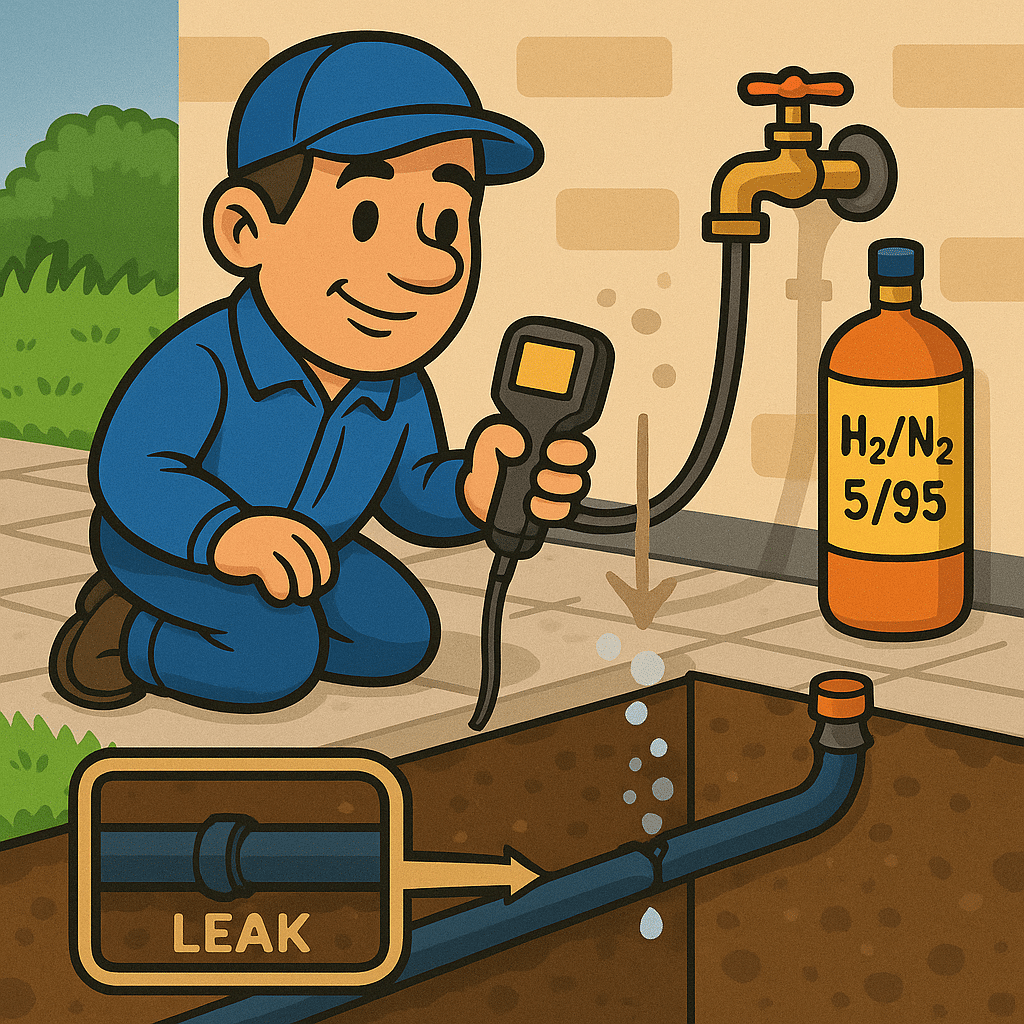
The hardest leak jobs on our books usually end with a gas trace. Once thermal imaging or acoustic listening has taken the search as far as it can, gas carries it the rest of the way. Few awkward leak situations exist that we have not already met and solved.
Granite walls and rambling Victorian pipe layouts make Scottish buildings a particular test, and gas tracing handles both. Our tally of successful traces runs into the thousands across every kind of property.
Pool Shell and Circuit Leaks
Shell cracks, buried pipe runs and filtration faults all show up under gas testing, and the pool does not need to be fully drained for us to do it.
Deep Mains and Supply Runs
The go-to method for underground water leaks where the supply sits deep under a drive, a garden or the footprint of the building and digging blind is out of the question.
Heating Loops in the Floor
A wet underfloor system hides its faults beneath the whole floor area. Gas runs the manifolds and loops and betrays the failure point, so only one small section ever gets lifted.
Pipes Cast Into Concrete
Where pipework sits buried in slab or screed, our slab leak detection work with gas keeps structural disturbance to the bare minimum.
Commercial Sites and Risers
Our commercial leak detection service uses gas on risers, distribution runs and sprawling pipe networks, keeping trading interruptions as short as possible.
Pressure Loss on Heating
If central heating systems keep dropping pressure and no leak is visible, gas testing checks the buried and boxed-in sections nothing else can reach.
Seepage Too Small to Hear
Slow seepage and pinholes produce no useful sound and no thermal signature. Hydrogen still escapes through them, which is exactly why gas succeeds here.
Second Opinions That Stick
Had a survey that ended in a shrug? Gas follows the same route out of the pipe that the water takes, so the answer it gives is final.
Bring us the leak nobody else could find. Gas tracing plus our trace and access expertise gets it located and gets the repair planned properly.
Reserve Your Tracer Gas Survey
Gas tracing that finds the leak, guaranteed
Get a Definitive Answer with Tracer Gas
A hidden leak only gets worse with time. When everything else has failed, gas tracing settles the matter once and for all.
Why the Physics Makes This Method So Reliable
Gas tracing sits at the sharp end of leak detection for good reason. Where standard techniques run out of road, the physics of hydrogen keeps going. The blend we carry was developed for this exact purpose, safe enough for any building yet sensitive enough to expose the smallest fault.
Scottish weather punishes pipework, and Scottish construction varies enormously from one street to the next. Aberdeen granite, Glasgow sandstone tenements, modern timber kit: we have traced leaks through all of them, including plenty that looked unfindable.
What makes the method so dependable is how little it leaves to interpretation. Gas leaves the pipe at the same point the water does, but instead of wandering through soil and building fabric the way water can, it climbs straight up. Where we detect it is where the fault is.
We keep the detection kit current and the training up to date, because results depend on both. Choose MCR Leak Detection and you get a team that traces water leaks for a living, the equipment to match and a guarantee behind the work.
Stop guessing where the water is going. Ring our gas tracing team today and have the leak marked, measured and reported properly.