
Scotland's Trace And Access Leak Detection Service
When a claim depends on proving where the water came from, we find the leak, open up only what the repair needs, and write it all up the way insurers expect. Careful access planning keeps repair costs down and claims moving.
Insurer Asking For Trace And Access? Start Here
We locate the leak source quickly and document everything your claim will need
Situations Where Trace And Access Is Needed
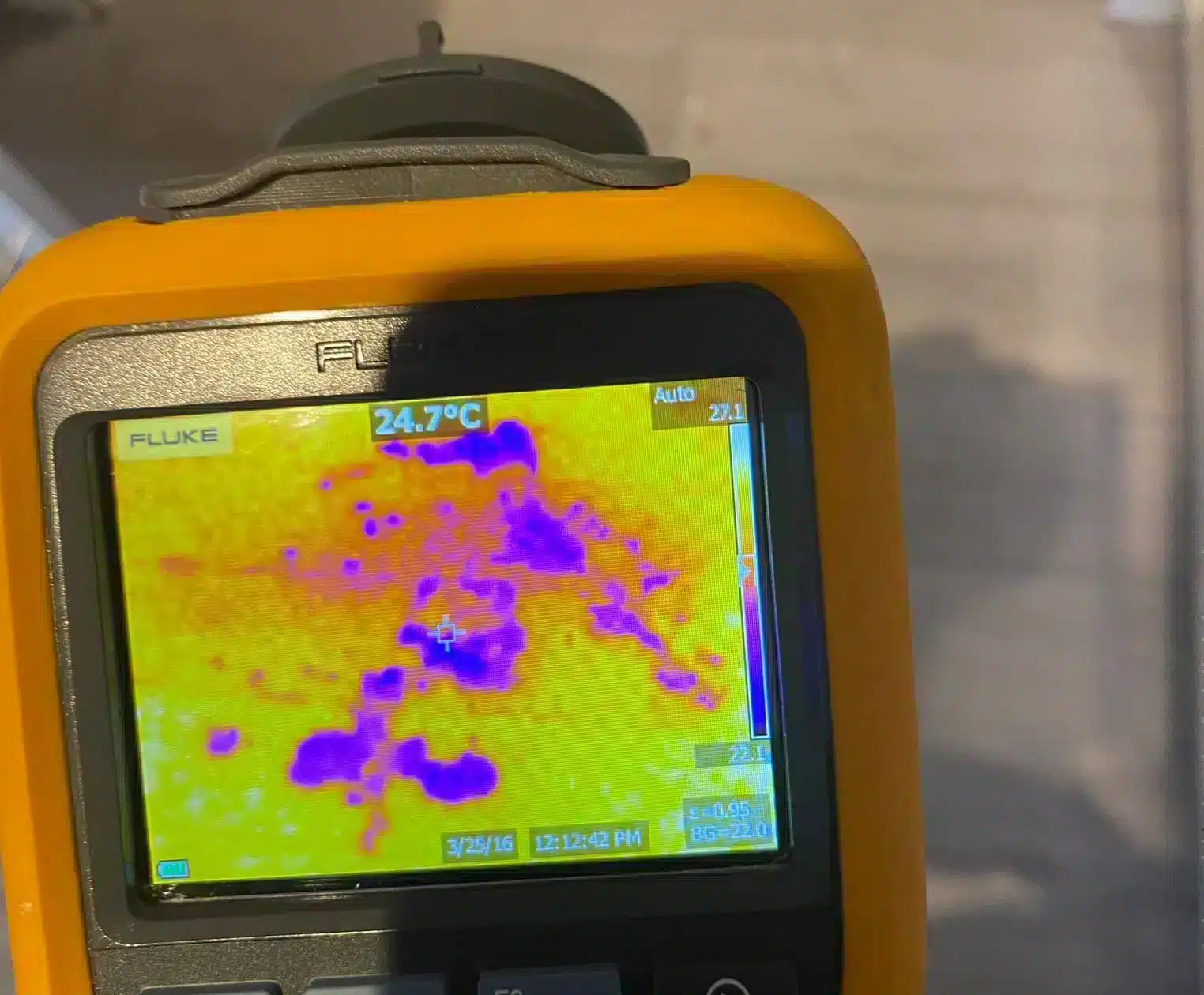
Water damage claims tend to stall on one question: where did the water actually come from? Trace and access answers it by investigating the damage methodically, fixing the leak source precisely, and working out the least destructive route in for the repair. Your property suffers less, and your insurer gets the evidence it needs.
The buildings section of most policies pays for this kind of investigation. MCR Leak Detection produces reports insurers can rely on, setting out the source of the leak, how far the damage runs and the repair route we recommend.
Insurance Claim Requirements
Insurers often will not settle until an independent investigation shows the exact leak source and confirms the damage came from an insured peril. That is what our survey establishes.
Mystery Water Damage
Damage is visible but the cause is not. A methodical trace works through walls, floors and ceilings until the hidden leak behind it is found.
Multiple Potential Sources
Where several systems could be to blame, bathroom, heating, mains or roof, a structured investigation rules each one in or out until the true culprit remains.
Minimise Repair Damage
Opening up in the wrong place doubles the making-good. Surveying first means the repair goes in at exactly the right spot and nowhere else.
Loss Adjuster Requirements
Adjusters want evidence, not opinion. We supply the photographs, readings and findings they specify, in the format they ask for.
Commercial Property Claims
When water moves through a commercial building it can affect several tenants and areas at once. Our reports untangle what happened for the insurers involved.
Worth knowing: Trace and access cover appears in most home policies, so the cost of the investigation itself is frequently recoverable. Because our reports follow insurer formatting from the start, claims tend to move through without queries.
Request A Trace And Access Quote
Investigations reported to insurer standards. One fixed price, agreed up front.
How We Trace The Leak
Good trace and access work is equal parts detection and documentation. We bring several technologies to each investigation, cross-check what they tell us, and record every finding as we go so the evidence for your claim builds itself.
No two investigations use exactly the same toolkit. The building, the symptoms and the suspected systems decide which combination of methods gets deployed.
Thermal Imaging Investigation
Water on the move leaves a temperature signature, and our thermal imaging cameras read it through plaster and flooring. Following those patterns leads back to the source with nothing opened up.
Moisture Mapping
Taking meter readings on a grid across the affected area builds a picture of where the water has been and where it is concentrated. That map both confirms the source and shows your insurer the true extent of the damage.
Acoustic Leak Detection
On pressurised systems, escaping water can be heard before it can be seen. Our acoustic listening equipment amplifies that sound and lets us follow it to the failing pipe.
Tracer Gas Testing
Where the route of the water defies logic, tracer gas technology settles it. The gas leaves the pipe through the same fault the water does, and our sensors track it straight back to the source.
Endoscopic Inspection
A slim camera fed into cavities, voids and the spaces behind fixed units lets us see the leak itself. The photographs that come back go straight into the insurance evidence, and nothing gets dismantled to obtain them.
Salts Analysis Testing
Analysing a sample of the escaped water reveals its chemistry, and the chemistry reveals its origin: mains supply, heating circuit or rain finding its way in. Hard scientific proof for claims that turn on where the water came from.
Working with several methods at once means the evidence stacks up without the building being pulled apart to get it. Photographs, readings and notes are logged throughout, ready for the insurer to review.
The Trace And Access Process, Step By Step
Each investigation follows the sequence insurers themselves expect to see, with evidence captured at every step. By the end, your claim has a clear, complete file behind it rather than a patchwork of notes.
Assessment And First Records
Everything visible gets photographed first, we go through what your policy requires, and you talk us through how the problem developed. That gives the investigation a documented starting point matched to your insurer's expectations.
Non-Destructive Tracing
Thermal cameras, moisture meters and acoustic gear then follow the water through the building. Nothing is opened at this stage, which keeps the evidence intact and the shortlist of possible sources honest.
Planning The Access Point
With the leak area established, we work out the single smallest opening that will confirm the fault and allow the repair. Planning this properly is where most of the cost and damage savings come from.
Controlled Opening Up
Once the insurer is happy, we make that small opening and put eyes on the leak itself. Each stage is photographed as it happens, so the claim carries evidence nobody can argue with, and nothing beyond the necessary area is touched.
The Written Report
The findings then come together in a single report: photographs, moisture data, thermal images and a plain-language conclusion on the source. It follows the layout insurers work with daily, so processing is quick.
Support Through The Claim
Our involvement does not stop at the report. If the insurer raises questions, we answer them; if adjusters want the findings explained, we do that too, staying on hand until the claim reaches settlement.
Give Your Claim The Evidence It Needs
Thorough investigation, tiny footprint, and a report your insurer will accept.
What Makes Our Trace And Access Service Different
Common Trace and Access Scenarios We Handle
Certain jobs come up week after week across Scotland, and knowing them inside out makes each investigation quicker. These are the scenarios we handle most often for homeowners, landlords and insurers.
Bathroom Leak Investigations
Water from a bathroom staining the room beneath could be a failed seal, a leaking pipe or a drainage fault. We establish which, because the answer changes how the claim is handled.
Ceiling Water Damage
A stained or fallen ceiling has three usual suspects: the roof, a pipe, or an overflow above. Identifying the right one determines what your policy will and will not pay for.
Central Heating System Leaks
Investigating central heating leaks means separating radiator faults from boiler problems and pipework failures, the distinction a heating-related claim hangs on.
Commercial Property Claims
In commercial properties a single leak can touch several tenancies at once. We map who and what was affected so a complicated claim has clear facts behind it.
Underground Pipe Leaks
Where underground water leaks threaten foundations or ground stability, we establish whether the mains supply or the drainage is at fault, a distinction insurers treat very differently.
Historic Water Damage
Old damage from a leak that has since stopped still needs explaining, whether for a retrospective claim or a dispute over a property purchase. We work backwards to the original cause.
Flat and Tenement Leaks
In tenements and blocks of flats, water crosses boundaries and so does the argument about liability. Our evidence shows which property the leak started in.
Frost Damage Claims
Once a freeze has split pipework, the visible burst is rarely the whole story. We check the full run, record everything affected and give the claim the scope it genuinely needs.
If your situation is not on that list, it will still follow the same principles: trace carefully, document everything, and hand you evidence a claim can stand on. Water damage is stressful, so we keep the process quick and clear.
Arrange Your Trace And Access Investigation
Evidence gathered properly and reported in the format insurers accept
Start Your Trace And Access Investigation
Claims settle faster when the evidence is solid. Book the investigation and give your insurer exactly what it asks for.
Trace And Access And Your Insurance Claim
Finding the leak is only part of the job. The real value of trace and access lies in giving your insurer evidence it cannot dispute while keeping the cost of getting that evidence low. Scottish weather, all freeze-thaw and driving rain, keeps water damage claims coming, and each one needs this groundwork done properly.
The question every insurer asks is whether the damage came from an insured peril or from slow deterioration that maintenance should have caught. Our investigation records the precise failure point and answers that question, distinguishing sudden damage, which policies usually cover, from wear and tear, which they often exclude.
Access deserves as much thought as tracing. Working out the smallest possible intervention before anything is opened keeps repair costs right down, and on marginal claims that planning can be what makes the claim worth pursuing at all.
Loss adjusters receive a complete package from us: photographs, moisture data, thermal imagery and findings explained in plain terms. Because the report speaks their language and follows their format, the back-and-forth that delays settlements rarely happens.
You do not have to handle the claim by yourself. Our specialists bring the equipment, the experience and the insurance know-how your claim needs. Get in touch with MCR Leak Detection and put the investigation in safe hands.