

Scottish Water’s advice comes down to three words: heat, insulate, protect. Keep the heating ticking over in cold snaps, lag exposed pipes and tanks, and isolate outside taps. Around 3,100 network bursts hit Scotland in winter 2023/24, with over 30% on customer property, so know where your stopcock is before you need it.
Protecting Your Pipes in a Scottish Winter: Heat, Insulate, Protect
A frozen pipe rarely announces itself. The water inside turns to ice, expands, and splits the pipe quietly. Nothing happens until the thaw, when the ice plug melts and mains-pressure water starts pouring through a crack you never knew existed, often while you are at work or away for the weekend.
The good news is that winter pipe protection in Scotland is cheap, unglamorous and genuinely effective. This guide works through the heat, insulate, protect approach that Scottish Water’s Protect your Pipes campaign promotes, plus the extra checks we would add after years of finding the leaks that winter leaves behind.
What this guide covers
Why Scottish winters burst pipes
Scotland gets freeze-thaw cycles rather than one long freeze, and that cycling is what does the damage. Every freeze stresses the pipe; every thaw reveals the splits. Scottish Water reported around 3,100 bursts on its network in winter 2023/24, and more than 30% of winter incidents happen on customer property, where the pipes are the owner’s responsibility rather than the utility’s.
That customer-property figure matters because of who pays. Scottish Water owns the main and the communication pipe up to your boundary; the supply pipe from the boundary into the house, and everything inside, belongs to the owner (the boundary is set out here). A burst in your loft or under your driveway is your burst.
Heat: the thermostat baseline
Ice needs cold, so the first defence is simply not letting the fabric of the house reach freezing. During a cold snap, keep the heating on a low background setting around the clock rather than letting the house go stone cold overnight. The pipes most at risk are the ones the radiators never warm: loft runs, garage pipework, under-floor voids and anything in a cupboard against an external wall.
Open the loft hatch during severe cold so household warmth reaches the tank and pipes up there, and open cupboard doors under sinks on external walls for the same reason. None of this is sophisticated. It works anyway.
Insulate: the lagging that pays for itself
Pipe lagging is foam tube that costs a few pounds a metre from any DIY shop, cuts with scissors and snaps over the pipe in seconds. There is no cheaper insurance in your house.
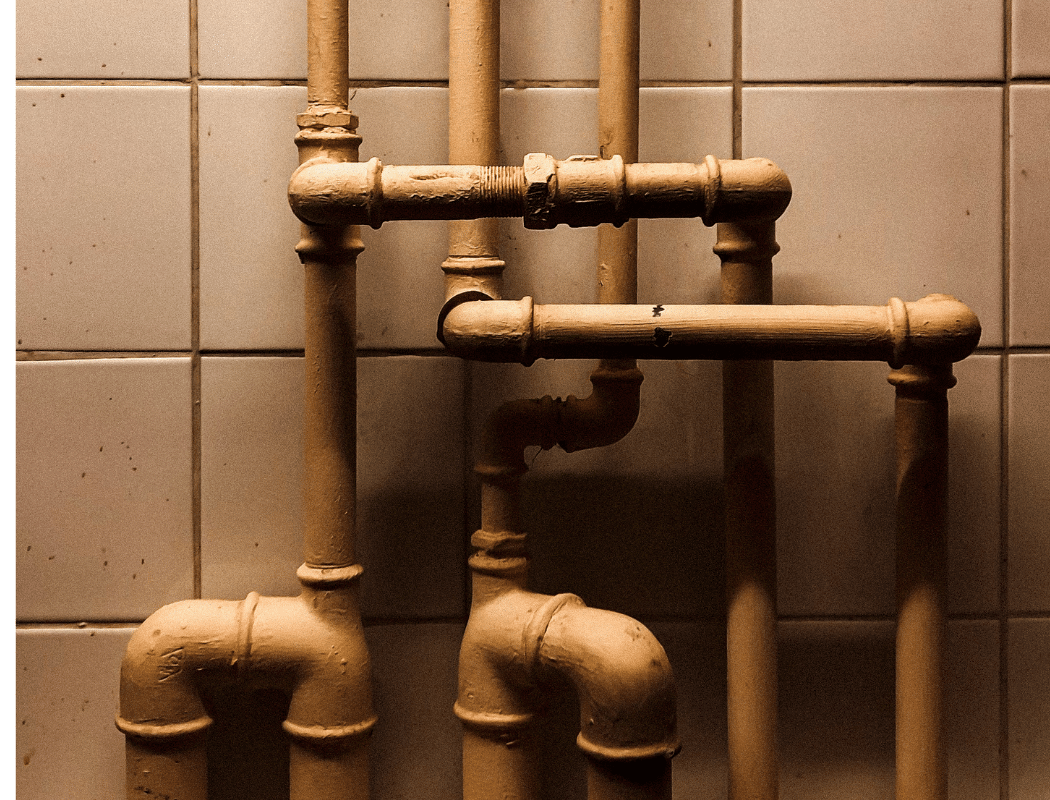
Work through the cold spots in order: loft pipework and the cold water tank, pipes in garages and outbuildings, the condensate pipe from a condensing boiler where it runs outside, and any supply pipework in unheated cupboards. Older properties, like the exposed runs pictured, often have metres of bare pipe that have simply never frozen yet.
While you are up in the loft, insulate over and around the tank but not underneath it; warmth rising from the house below helps keep the tank liquid.
Do not forget joints and bends. A run of lagged pipe with bare elbows freezes at the elbows. Tape short offcuts around anything the tubes will not wrap cleanly.
Protect: taps, tanks and the usual suspects
- Outside tapsIsolate the feed from inside if there is a valve, then open the outside tap and leave it to drain. A garden tap left charged through January is one of the most common bursts we see.
- Hoses and fittingsDisconnect hosepipes. A connected hose traps water in the tap body and helps it freeze.
- Boiler condensate pipeIf your condensing boiler’s white plastic discharge pipe runs outside, it can freeze and shut the boiler down exactly when you need it. Lag it generously.
- Dripping taps and running overflowsFix them before winter. A steady drip through a waste or overflow pipe can freeze it solid from the outlet backwards.
- Empty and rarely used roomsKeep some background heat in them. The pipe that bursts is usually in the room nobody checks.
Find your stopcock before the freeze
When a pipe lets go, the difference between a wet carpet and a ruined ground floor is how fast the water stops. That is entirely about whether you can find and turn your stopcock under pressure, in the dark, possibly in a dressing gown.
Most Scottish homes have the indoor stopcock under the kitchen sink, but tenements and older properties throw up surprises: shared stop valves in common closes, external boundary stopcocks under a small lid in the pavement. Find yours now, turn it fully off and on again so you know it moves, and show everyone in the house. Our guide to finding your stopcock covers the likely locations by house type.
Going away? Empty homes need a plan
The worst winter losses we attend are empty houses: a burst on Boxing Day discovered on the fifth of January. If the property will be empty over winter, pick one of two strategies and commit.
Option 1: Keep it warm
Leave the heating on a constant low setting throughout the absence, and ideally have someone check the house every few days. A smart thermostat that flags a temperature crash gives you an early warning that the boiler has stopped.
Option 2: Drain it down
For long absences, turn off the stopcock and drain the system by running the taps until they stop. Scottish Water’s winter guidance covers this for extended trips. No water in the pipes means nothing to freeze, whatever the weather does.
Whichever you choose, turning off the stopcock while you are away limits the damage even if something upstream of a fitting fails. An unmetered Scottish home gives you no bill to spot a problem on, so nobody notices anything until someone physically visits; our article on checking for a leak without a meter explains the checks that replace the meter test here.
A checklist to protect your pipes this winter in Scotland
An hour in November saves a claim in January
- Lag exposed pipes in the loft, garage and unheated cupboards
- Insulate the cold water tank (sides and top, never underneath)
- Isolate and drain outside taps; disconnect hoses
- Lag the boiler condensate pipe where it runs outside
- Find and exercise the stopcock; show the household
- Fix dripping taps and running overflows now
- Get the boiler serviced before the cold arrives
- Set a plan for any period the house will stand empty
If you get through that list and something still niggles, a damp smell, a pressure gauge that keeps creeping down, a patch of driveway that never dries, those are signs of a leak that predates winter. Call us on 07700 152 467 and we will find it before the frost turns a weep into a flood.
If a pipe freezes or bursts anyway
No flow from one tap on a freezing morning usually means an ice plug, and the pipe may already be split behind it. Turn off the stopcock before you attempt any thawing, thaw gently (warm towels or a hairdryer on low, never a naked flame) and watch every joint as the flow returns. If water appears anywhere it should not, leave the stopcock off and get help.
A full burst is simpler: stopcock off, cold taps open to drain the system, electrics off in any soaked area, photographs for the insurer. The one thing you should not do afterwards is guess where a hidden split is. Winter bursts inside walls and under floors are exactly what non-destructive detection exists for: we trace the pipe, pinpoint the split and mark it, so the repair means one small opening rather than an exploratory demolition.
Frequently asked questions
Should I leave my heating on all night in winter?
In a normal cold spell, a timed pattern with a low overnight setting is usually enough. In severe frost, keep the heating running constantly at a low temperature instead. The aim is to stop the coldest corners of the building, not the living room, from ever reaching freezing.
What temperature should I leave an empty house at?
Keep it warm enough that loft spaces and pipe runs never freeze; frost-protection settings on the boiler or a constant low thermostat setting do the job. For long winter absences, draining the system down entirely is the safer option. Check your insurance policy too, as many have unoccupancy conditions.
Who is responsible if my pipe bursts in Scotland?
Scottish Water is responsible for the main and the communication pipe up to your property boundary. From the boundary into and throughout the house, the pipework belongs to the owner, and over 30% of winter incidents happen on customer property. Bursts in flats with shared supply pipes are usually a joint responsibility with neighbours.
Does a winter leak show up on my water bill?
Usually not in Scotland. Most households here are unmetered and pay for water through council tax, so a burst or slow leak does not change the bill. That removes the early warning metered homes get, which is why physical checks and a known stopcock location matter more here.
My heating pressure keeps dropping in cold weather. Is that a winter problem?
It can be. Cold snaps stress heating systems, and a pressure gauge that needs topping up more than once or twice a year suggests water is escaping somewhere. Small winter splits on heating pipes often leak invisibly under floors. Track how fast it drops and get it investigated rather than topping up indefinitely.
Related reading
- Frozen Pipes: How to Thaw Them Safely and Prevent a Burst
- Burst Water Pipe? What to Do in the First 10 Minutes
- Where Is My Stopcock? How to Shut Off Your Water in an Emergency
MCR Leak Detection provides water leak detection across Scotland all winter, from Highland holiday homes to city tenements.
Speak to MCR Leak Detection
Suspect winter has already found a weak spot in your pipework? We locate frozen splits and hidden leaks non-destructively, across Scotland, 24/7, before the thaw turns them into something worse.