

Before you book, ask about the range of equipment carried, how the leak position is confirmed before anything is opened, what the written report includes, experience with insurance claims, how the survey is priced, and what happens if nothing is found. A genuine specialist answers all ten questions here without flannel. Hesitation on any of them is your red flag.
10 Questions to Ask Before Hiring a Leak Detection Company
Leak detection is an odd purchase. You cannot inspect the work afterwards the way you can a new bathroom, you probably need it in a hurry, and the difference between a good firm and a poor one only shows up when a floor gets opened. Pick well and the leak is marked with one small repair to follow. Pick badly and you pay for a survey, then pay again for the holes it should have prevented.
The fix is to ask better questions before you book. These are the ten we would ask any leak detection company, including us, and the answers a firm worth hiring should give.
What’s in this guide
Questions 1–3: methods and evidence
1. What detection methods do you carry on the van?
The answer you want is a list: thermal imaging, acoustic ground microphones, leak noise correlation, tracer gas, moisture mapping and pipe tracing. No single method finds every leak, and a firm with a full equipment range can switch approach when the first tool hits its limits. One-gadget outfits find one kind of leak.
2. How do you confirm the location before anyone opens anything?
Listen for cross-checking. A suspect reading from one instrument should be verified with a second method before a repair point is marked. Firms that mark the floor off a single thermal image are guessing with a camera, and the wrongly lifted tiles that follow are yours, not theirs.
3. Is the survey non-destructive?
The whole value of professional detection is finding the leak without exploratory damage. The survey itself should involve no opening up at all, with the repair needing one small access point at the confirmed location. Our guide to non-destructive leak detection explains what that promise should mean in practice.
Questions 4–6: reports and insurance
4. Do you provide a written report, and what does it contain?
A proper report includes the confirmed location, methods used, photographs, readings and repair recommendations. It is not an invoice with a sentence on it. This document briefs your plumber and evidences your insurance claim, so ask to see an example (with a previous customer’s details removed). What should be in one is covered in our guide to leak detection reports for insurance.
5. Have you worked with insurance claims and loss adjusters?
Most hidden-leak jobs end up involving an insurer, and the finding-the-leak part is usually claimable under trace and access cover. A firm that regularly deals with claims will write reports adjusters accept first time and can tell you what your policy will want to see. Ask for specifics rather than a bare “yes”.
6. Who will actually attend?
You are buying the engineer, not the brochure. Ask whether the person attending is employed and trained by the firm or subcontracted, and how much leak detection they do, since for some general plumbing firms it is a sideline behind a borrowed camera.
Questions 7–8: pricing and the awkward outcome
7. How is the survey priced, and what exactly does it include?
You want a clear structure before anyone attends: what the fee covers, how long is included, what triggers extra cost, and whether the report is included or an add-on. Market guides such as our leak detection cost article set out typical UK ranges with named sources, so you can spot both overcharging and suspiciously cheap surveys, which usually mean one tool and no report.
8. What happens if you cannot find the leak?
An honest firm has a straight answer: what a return visit costs, what circumstances lead to one (usually intermittent leaks), and what you get if the diagnosis turns out to be condensation or rainwater rather than plumbing. Be careful with dramatic guarantees. “No find, no fee” sounds reassuring, but read what counts as a “find” and what is excluded before you rely on it.
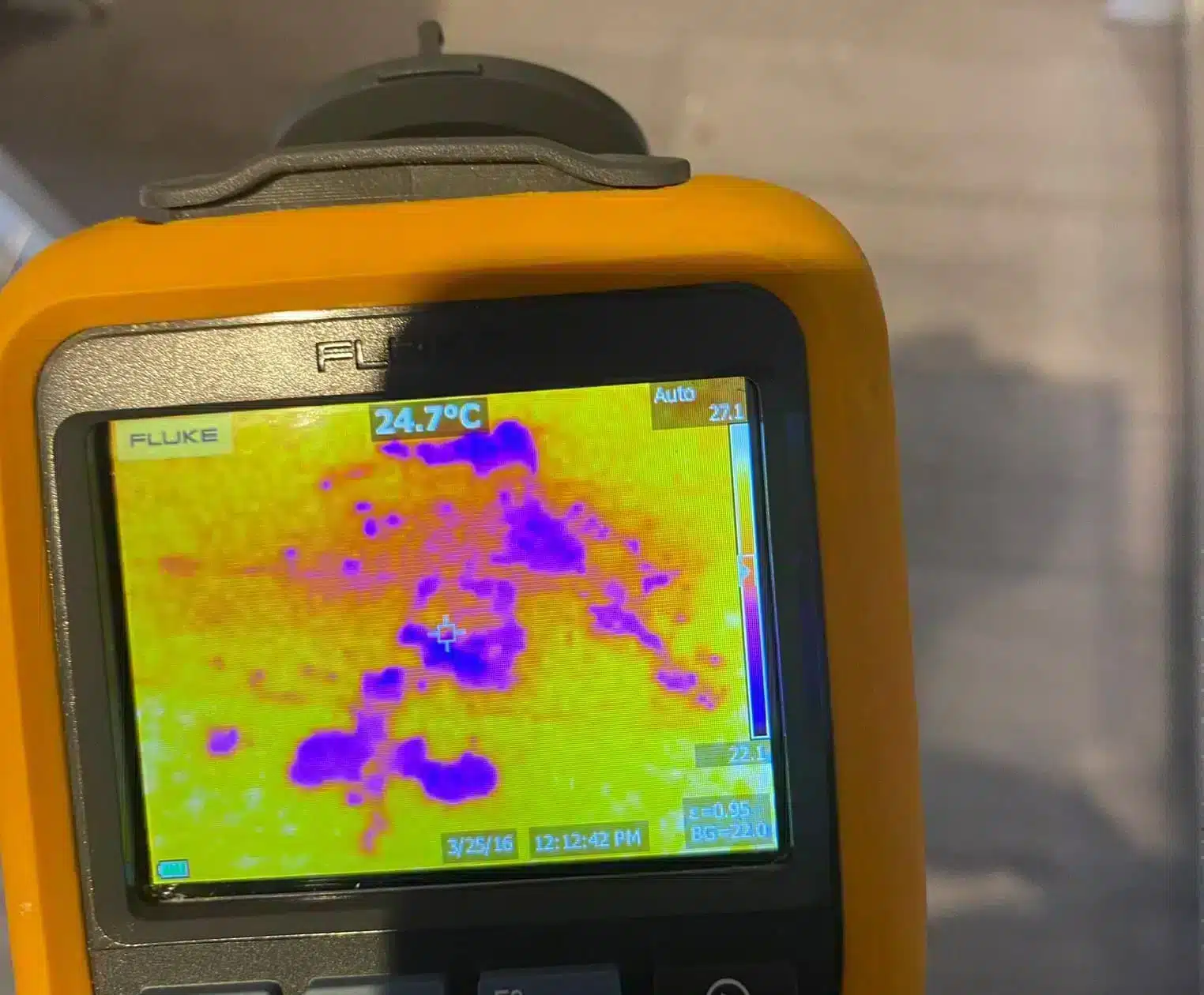
Equipment is easy to buy and hard to interpret. A thermal camera in untrained hands produces colourful pictures and confident wrong answers, because damp, cold bridging and missing insulation all look alike to an amateur.
That is why the questions above focus on method and evidence rather than brand names of gadgets. How a firm reaches its conclusion tells you far more than what it carries.
Questions 9–10: coverage and what comes after
9. Do you know this area and this housing type?
Scottish housing punishes generic advice. Tenement flats share pipes and responsibilities, solid stone walls hold moisture differently from cavity walls, monoblock driveways hide supply pipes, and most homes have no water meter to test against. A firm working here regularly should talk about all of this unprompted. Ask where they cover and what they see most in homes like yours.
10. Do you repair as well, or hand over to my plumber?
Neither answer is wrong, but you need to know the plan. Some firms locate only and pass a marked point plus report to your plumber; others quote for repair too. What you want to avoid is discovering after the survey that nobody is lined up to fix the pipe while water is still escaping.
Red flags that should warn you off
- A quote with no questionsIf a firm prices the job without asking about symptoms, systems or property type, the diagnosis has already been skipped.
- One method for everything“We use the thermal camera” as the complete answer means leaks that need acoustics or tracer gas will not be found, and you may be told they do not exist.
- Vagueness about the reportIf nobody can tell you what the written output contains, expect a one-line invoice your insurer will bounce.
- Digging as a first resortAnyone proposing to open floors or excavate before instruments have narrowed the search is selling demolition, not detection.
- Pressure tacticsA genuine emergency needs speed, but a firm inventing urgency to stop you comparing options is telling you something about the comparison.
If you want to hear how we answer these questions ourselves, call us on 07700 152 467. Five minutes of straight answers is a fair test of any firm, including ours.
The take-along checklist
Ask every firm the same ten things
- Methods: full equipment range, not one gadget
- Confirmation: second-method cross-check before marking
- Non-destructive: no opening up during the survey
- Report: location, methods, photos, readings, recommendations
- Insurance: real trace and access claim experience
- The engineer: who attends and how experienced they are
- Pricing: what is included, in writing, before the visit
- No-find policy: the honest terms, not the slogan
- Local knowledge: tenements, stone walls, unmetered homes
- Aftercare: who repairs, and how fast
Frequently asked questions
What is the single most important question to ask a leak detection company?
Ask how they confirm the leak position before anything is opened up. The answer reveals everything: the equipment range, the discipline of cross-checking with a second method, and whether the firm treats your floors as evidence or as an excavation site. Vague answers here predict expensive holes later.
Should a leak detection company be cheaper than a plumber’s day rate?
Not usually, and that is fine. You are paying for specialist equipment and diagnosis that turns an open-ended search into one targeted repair. A survey that prevents a single wrongly lifted floor typically pays for itself. Compare what the fee includes, especially the written report, rather than the headline number alone.
Is “no find, no fee” a good sign?
It can be genuine, but read the terms. What counts as a find, what happens with intermittent leaks, and whether condensation or rainwater diagnoses are excluded all vary between firms. A transparent returns policy with clear pricing is often worth more than a slogan designed to win the booking.
Do I need a specialist, or can my plumber find the leak?
Plumbers are excellent at visible leaks and repairs. Hidden leaks under floors, in walls or underground need detection equipment and daily practice interpreting it. The usual pattern is specialist locates, plumber repairs, and the two trades work well together when the survey report marks the exact spot.
What should a leak detection report include?
The confirmed leak location, the methods and equipment used, photographs, moisture or pressure readings, and clear repair recommendations. If an insurer is involved, it should document the cause of damage in language a loss adjuster can act on. Ask to see an anonymised example before booking.
Speak to MCR Leak Detection
Ask us all ten. Non-destructive methods, a full equipment range, written reports insurers accept, and honest answers before you spend a penny. Scotland-wide, 24/7.
Related reading
- How Much Does Leak Detection Cost? UK and Scotland Price Guide
- Why Insurers Ask for a Leak Detection Report (and What’s in One)
- Non-Destructive Leak Detection: What It Means for Your Home
- DIY Leak Detection vs Calling a Professional: An Honest Guide
Or see the areas we cover across Scotland.