

Rising damp climbs from the ground as a broad, even band with a salty tide mark, always starting at floor level. A leak shows as a localised patch that can sit anywhere on the wall, often growing or changing with water use. Moisture profiles, salts analysis and a pipe pressure test settle it; guessing pays for the wrong repair.
Rising Damp or a Water Leak? Stop Guessing
Rising damp is the most over-diagnosed condition in British housing. A damp patch appears low on a wall, someone says the dreaded words, and before long there is a quote on the table for a chemical damp-proof course, hacked-off plaster and a week of mess. Meanwhile, in a fair share of these houses, a heating pipe or a supply pipe is quietly leaking a metre away, and no injection cream on earth will fix that.
The two problems produce similar-looking walls and completely different repairs. This article gives you the differences you can check yourself, the tests that settle it properly, and the honest cost of getting the diagnosis wrong.
What’s in this guide
Why rising damp gets the blame so often
Three reasons. First, it is the diagnosis everyone has heard of, so it is the one that gets reached for. Second, low-level damp is exactly where leak evidence also appears: water from a failed pipe under the floor migrates sideways and climbs the base of the nearest wall, mimicking the classic rising damp picture. Third, some of the people offering free damp surveys sell damp-proofing for a living, and a hammer salesman finds a lot of nails.
None of that means rising damp is a myth. It is real, particularly where an old damp-proof course has failed or ground levels have been raised above it. But in our work we regularly find plumbing behind walls that had already been condemned as rising damp, and the giveaway was usually there all along in the pattern of the moisture.
What rising damp actually is
Rising damp is ground moisture drawn upwards through the pores of brick, stone and mortar, the same way a paper towel pulls water up from a spill. Gravity limits how far it can climb, which is why genuine rising damp is a low-level condition, typically fading out within roughly a metre of the floor rather than appearing halfway up a wall.
As the water rises and evaporates, it carries dissolved ground salts into the wall and leaves them behind. Those salts concentrate at the top of the wet zone, forming the classic tide mark, and because the salts themselves attract moisture from the air, the band can stay stubbornly damp even in dry spells. Salt is rising damp’s signature, and it becomes the key to telling it apart from a leak, because clean water from a pipe carries no ground salts at all.
Rising damp or leak: the differences you can see
| What to check | Rising damp | Water leak |
|---|---|---|
| Height on the wall | Starts at the skirting, fades out within roughly a metre | Can sit at any height, including mid-wall or near the ceiling |
| Shape | Broad, even band along a length of wall | Localised patch, ring or streak, often centred on one spot |
| Edges | Salty tide mark at the top of the band | Clean-edged stain, no salt crust |
| Distribution | Often affects a whole wall base, sometimes several rooms at ground level | One wall, one area, frequently near a bathroom, kitchen or heating run |
| Floor involvement | Wall base wet, floor itself often unaffected | Damp floor coverings or a warm spot can accompany the wall patch |
| Skirtings and plaster | Salts fluff the plaster surface; decoration fails along the band | Staining and swelling concentrated at the wet spot |
Upstairs damp deserves its own line: rising damp does not happen on the first floor. A damp patch upstairs is a leak, condensation or rain penetration, full stop. Our guides to damp patches with no obvious leak and condensation versus leaks cover those neighbouring diagnoses.
Timing and behaviour: watch what the patch does
- Does it respond to water use?A patch that darkens after baths, showers or heavy heating use is tracking a pipe or waste, not the ground. Rising damp does not care what time you shower.
- Does it respond to weather?Damp that surges after driving rain points to penetrating damp, a common story on exposed Scottish gables and solid stone walls. Rising damp changes slowly with the seasons, not with individual storms.
- Is it growing week on week?Rising damp is broadly stable; it has been there for years. A patch that is visibly spreading has a live water source feeding it.
- Any other symptoms?A boiler losing pressure, a musty smell getting stronger or a hiss in the quiet all point towards plumbing.
The tests that settle it
Opinions argue; measurements do not. A proper investigation runs the wall through a sequence of checks, and each one eliminates suspects.
On Scotland’s older stone housing this matters double, because thick solid walls hold moisture for months and lime plasters read differently from modern gypsum. Slapping a standard rising damp verdict on a Victorian sandstone wall without testing is guesswork with a clipboard.
1. Moisture profile up the wall
Readings taken in a grid from skirting level upwards. Rising damp reads wettest at the bottom and fades with height; a leak reads wettest at its source, wherever that is. Our guide to moisture meter readings explains what the numbers mean and their limits on different materials.
2. Salts analysis
A sample from the damp zone is tested for nitrates and chlorides, the salts ground water carries. Salts present supports rising damp; salt-free moisture means clean water, and clean water comes from pipes or rain, not the ground.
3. Pressure test the plumbing
The heating circuit and mains supply are isolated and pressure tested. A circuit that cannot hold pressure has a leak, and the damp wall has its explanation. This single test has cancelled many damp-proofing quotes.
4. Thermal imaging and tracing
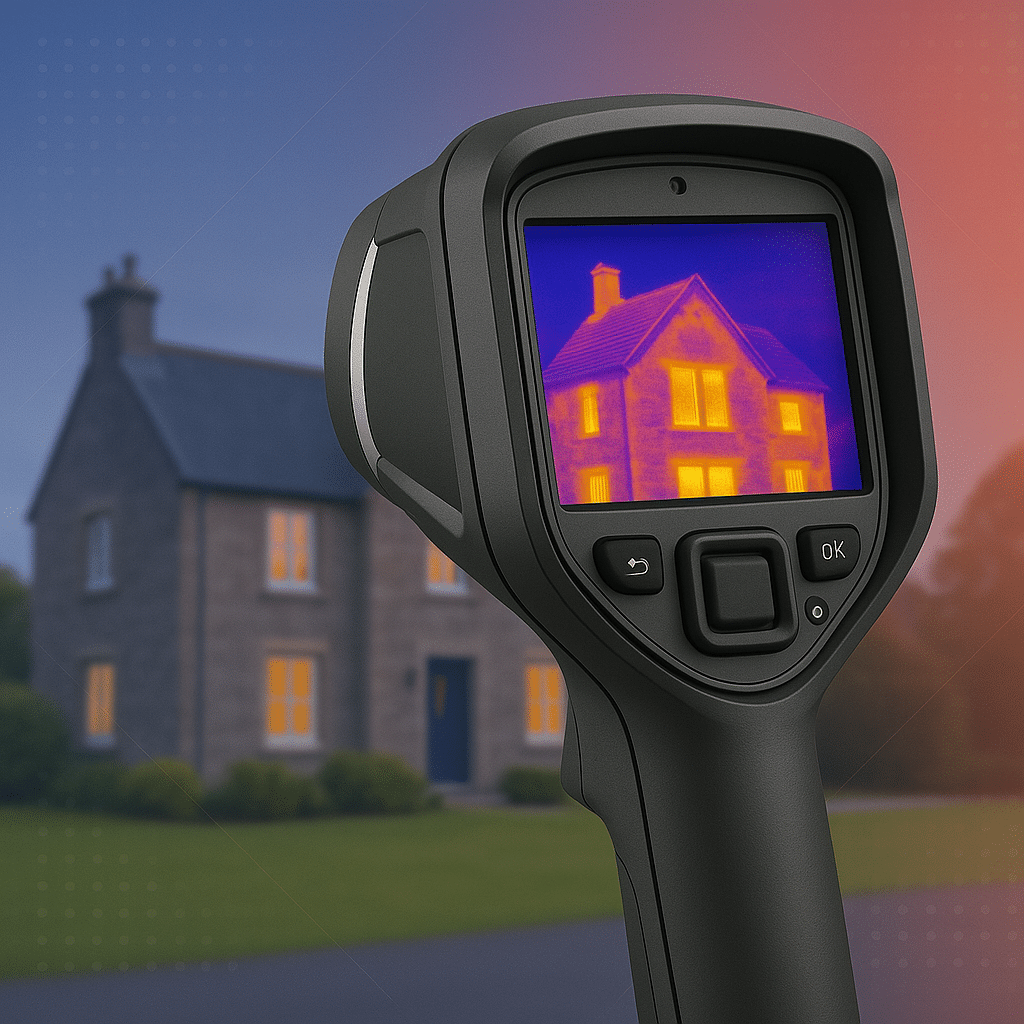
If plumbing is losing water, thermal imaging and acoustic tracing pinpoint the failure behind the wall or under the floor without opening anything on a hunch.
Halfway to booking a damp-proofing crew but nobody has tested the pipes? Call us on 07700 152 467 first; ruling a leak in or out is quick, and it is far cheaper than replastering the wrong wall.
The cost of the wrong diagnosis
Get it wrong in either direction and you pay twice. Treat a leak as rising damp and you buy an injected damp-proof course, stripped and replastered walls, redecoration, and a wall that gets wet again within months because the pipe behind it never stopped leaking. Worse, the water keeps damaging the structure the whole time, and an insurer may later ask why a known problem went unaddressed; our article on slow leaks and insurance explains why the discovery date matters.
Treat rising damp as a leak and the failure is gentler but still wasteful: survey fees, opened walls, and the real fix, sorting the damp-proof course or the ground levels outside, delayed by months. The order of operations that protects your money is simple. Measure first. Eliminate plumbing with a pressure test. Only then let anyone sell you a damp treatment, and get the findings in writing either way.
Frequently asked questions
How can I tell rising damp from a leak myself?
Check height, shape and behaviour. A broad, even band starting at the skirting with a salty tide mark suggests rising damp. A localised patch at any height, especially one that darkens after water use or keeps growing, suggests a leak. Anything above the ground floor is not rising damp.
Can a water leak look like rising damp?
Easily. A pipe leaking under the floor spreads water sideways, and the nearest wall soaks it up from the bottom, producing low-level damp in the classic rising damp position. The difference shows in testing: leak water carries no ground salts and the plumbing fails a pressure test.
How high does rising damp go up a wall?
Genuine rising damp is a low-level condition. Capillary action fights gravity, so the wet zone typically fades out within roughly a metre of floor level, marked by a salt tide line at its top. Damp appearing well above that height has a different cause, usually a leak or rain penetration.
What does salts analysis actually prove?
Ground water carries dissolved nitrates and chlorides up into the wall, so their presence in a sample supports rising damp. Their absence means the moisture is clean water, which points to plumbing or rain instead. It is one of the few tests that distinguishes the source rather than just the wetness.
Should I get a damp survey or a leak detection survey first?
If there is any plumbing near the damp, rule the leak in or out first. A pressure test and moisture mapping are quick, non-destructive and give a definite answer, while a mistaken damp-proofing job costs far more and leaves the real leak running. An independent report also keeps everyone honest.
Speak to MCR Leak Detection
Before you pay for a damp-proof course, find out what the moisture actually is. We test, trace and pinpoint hidden leaks non-destructively, anywhere in Scotland, 24/7.
Related reading
- Damp Patch on the Wall but No Obvious Leak? Start Here
- Condensation, Damp or a Leak? How to Tell the Difference
- Moisture Meter Readings Explained: What’s Normal and What’s Not
- How to Find a Water Leak in a Wall or Ceiling
Or learn more about our water leak detection across Scotland.