
Rats and mice gnaw constantly because their incisor teeth never stop growing, and modern plastic pipe is soft enough to chew through. The damage happens in lofts, wall cavities and under-floor voids, so the leak appears with no obvious cause. If you find droppings or gnaw marks near a leak, treat the pests and the pipe together.
Rodent Damage to Pipes: The Leak Cause Nobody Suspects
When a leak appears in a ceiling or under a floor, everyone blames a joint, a nail or corrosion. Almost nobody blames an animal. Yet rodent damage to pipes is a genuine and growing cause of hidden leaks, because so much modern plumbing is plastic, and plastic is no obstacle to a rat. We have opened up voids expecting a failed fitting and found a pipe chewed halfway through, with a nest a metre away.
This guide covers why rodents attack pipework, where in a Scottish home it happens, the signs that point to it, and how the damage gets found in spaces you cannot see into without demolition.
What’s in this guide
Why rodents chew pipes at all
Rodents do not chew pipes out of spite or hunger. Their front teeth grow throughout their lives, and the RSPCA notes that rats’ teeth grow continuously, so gnawing keeps them worn down. A rat in a floor void gnaws whatever is in front of it: joists, cables, insulation and pipework. A water pipe has two extra attractions. It sweats or carries condensation, so it smells of water, and a warm heating pipe marks a cosy nesting spot.
The result is chew damage that starts as shallow grooves and ends as a hole. Sometimes the pipe fails while the rodents are still in residence. Just as often the animal has weakened the wall of the pipe and moved on, and the leak opens up weeks or months later, which is exactly why nobody connects the two events.
Where the damage happens in a Scottish home
Rodents work in the spaces people never enter, and Scottish housing gives them plenty. Suspended timber floors leave a ventilated void under the ground floor. Lofts hold water tanks, heating pipes and warm insulation. Older stone homes have generous wall cavities and gaps around joist ends. Mice squeeze through surprisingly small openings, and rats follow drains, broken air bricks and gaps around external pipework.
Activity indoors rises noticeably in autumn and winter as food gets scarce and temperatures drop, so a mystery leak that appears in November in a house with scratching noises deserves a suspicious look. The classic locations we find chewed pipe are under-floor voids near kitchens, loft pipework beside tanks, boxed-in soil and supply pipes, the dead space behind kitchen kickboards and integrated appliances, and garage or outbuilding runs.
Which pipes are at risk
| Material | Risk from rodents | Typical failure |
|---|---|---|
| Plastic barrier pipe (PEX, polybutylene) | High. Soft enough for rats and mice to chew through | Gnaw grooves, then a pinhole or full breach |
| Push-fit fittings and inserts | High. Chewed collars and O-ring housings fail suddenly | Fitting lets go under pressure |
| MDPE supply pipe | Moderate. Thicker wall, but rats will work at it | Slow weep underground or in voids |
| Copper pipe | Low. Too hard to breach, though teeth marks do appear | Rarely fails from gnawing alone |
| Electrical cables nearby | High, and serious | Stripped insulation, shorts and fire risk |
That last row matters. Where rodents have chewed pipe, they have usually chewed cable too, so a rodent leak is a good reason to have the wiring in that void inspected at the same time.
Signs of rodent damage to pipes
Check for these alongside any unexplained leak
- Scratching, scurrying or gnawing sounds from floors, walls or the loft, mostly at night
- Droppings along skirtings, in the loft, under the sink or behind kickboards
- Gnaw marks on timber, cables, stored boxes or the pipe insulation itself
- Shredded loft insulation or nesting material near pipework
- A damp patch or drip in a void with no joint or fitting anywhere near it
- A greasy smear line along a regular rodent run
The plumbing symptoms look like any other hidden escape: stains, a musty smell, swollen boards. Our guide to the signs of a hidden water leak covers the full list. If the chewed pipe is on the heating circuit, the first clue is often a boiler losing pressure for no apparent reason, and a persistent earthy odour with no visible damp is worth reading our article on the musty smell of a hidden leak before you blame the dog.
Finding the leak without tearing the house apart
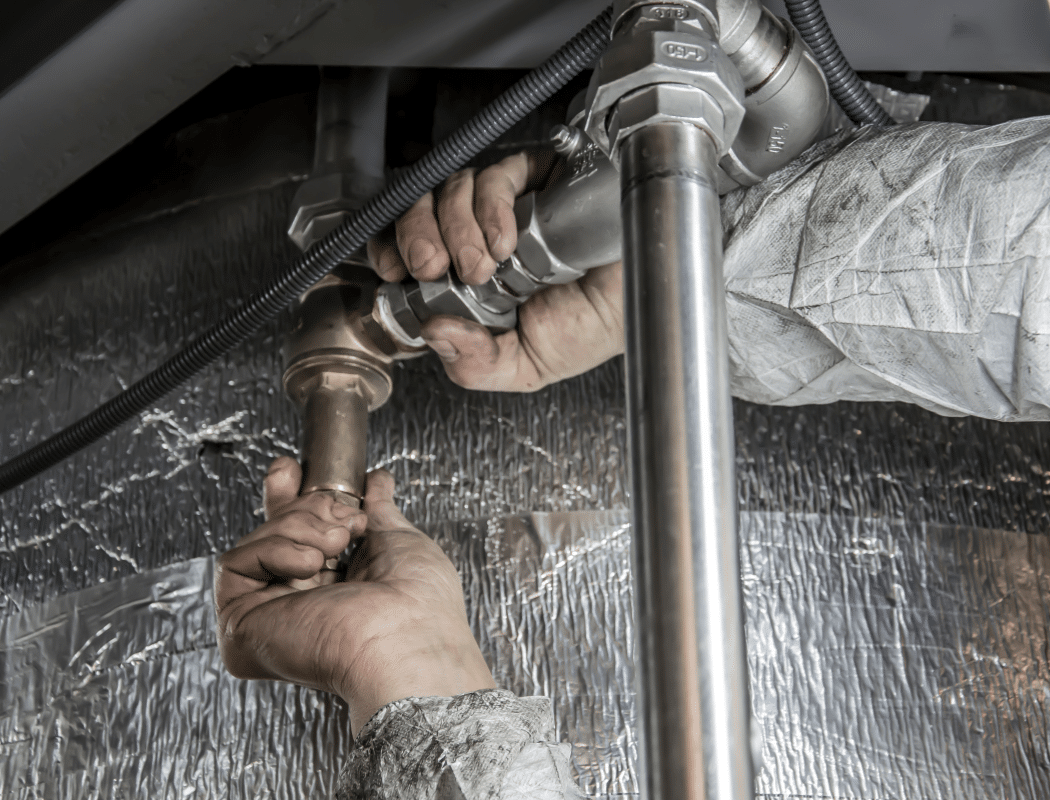
Rodent damage sits, by definition, in the least accessible parts of the building. That is where the animals feel safe. The good news is that the leak itself does not care what caused it, and it can be located the same way as any other hidden escape.
We use moisture mapping and thermal imaging to narrow the wet area from the room side, then acoustic equipment or tracer gas to pinpoint the escape inside the void. Our article on tracer gas leak detection explains why gas testing suits chewed plastic pipe so well: plastic carries little leak noise, but the gas finds its way up through boards and insulation to the probe. A borescope through a small drilled hole then confirms what we are dealing with, and often shows the gnaw marks and droppings that settle the diagnosis.
If you suspect a chewed pipe under your floor right now, do not start lifting boards on a hunch. Call us on 07700 152 467 and we will pinpoint it first, so one board comes up instead of twenty.
The article on telling whether you have a leak under the floor covers the room-side checks you can do yourself before anyone drills anything.
Fix the pests as well as the pipe
Repairing the pipe without dealing with the rodents is a short-term fix. The same animals, or the next family, will chew the new section, and repeat call-outs for the same void are depressingly common. A proper job has three parts. Repair the pipe, ideally in copper for the exposed section, since rodents rarely breach it. Have a pest control professional treat the infestation and confirm it is cleared. Then proof the building: mesh over air bricks, seal gaps around incoming pipes and cables, repair damaged vents and cut back anything giving easy roof access.
On insurance, be careful with assumptions. Policies differ on damage caused by pests, and some exclude it, so read your wording or ask your insurer before you commit to a claim. A detection report that documents exactly where and why the pipe failed gives you the strongest starting position either way.
Frequently asked questions
Can mice really chew through a water pipe?
Yes, given time. Mice manage thin-walled plastic pipe and fittings, while rats deal with plastic easily and will even work at harder materials. Because rodent teeth grow continuously, the gnawing never stops, and a pipe that sits on a regular run gets revisited night after night until it fails.
Do rats chew copper pipes?
They leave teeth marks on copper, but breaching it is rare. Copper is simply too hard to be worth the effort when softer targets sit alongside. That is why we often recommend repairing a rodent-damaged section in copper rather than like-for-like plastic, at least through the vulnerable void.
How quickly does a chewed pipe start leaking?
Anywhere between instantly and months later. A full breach floods the void straight away, but shallow gnaw grooves just thin the pipe wall. Pressure, heat cycles and time finish the job long after the rodents have moved on, which is why the cause so often goes unrecognised.
Does home insurance cover rodent damage to pipes?
It depends on the policy. Escape of water damage is usually covered, but some insurers exclude damage caused by vermin, so the pipe repair itself may not be. Check your wording before claiming. An independent detection report showing the location and cause of the failure helps whichever way the policy reads.
How do I stop rodents chewing pipes again?
Proof the building rather than relying on traps alone. Mesh air bricks, seal gaps where pipes and cables enter, fix broken vents and keep food waste secured. Have a pest professional confirm the infestation is cleared after treatment, and consider copper for pipe runs through voids with a history of activity.
Speak to MCR Leak Detection
Unexplained leak in a floor, wall or loft? We locate hidden pipe damage non-destructively across Scotland, 24/7, whatever caused it, and our report tells you exactly what happened and where.
Related reading
- 12 Signs of a Hidden Water Leak in Your Home
- Water Leak Under the Floor? How to Tell Without Lifting It
- Tracer Gas Leak Detection: How It Works and When It’s Used
- Musty Smell in the House? It Might Be a Hidden Leak
Or learn more about our professional leak detection service.