
A pressure relief valve leaking usually means one of two things. Either system pressure is climbing too high, most often because the expansion vessel has failed, or the valve seat no longer seals. Check the pressure gauge first. High readings point to overpressure; a drip at normal pressure means the valve itself has failed. Never cap the pipe.
Boiler PRV Dripping? What a Leaking Pressure Relief Valve Means
There is a small copper pipe on the outside wall behind most boilers, and for years it does nothing. Then one day it starts to drip. That pipe is the discharge from your boiler’s pressure relief valve, and a drip from it is your heating system telling you something specific. The message is worth decoding, because a weeping PRV wastes treated system water, drags your boiler pressure down, and regularly gets mistaken for a hidden pipe leak.
This guide explains what the valve does, the two reasons it drips, how the expansion vessel fits in, and how to avoid paying for the wrong repair.
In this guide
What the pressure relief valve does
Modern combi and system boilers run sealed. The water inside the heating circuit sits under pressure, usually about 1 to 1.5 bar when the system is cold. Because the circuit is sealed, something has to protect it if pressure ever climbs dangerously. That is the pressure relief valve, sometimes called the safety valve or PRV. On most domestic boilers it is set to open at 3 bar.
When the valve opens, it dumps water out of the system through a discharge pipe, which normally runs through the wall and points at the ground outside. That routing is deliberate. Scalding water needs somewhere safe to go. It also means the evidence of a PRV problem appears outside the house, where nobody is looking, while the symptom people notice indoors is a boiler losing pressure for no obvious reason.
A PRV that opens once in an emergency has done its job. A PRV that drips day after day has a fault behind it, and the fault is rarely the weather.
First check: what is the pressure gauge doing?
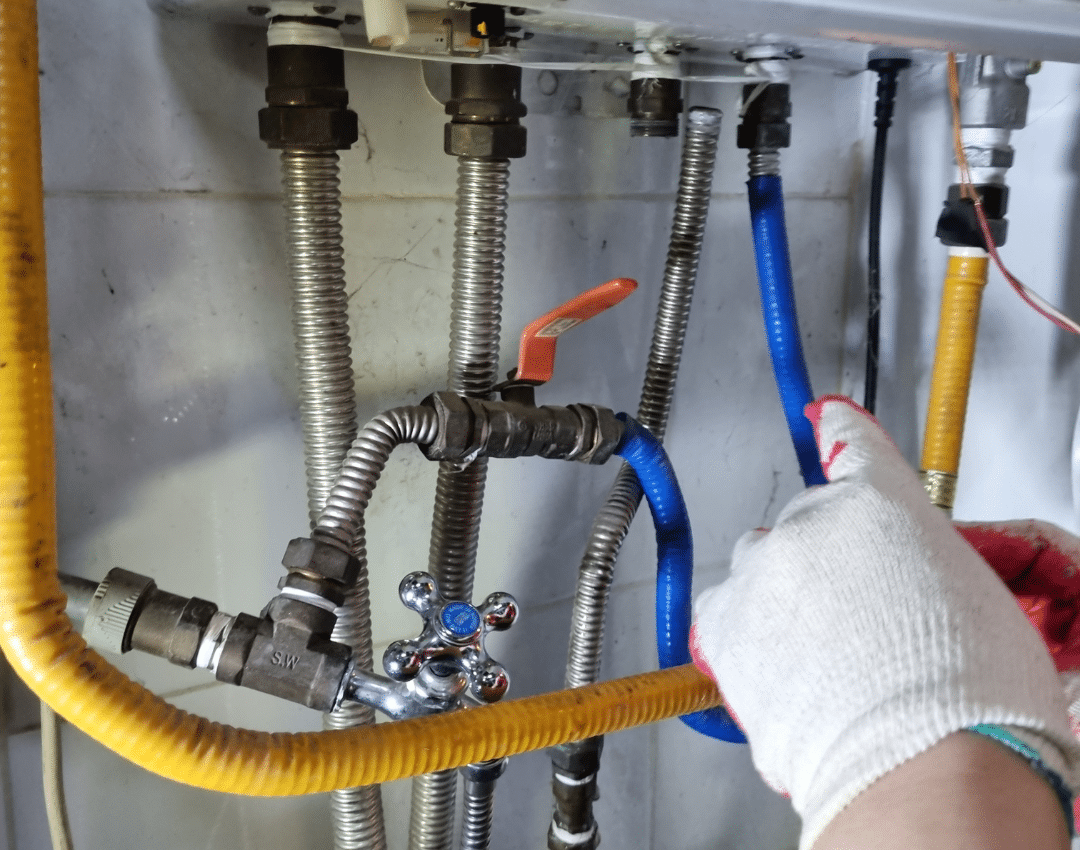
Before anything else, look at the pressure gauge on the front or underside of the boiler. Note the reading cold, then again when the heating has been running for an hour. The pattern tells you which of the two faults you have.
Pressure climbing towards 3 bar when hot: the system genuinely is over-pressurised and the valve is doing what it was built to do.
Pressure normal but the pipe still drips: the valve itself is no longer sealing.
Water expands as it heats, so a small rise between cold and hot is normal. A swing from 1.5 bar cold to nearly 3 bar hot is not. Keep a note of the readings over a few days, because that record settles arguments later and helps whichever engineer attends.
Cause one: the pressure really is too high
If the gauge climbs steeply every time the boiler heats up, the PRV is the messenger, not the fault. Two things commonly push a sealed system over the limit.
- Overfilling at the filling loopThe simplest cause. Someone topped the system up and left it at 2 bar or more, or the filling loop valve was left cracked open and mains pressure has been creeping in ever since. Our guide to repressurising a boiler shows the correct range and why the loop must be fully closed afterwards.
- A failed expansion vesselThe far more common culprit on older boilers, and the one that catches people out. When the vessel loses its air charge, the system has nowhere to put expanding hot water, so pressure spikes with every heating cycle and the PRV vents the excess. More on this below.
Cause two: the valve no longer seals
PRVs are simple devices: a spring holds a rubber or elastomer disc against a brass seat. They also have a known weakness. Once a PRV has lifted, a fleck of sludge, scale or jointing debris often lands on the seat as it closes, and from that day it weeps. The spring cannot squeeze the disc past the debris, so a thin trickle escapes constantly even at perfectly normal pressure.
Age does the same job more slowly. The disc hardens, the spring weakens, and a valve that sealed at 1.5 bar for a decade starts to let go at lower and lower pressures. This is why the trade treats a PRV as a consumable part. Once one has started passing water, cleaning it rarely lasts. Replacement is the honest fix, and it is a routine job for a Gas Safe engineer.
Dirty system water accelerates all of this, which is one more argument for keeping inhibitor levels up. Clean water means clean valve seats.
The expansion vessel connection
The expansion vessel deserves its own section because vessel failure and PRV trouble arrive as a pair. The vessel is a steel container, usually inside the boiler casing, split in half by a rubber diaphragm. One side holds system water; the other holds pressurised air. When the heating runs and the water expands, the air side compresses and absorbs the growth.
When the vessel loses its air charge, or the diaphragm splits, that cushion disappears. Every heating cycle then slams the full expansion against a fixed volume of water, pressure leaps, and the PRV vents. The classic pattern looks like this:
- Pressure swings wildly between cold and hotLow in the morning, close to 3 bar mid-evening. The wider the swing, the more suspect the vessel.
- The boiler needs topping up every few daysEach vent through the PRV pushes water out of the system, so the cold reading keeps falling. Repeated top-ups then feed fresh, oxygenated water into the circuit, which encourages corrosion.
- The discharge pipe drips mainly when the heating runsA seat-failure drip is constant. A vessel-failure drip follows the heating schedule.
Recharging or replacing an expansion vessel is boiler work, not leak detection work, and we would rather tell you that plainly than sell you a survey you do not need. But confirming which fault you have is exactly where diagnosis matters, because the symptoms overlap with something worse.
When a leaking pressure relief valve mimics a hidden leak
Here is the situation we meet most often. A boiler keeps losing pressure. Nobody can see water anywhere. The assumption becomes a hidden pipe leak, and quotes are gathered for lifting floors. Meanwhile a copper pipe behind the boiler has been quietly dripping onto the ground outside for months.
So before anyone talks about floorboards, check the discharge pipe. Hold a dry cloth or a cup under it for a minute, look for green staining on the pipe end, and check for a damp patch or moss on the wall or ground beneath it. If the pipe is wet, deal with the PRV and vessel first, then watch the gauge for a fortnight. Our article on boiler pressure dropping overnight covers the same detective work from the other direction.
The reverse trap also exists. A new PRV gets fitted, the vessel gets recharged, and the pressure still falls. At that point the PRV was never the whole story, and the water is going somewhere hidden: a weeping joint under a floor, a corroded microbore run, or a buried heating pipe. That is when finding a leak in a central heating system becomes a specialist job, using thermal imaging and tracer gas rather than guesswork.
If you are stuck between those two explanations, call us on 07700 152 467 before any floor comes up. Talking it through costs nothing, and we can usually tell you which test settles it.
What to do next
Step 1: read the gauge, cold and hot
Note the pressure first thing in the morning and after an hour of heating. Write both down for a few days.
Step 2: confirm the drip
Check the discharge pipe outside with a dry cup. Constant drip suggests the valve seat; a drip only when the heating runs suggests the expansion vessel.
Step 3: book the right trade
PRV replacement and expansion vessel work on a gas boiler is a job for a Gas Safe registered engineer. It is routine and usually quick.
Step 4: watch the gauge afterwards
If pressure still falls with a new valve and a healthy vessel, the loss is elsewhere in the system and needs professional leak detection.
One safety point that outranks everything above: never cap, plug or squeeze shut a dripping discharge pipe. That pipe is the boiler’s only overpressure escape route. Blocking it turns a nuisance drip into a genuine hazard.
Speak to MCR Leak Detection
New PRV, healthy vessel, and the pressure still drops? The water is going somewhere. Our engineers trace hidden heating leaks non-destructively across Scotland, 24/7, so the repair happens at one spot instead of half the house.
Frequently asked questions
Is a leaking pressure relief valve dangerous?
A drip is not immediately dangerous, because the valve is venting to a safe place outside. The danger arises if the pipe is blocked or capped, or if the underlying overpressure is ignored. Treat a persistent drip as a fault that needs a Gas Safe engineer within days, not months.
Can I just tighten or clean the PRV to stop the drip?
Usually not for long. Once debris has scored the seat or the disc has hardened, the valve rarely seals reliably again. Twisting the cap can briefly flush the seat, but the standard trade advice is replacement, and on a gas boiler that is a job for a registered engineer.
Why does my boiler lose pressure if the PRV is dripping?
Every drop leaving the discharge pipe is water leaving your sealed heating circuit, so the gauge falls and the boiler eventually locks out. The loss looks identical to a hidden pipe leak from inside the house, which is why the discharge pipe should be checked before any floors are lifted.
How do I know if the expansion vessel has failed?
The strongest clue is a wide pressure swing: low when cold, close to 3 bar when hot, with the PRV dripping during heating cycles. An engineer confirms it by checking the vessel’s air charge. If water comes out of the vessel’s air valve, the diaphragm has split and the vessel needs replacing.
I replaced the PRV and the boiler still loses pressure. What now?
If the vessel checks out too, the water is escaping somewhere hidden, often under floors or within walls. Small heating leaks can run for months without visible damage. Professional detection using thermal imaging, tracer gas and acoustic equipment locates the exact spot so only one small area is opened.
Related reading
- Boiler losing pressure? Causes and what to do next
- How to repressurise a boiler (and when you should not)
- Boiler pressure dropping overnight: what it usually means
- How to find a leak in a central heating system
Or learn more about our water leak detection service across Scotland.