

A water leak under the driveway is almost always on the supply pipe, which the homeowner owns in Scotland. You do not need to dig the driveway up to find it: acoustic listening and correlation pinpoint the leak from the surface, often to a dig window around 30cm across, so only a small patch of monoblock or tarmac gets lifted.
Water Leak Under the Driveway: Finding It Without Digging It All Up
Few leaks cause as much dread as one under the driveway. The pipe is buried beneath tonnes of monoblock, tarmac or concrete, the wet patch on the surface may be nowhere near the actual hole, and every wrong guess with a digger costs real money to reinstate. Monoblock driveways, everywhere in Scottish suburbs, add their own twist: lift blocks carelessly and the edges crumble, and matching weathered blocks later is harder than people expect.
The good news is that nobody should be digging on a guess. Here is how to confirm the leak, who is responsible for the pipe in Scotland, and how detection narrows the excavation to a single small opening.
What’s in this guide
Signs there is a water leak under the driveway
- A patch that never driesOne area of the driveway stays dark and damp days after the rest has dried. In frost it may glaze with ice before anywhere else.
- Water rising between blocks or through cracksUnder pressure, leak water finds the joints. A slow seep between monoblock joints in dry weather is close to conclusive.
- Sunken or rocking blocksEscaping water washes out the sand bed and sub-base, so blocks settle, rock underfoot or sit proud of their neighbours in one area.
- Moss and lush growth in one stripConstant moisture feeds a green line across an otherwise grey surface, often tracing the pipe route itself.
- A hiss at the stopcockPut your ear near the boundary stopcock or indoor stop valve with everything off. A steady hiss means water is moving somewhere it should not be.
- Low pressure indoorsA supply pipe losing water can show as weaker flow at the kitchen tap; our guide to low water pressure and leaks explains when pressure loss points underground.
Confirming the leak before anyone digs
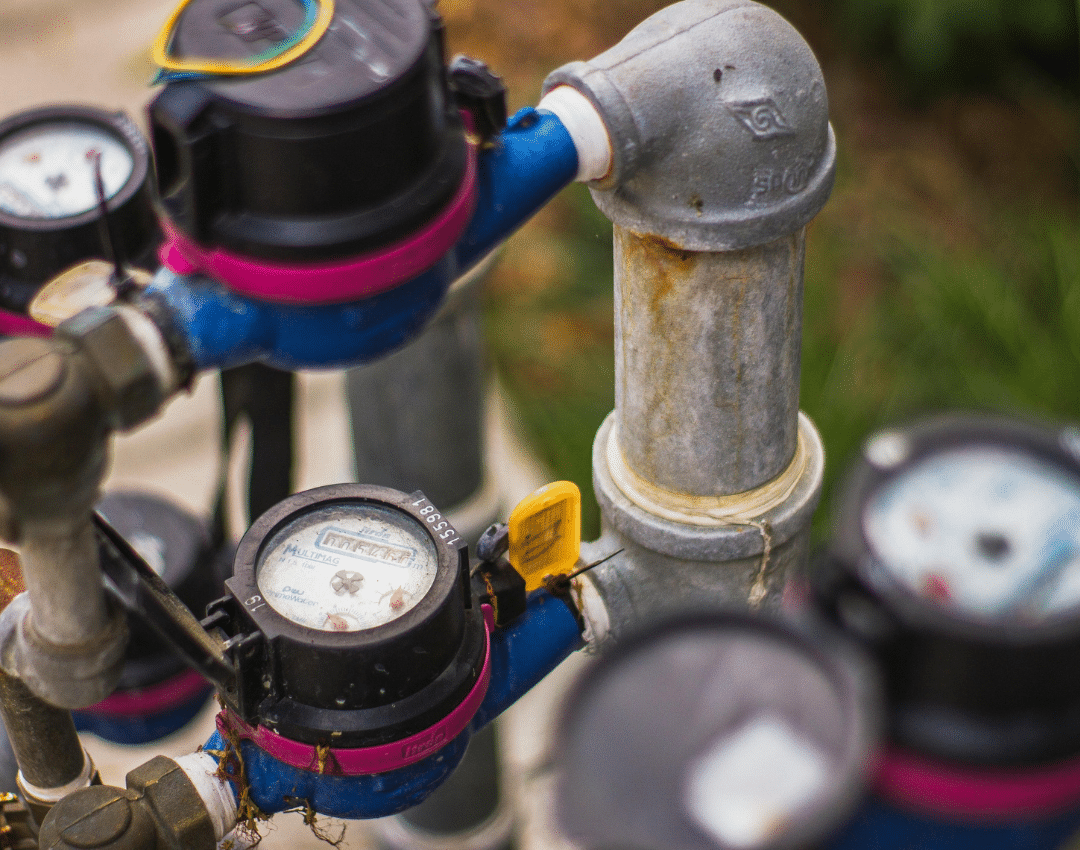
The standard advice online says watch your water meter with everything switched off. In Scotland that advice mostly fails at the first step, because most Scottish households are unmetered and pay for water through council tax. No meter, no meter test.
The unmetered check is the stop valve test: shut the stop valve inside the house, wait, then listen at the boundary stopcock. Sound continuing with the house isolated points to the buried supply pipe. Our article on checking for a leak without a meter runs through it properly.
Businesses usually do have meters, and two readings across a quiet period settle the question quickly.
Whose pipe is it? The Scottish answer
Under a driveway the answer is nearly always: yours. Scottish Water owns the main in the street, the communication pipe from the main to your property boundary, and the boundary stopcock. Everything from the boundary to the house, including the run under your garden and driveway, is the supply pipe, and the supply pipe belongs to the homeowner.
That ownership carries a legal duty. Under the Water (Scotland) Act, owners must repair leaking supply pipes, and Citizens Advice Scotland notes that Scottish Water can serve notice, carry out the repair itself and charge the owner if a leak is left unfixed. Flats and older terraced houses often share a single supply pipe, which makes responsibility joint with the neighbours; our guides to pipe responsibility in Scotland and shared supply pipes cover the detail.
Why digging first is the expensive way round
Water is a liar underground. It travels along the outside of the pipe, follows the loose backfill of the original pipe trench, and surfaces wherever the ground lets it, which can be metres from the hole in the pipe. Dig where the driveway is wet and there is a real chance of finding nothing but saturated sub-base, then digging again, and again.
Every one of those holes has to be reinstated. On monoblock that means lifting, re-bedding and re-laying; on tarmac and concrete it means patches that rarely match. The maths is simple: precision before excavation. One located leak, one opening, one reinstatement.
How we pinpoint a water leak under a driveway
1. Trace the pipe route
A locator maps exactly where the supply pipe crosses the driveway, because pipes rarely run where anyone assumes, especially where driveways were laid over older gardens. This turns the search from an area into a line. Our guide to tracing underground water pipes explains the kit.
2. Listen along the line
A ground microphone works along the traced route. Hard driveway surfaces actually help here: monoblock, tarmac and concrete carry the leak’s hiss to the surface better than soft, soaked ground does. The loudest point sits close to the leak.
3. Correlate for precision
Sensors clamped at two points on the pipe, typically the boundary stopcock and the stop valve indoors, both hear the leak. The correlator measures the difference in the sound’s arrival time and calculates the leak position along the pipe. Acoustic leak detection has its own article if you want the physics.
4. Mark a small dig window
The methods converge on a marked spot, often a window of around 30cm, and on plastic pipes that resist listening, tracer gas confirms it. Only then does anyone lift the surface, and only there.
If your driveway already has a wet patch that will not dry, call us on 07700 152 467 and we will put a mark on it before any digging gets priced.
Monoblock, tarmac, concrete: what reinstatement means
| Surface | Opening it up | Putting it back |
|---|---|---|
| Monoblock | Blocks lift individually around the marked point | Best of the three: original blocks re-bed and re-lay, with little visible trace if lifted carefully |
| Tarmac | Cut and break a neat square | Patched with new tarmac; a colour difference usually shows until it weathers |
| Concrete | Saw-cut and break out a section | Re-poured patch; matching the finish and colour of old concrete is difficult |
This table is exactly why detection pays for itself on driveways. The smaller and better-placed the opening, the cheaper and tidier the reinstatement, and on monoblock a precise dig can disappear completely once relaid.
Insurance, reinstatement and the paperwork
Two parts of a buildings policy matter here. Trace and access cover pays for finding the leak and making good the access, and it is common: MoneySuperMarket, citing Defaqto, puts it at 94% of buildings policies, typically with limits of £5,000 to £10,000. Escape of water cover handles resulting damage. The pipe repair itself usually stays with the owner.
Insurers want evidence, and a detection report showing where the leak was, how it was located and what access was needed is precisely that. Our guides to trace and access cover and leak detection reports for insurance explain what to ask for.
One Scottish footnote: because most households here are unmetered, a supply pipe leak does not inflate a household water bill, so the pressure to act comes from the legal duty to repair and the damage risk, not the meter. Do not let the missing bill shock lull you into leaving it.
Frequently asked questions
How do I know if water is leaking under my driveway?
Look for a patch that never dries, water seeping between blocks in dry weather, sunken or rocking blocks, a moss-fed green strip, or a steady hiss at the stopcock with everything off. Any of these alongside reduced indoor pressure makes a supply pipe leak the likely cause.
Who pays to fix a leaking pipe under my driveway in Scotland?
The homeowner, in most cases. The supply pipe from the property boundary to the house belongs to you, even where it runs under the driveway, and owners have a legal duty to repair it. Scottish Water is responsible only up to and including the boundary stopcock.
Can a leak under a driveway be found without lifting it?
Yes. The pipe route is traced first, then ground microphones and a leak noise correlator locate the leak from the surface. Hard surfaces carry leak sound well, so driveways suit acoustic methods. The surface is only opened at the marked repair point.
Will my water bill go up because of a driveway leak?
For most Scottish households, no. Homes here are typically unmetered, with water charges collected through council tax, so the leak never shows on a bill. Metered businesses do pay for the lost water, which is why commercial driveway leaks tend to get found faster.
Does home insurance cover a leak under the driveway?
Usually in part. Trace and access cover pays to locate the leak and make good the excavation, and most buildings policies include it with limits typically between £5,000 and £10,000. The repair of the pipe itself is normally the owner’s cost. Check your policy wording before work starts.
Speak to MCR Leak Detection
One marked dig point beats a driveway in pieces. We locate leaks under monoblock, tarmac and concrete non-destructively, anywhere in Scotland, 24/7.
Related reading
- Wet Patch in the Garden or Driveway? Finding an Outside Leak
- How to Trace Underground Water Pipes Before You Dig
- Acoustic Leak Detection: How Engineers Hear Leaks Underground
- Who Is Responsible for Water Pipes in Scotland?
Or learn more about our water leak detection across Scotland.