

A burst allowance lets a metered Scottish business claim back charges for water lost to a hidden leak. You claim through your Licensed Provider, such as Business Stream, after the leak is repaired. Policy allows up to 9 months’ allowance for biannually read meters and a 50% water-and-waste allowance for private leakage. Evidence decides the outcome.
Burst Allowances for Scottish Businesses: How to Claim
A hidden burst on business premises hurts twice. First the water bill arrives, inflated by every litre that ran to waste. Then the repair bill lands on top. What many Scottish business owners never learn is that the first of those two hits can often be clawed back, because the burst allowance exists for exactly this situation.
We prepare the evidence for these claims regularly, so here is how the system works, who qualifies, and how to put together an application that gets approved rather than parked.
In this guide
What a burst allowance is in Scotland
Business water in Scotland is billed through the meter. If a pipe on your side of that meter fails, every litre it loses is metered and charged exactly as if your business had used it, and until the leak is found the invoices simply keep climbing.
The burst allowance is the correction mechanism. Once the leak is repaired, your Licensed Provider, the retailer who bills you, applies to Scottish Water as the wholesaler for an allowance against the excess consumption recorded during the leak period. Approved claims credit back charges for water that demonstrably went into the ground rather than through your business. Business Stream, the largest provider, publishes its process openly, and other Licensed Providers run equivalents.
Who can claim (and who cannot)
Eligibility is narrower than most people hope, so it is worth being clear before you spend time on an application.
- Metered business customers: yesThe allowance exists for metered supplies billed via a Licensed Provider. Shops, offices, pubs, factories, farms on metered supplies, charities and public buildings all fall in scope.
- The leak must be on your private pipeworkThe allowance addresses private leakage, meaning failures on pipes you own. Leaks on Scottish Water’s network are their cost, not yours; our guide to who pays when there is a water leak maps the boundary.
- The leak must be fixed firstProviders will not grant allowances for leaks still running. Repair first, claim second, with no exceptions worth planning around.
- Scottish households: noMost homes in Scotland are unmetered and pay through council tax, so there is no metered bill to correct. The household position is covered in our guide to leak allowances in Scotland.
What the policy actually allows
Scottish Water’s burst allowance policy sets the framework the Licensed Providers work within. The headline terms: for meters read every six months, the allowance can cover up to 9 months of excess consumption, and for private leakage the standard grant is a 50 per cent allowance across water and waste water charges.
Fifty per cent may sound ungenerous until you see the sums involved. Castle Water estimates a moderate leak of one litre per second costs a business around £55,000 a year. Halving even a few months of that kind of excess is a serious credit, and it is money the business has already been billed for.
The evidence you need
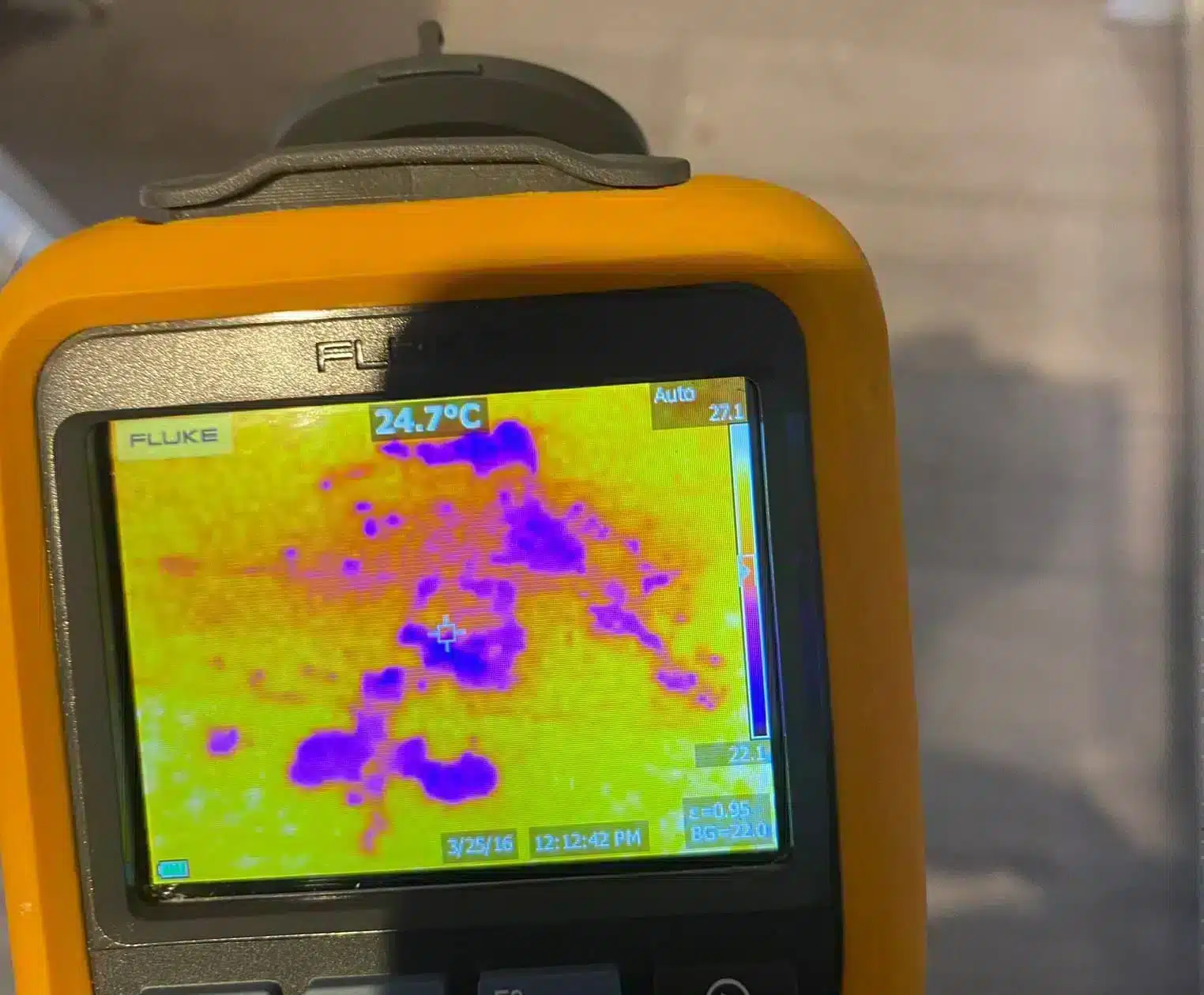
Allowance claims are decided on paper, and the wholesaler sees none of the flood, the stress or the disruption. It sees the file you submit. Per Business Stream’s published requirements, that file needs four things.
Burst allowance evidence checklist
- The repair dateWhen the leak was fixed, with the invoice to prove it.
- An estimated leak start dateWhen the loss began. Billing history showing where consumption jumped is accepted where the exact date is unknown.
- A plumber’s or leak detection reportConfirming what failed, where, and that it has been repaired.
- Two meter readings, at least a week apart, after the repairThese prove consumption has returned to normal and give the wholesaler a clean baseline.
How to claim, step by step
Step 1: confirm and locate the leak
Overnight meter readings across a closed period confirm hidden flow. Professional detection then pinpoints the failure so the excavation happens in one place, not five.
Step 2: repair it and keep the paperwork
Get the repair done and keep the contractor’s invoice and report. External leaks on your supply can also be reported to your provider before repair for advice on responsibility.
Step 3: take the two post-repair readings
Read the meter after the repair, wait at least seven days, and read it again. Photograph both readings with the meter serial visible.
Step 4: apply through your Licensed Provider
Submit the application with your customer reference through your provider’s claim route, for example the My Business Stream portal. The provider checks eligibility and passes the claim to Scottish Water as wholesaler for decision.
Step 5: check the credit
Approved allowances arrive as a bill adjustment. Check it against your own consumption figures, and query the calculation if the leak period looks understated.
If you are at step one and the meter says water is moving through an empty building, call us on 07700 152 467. We survey commercial premises across Scotland, out of hours where trading demands it.
Where a leak detection report fits
Nothing in the rules forces you to use a professional detection firm, but the report earns its fee twice over in an allowance claim. It pins down the leak location and cause in language the wholesaler recognises, it supports the estimated start date with physical evidence such as the extent of ground saturation or damage, and it shortens the argument about whether the leakage was genuinely private and genuinely fixed. The same document usually serves any insurance claim running alongside; our article on leak detection reports explains what a proper one contains.
For the practical side of surveying a trading business, from night surveys to plant rooms, see our commercial leak detection guide.
Why claims stall
The rejections and delays we hear about follow a familiar pattern: the claim was lodged before the repair, the meter readings were taken too close together or not at all, no evidence supported the leak start date, or the leak sat on shared or third-party pipework where responsibility was never established. Every one of those is avoidable with the checklist above, and the cheapest time to fix them is before the application goes in.
Speak to MCR Leak Detection
A burst allowance claim is only as strong as its evidence. We locate commercial leaks non-destructively across Scotland, 24/7, and provide the detection report and repair verification your Licensed Provider will ask for.
Frequently asked questions
Do I claim from Scottish Water or from Business Stream?
You apply through your Licensed Provider, which is the retailer that bills you, such as Business Stream. The provider checks the application and passes it to Scottish Water, the wholesaler, which grants the allowance. You do not approach Scottish Water directly for a burst allowance.
How far back will a burst allowance go?
Scottish Water’s policy allows up to nine months of allowance for meters read every six months. In practice the period runs from the evidenced start of the leak to the repair date, so a well-supported start date directly affects how much money comes back.
Will I get all of the wasted water refunded?
Usually not all of it. For private leakage the standard grant is a 50 per cent allowance across water and waste water charges. Given that a moderate leak can cost tens of thousands of pounds a year, half of several months of excess is still a substantial credit.
Can I apply while the leak is still running?
No. Providers require the leak or burst to be repaired before an application is made, and the two post-repair meter readings taken a week apart are part of the required evidence. Fix first, document everything, then claim. Applications lodged early simply get sent back.
My home has a leak. Can I claim a burst allowance too?
Almost certainly not. Most Scottish households are unmetered and pay for water through council tax, so a leak never changes the bill and there is nothing to credit. Owners still carry a legal duty to repair supply pipe leaks, and Scottish Water can require that repair.
Related reading
- Commercial leak detection in Scotland: what to expect
- Leak allowances in Scotland: the rules for homes and businesses
- Why insurers ask for a leak detection report
- Who pays when there is a water leak?
Or learn more about our water leak detection service across Scotland.