

Most domestic leak detection surveys take a few hours on site. A straightforward indoor leak is often pinpointed in one to three hours, buried supply pipes and underfloor heating loops usually need half a day, and large commercial systems can take a full day or more. Preparation shortens every one of these: clear access, notes on symptoms and knowing where your stop valve is all help.
How Long Does Leak Detection Take?
It is one of the first questions people ask when they book a survey, and it deserves a straight answer rather than “it depends”. So here it is: in our experience, most home leak detection visits in Scotland are finished within half a day, and many are done in a couple of hours. A minority run longer, and there are good reasons when they do.
This guide sets out typical timescales scenario by scenario, explains where the time actually goes, and covers the things you can do before the engineer arrives that genuinely shorten the visit.
What’s in this guide
Where the time actually goes
People sometimes picture leak detection as waving a scanner over the wall until it beeps. The reality is closer to detective work, and the clock is spent on diagnosis rather than gadgets.
A survey starts with questions and system checks: what have you noticed, when did it start, which pipework runs where, and which system is actually losing water. Isolating circuits and watching pressure behaviour is what separates a heating leak from a mains leak, and it cannot be rushed, because everything that follows depends on getting it right. Only then does the detection equipment come out, with the method chosen to suit the pipe material, the floor build-up and the leak’s behaviour.
The final stretch is confirmation. A professional does not mark a repair point on one instrument’s say-so; readings get cross-checked with a second method before anyone is told to open a floor. That belt-and-braces step adds minutes and saves ruined rooms, which is the entire point of non-destructive leak detection.
Typical durations by scenario
Every property is different, so treat these as honest working ranges from our own visits rather than promises. Time on site also depends on how much of the story is already known when we arrive.
| Scenario | Typical time on site | What drives it |
|---|---|---|
| Visible leak, hidden source (e.g. ceiling stain below a bathroom) | 1–3 hours | Small search area; testing fittings and isolating the culprit |
| Central heating circuit losing pressure | 2–4 hours | Isolating the circuit, thermal scanning of pipe runs, confirming the drop point |
| Underfloor heating loop | Half a day | Draining and gas-charging the loop, scanning the whole floor area |
| Underground supply pipe (garden or driveway) | 3–6 hours | Tracing the pipe route first, then acoustic and correlation work along it |
| Commercial premises or large property | Full day or more | Multiple circuits, long pipe runs, out-of-hours access, larger reports |
Two caveats. First, a small number of leaks resist a first visit, usually intermittent ones that only run under certain conditions, and need a return with the system in its faulty state. Second, these figures cover finding the leak. The repair is a separate job, usually for your plumber, and the survey report tells them exactly where to work.
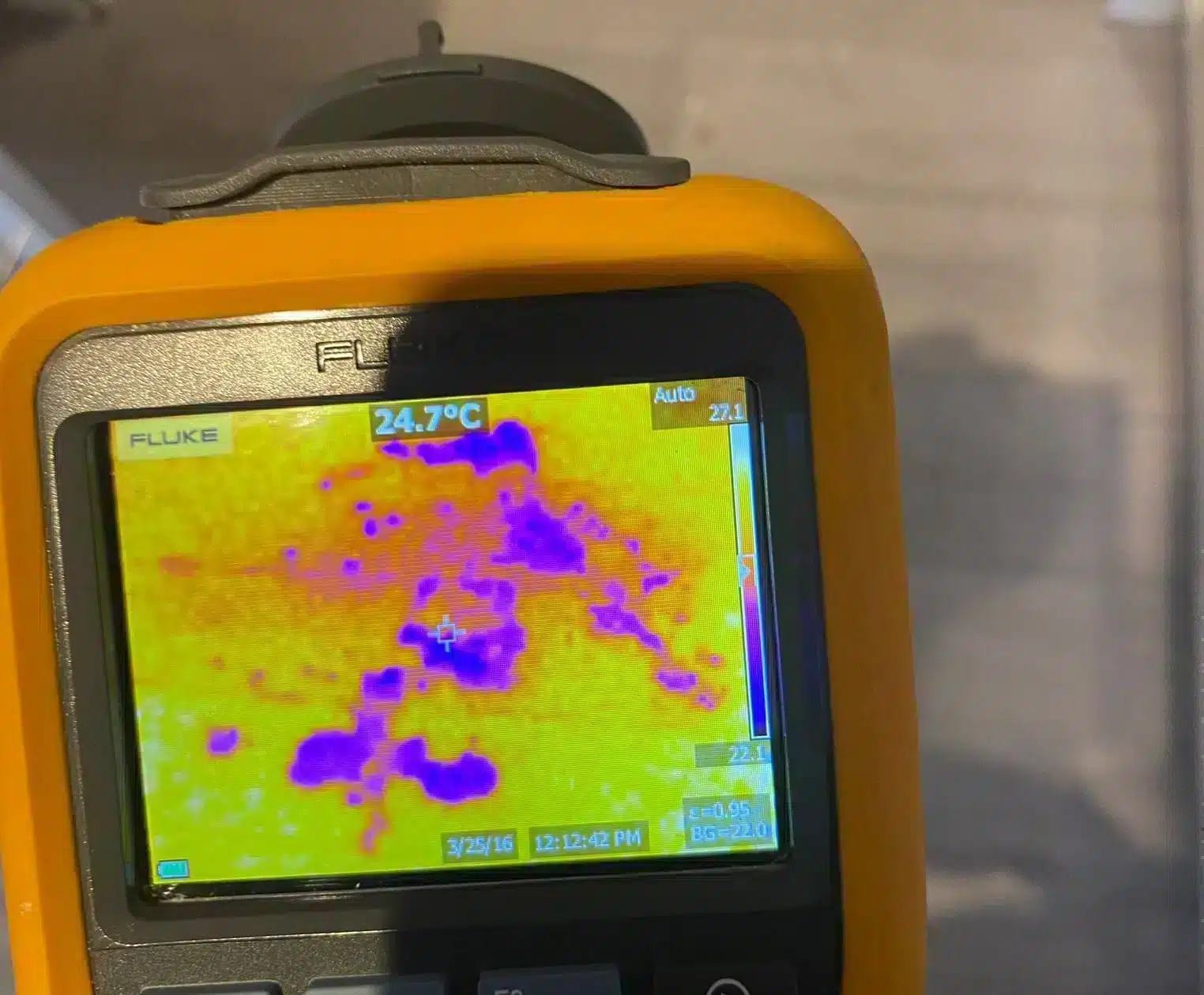
Method choice affects duration too. A thermal camera reads a whole wall in minutes but only tells part of the story. Acoustic work is slower and more precise. Tracer gas needs the pipe drained and charged before the search even starts, which adds an hour before any scanning happens.
An engineer who carries the full toolkit will pick the fastest route to a confirmed answer, not the fastest route to an answer. Those are different things, and the second one is how floors get lifted in the wrong place.
What makes a survey faster
You have more influence over the visit length than you might think. The properties we pinpoint quickest are nearly always the ones where the homeowner has done a little groundwork.
Have this ready before the engineer arrives
- A symptom timelineWhen you first noticed the problem, what has changed since, and anything that makes it better or worse. Photos with dates help.
- Boiler pressure notesIf the boiler loses pressure, note how much and how fast. A gauge reading morning and night for a few days is genuinely useful evidence.
- Clear accessMove furniture off suspect walls, empty the sink cupboard, unlock the garage and clear loft hatches. Ten minutes of clearing can save an hour on site.
- Know your stop valve and metersWe will need the stop valve inside the house, and outside, the boundary stopcock. Finding them in advance saves hunting.
- Any plans or previous reportsBoiler service records, previous plumber visits, extension drawings. Anything showing where pipes run shrinks the search area.
- Water availableDetection generally needs the system charged, so do not drain everything down unless a plumber has told you to for safety.
If you are not sure what applies to your situation, ask when you book. A five-minute phone conversation about symptoms lets us arrive with the right equipment and a working theory, and that preparation is often the difference between a two-hour visit and a four-hour one. Call us on 07700 152 467 and we will tell you exactly what to have ready.
What slows a survey down
- Intermittent leaksA pipe that only leaks when the heating cycles, or a shower that only leaks in use, has to be caught misbehaving. Recreating the fault takes time.
- Unmapped pipeworkOlder Scottish homes with decades of renovations often have pipes nowhere near where anyone expects. Tracing the runs comes first and adds time.
- Background noiseAcoustic methods need quiet. Busy roads, machinery or a household in full swing can slow listening work, which is one reason mains surveys sometimes happen at night.
- Multiple leaksFinding one leak does not prove it is the only one. If pressure keeps dropping after the first find, the search continues.
- Deep or shielded pipesInsulated pipes, thick screeds and monoblock driveways all mute the signals equipment relies on, so readings take longer to gather and confirm.
After the visit: how long until the report?
The on-site part ends with the leak position marked and explained to you. The written survey report, with photos, readings, method notes and the confirmed location, typically follows within a few working days. If your insurer is involved, that document matters as much as the visit itself, since it evidences the cause of damage and supports a trace and access claim. Our guide to leak detection reports for insurance covers what a proper one contains.
If a claim or a repair is urgent, say so at booking. A verbal location on the day plus a fast-tracked report is usually possible when a ceiling is coming down or a business cannot open.
Is faster always better?
No, and it is worth being blunt about why. The expensive part of a wrongly located leak is not the survey fee, it is the hole in the wrong floor. A survey that takes an extra hour to confirm the position with a second method is cheaper than a quick guess that costs you a retiled bathroom. When comparing firms, weigh thoroughness and reporting alongside speed, and look at what leak detection costs in that light.
The fair promise is this: as fast as the evidence allows, and no faster.
Frequently asked questions
How long does a typical home leak detection survey take?
Most domestic visits take between one hour and half a day. Simple indoor leaks sit at the short end, central heating circuits in the middle, and underground supply pipes or underfloor heating at the longer end. Large or commercial properties can need a full day or more.
Can a leak always be found in one visit?
Usually, but not always. Intermittent leaks that only run under certain conditions sometimes need a second visit with the system caught in its faulty state. A good engineer will explain what was ruled out on the first visit and exactly what the return visit will test, so no time is wasted.
Do I need to be home during the survey?
Someone needs to give access and, ideally, answer questions about the symptoms, since the history often points to the leak. For rented or managed properties a keyholder works fine if we can reach the person who knows the story by phone. Water and heating usually need to be available.
Does the water need to be on for leak detection?
Generally yes. Acoustic and correlation methods listen to pressurised water escaping, and thermal imaging needs the system running to create temperature contrast. Tracer gas is the exception, since the pipe is drained and charged with gas. If a burst has forced you to shut off the supply, tell us at booking.
How quickly can an engineer attend in Scotland?
MCR Leak Detection runs a 24/7 emergency service across Scotland, so urgent cases, such as water coming through a ceiling or a suspected burst main, can be attended fast. For non-urgent hidden leaks, surveys are booked in like any other trade visit, usually within days rather than weeks.
Speak to MCR Leak Detection
Tell us the symptoms and we will tell you what the survey involves, how long to expect and what to have ready. Non-destructive leak detection across Scotland, 24/7.
Related reading
- What Is Trace and Access? The Method Explained
- The Equipment Professional Leak Detection Engineers Use
- How Much Does Leak Detection Cost? UK and Scotland Price Guide
- Non-Destructive Leak Detection: What It Means for Your Home
Or learn more about our professional leak detection across Scotland.