

A slow drip from the gland nut under the stopcock handle is common and rarely urgent; a gentle quarter turn of that nut often stops it. Water from the valve body or joints is more serious, because the stopcock sits on your mains supply. Never force a seized stopcock, and get a weeping one looked at within days, not months.
Leaking Stopcock: Is It an Emergency and What Should You Do?
A leaking stopcock has a special way of making people nervous, and fairly enough. This is the valve that is supposed to save you in an emergency, and now it is the thing dripping. The reassuring news is that most stopcock leaks start as small, fixable weeps. The catch is where the valve sits: on the incoming main, under pressure all day, every day, often in the least visible corner of the kitchen.
This guide explains what is actually leaking, which drips can wait for a routine plumber visit, which ones need same-day attention, and what to do in the meantime.
What’s in this guide
What is actually leaking on a stopcock
A traditional stopcock is a simple brass valve, and it only has a few places it can let go. Knowing which one you are looking at tells you how worried to be.
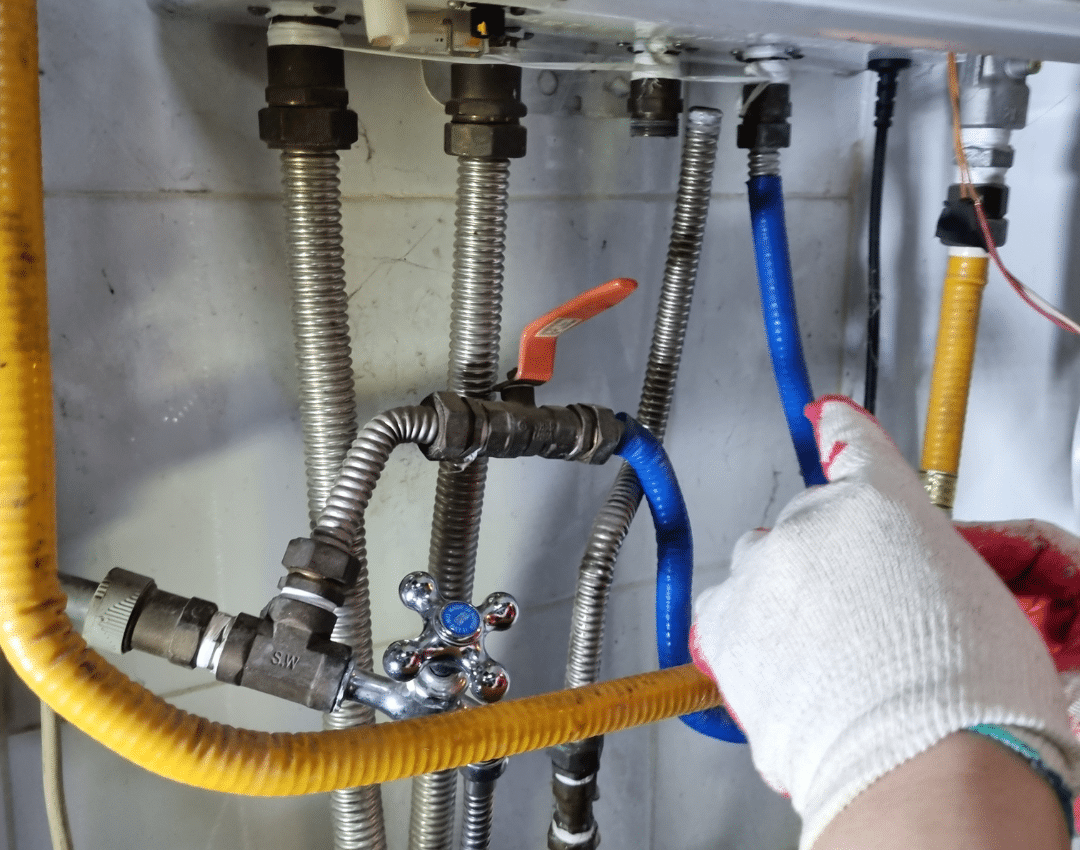
- The gland nut, just under the handleThe most common leak by far. The gland packing that seals the spindle dries and shrinks with age, and water creeps up past it, usually only when the valve has just been turned. Annoying, but rarely urgent.
- The compression joints either sideThe nuts connecting the valve to the pipework. A weep here is worth more respect, because the joint is holding back mains pressure and a weep can develop into a spray.
- The valve body itselfA crack or corrosion pinhole in the brass casting. This is the rare one, and the serious one. A failing body will not improve, and it can fail properly without notice.
Dry the valve with a cloth, then hold a piece of dry kitchen roll against each point in turn. The spot that wets the paper first is your leak.
How urgent is a leaking stopcock?
| What you see | What it means | How fast to act |
|---|---|---|
| Damp or a slow drip at the gland nut after turning the valve | Tired gland packing | Routine. Try the gland nut fix below, book a plumber if it persists |
| Steady drip from a compression joint | Joint or olive losing its seal | Days, not weeks. Put a container under it and get it looked at |
| Weep from the valve body, green or white crust on the brass | Corrosion working through the casting | Same week, sooner if it grows. Plan for replacement |
| Running water, spraying joint, or a leak you cannot slow | Failing valve on mains pressure | Emergency. Shut the outside stop valve and call for same-day help |
The reason a stopcock leak deserves more caution than an ordinary dripping fitting is simple. There is no valve upstream of it inside the house. If it fails outright, the only way to stop the water is at the external stop valve, so you want that located before you need it.
Never force a seized stopcock
Half the stopcock damage we see was done by a well-meaning pair of hands and a set of grips. An old stopcock that has not been turned for years seizes, and forcing it is a gamble you do not want. The spindle can snap, the gland can blow, and a valve that was merely stiff becomes a valve that is broken, jammed, and still the only thing between your home and the main.
If your stopcock will not turn by hand, stop. Apply penetrating oil around the spindle, leave it to work, and try again gently later. If it still will not move, have a plumber free or replace it in a planned visit, with the outside valve available as backup. A seized stopcock discovered during a flood is a miserable combination, which is why we suggest testing yours a couple of times a year. Our guide to finding your stopcock covers where it hides in different Scottish house types, including tenements.
Temporary measures that actually work
Step 1: Try the gland nut quarter turn
For a leak at the spindle, take a spanner to the gland nut, the first nut directly below the handle, and tighten it a quarter turn clockwise. Snug, not brutal. This compresses the packing and stops most spindle weeps. If the handle becomes too stiff to turn, back it off slightly.
Step 2: Catch and monitor everything else
For joint or body weeps, dry the valve, put a container underneath and check it over a few hours. A teaspoon a day is a booking. A cup an hour is a callout. Marking the water level with tape tells you quickly if it is getting worse.
Step 3: Do not rely on wraps and pastes
Self-amalgamating tape or epoxy putty can slow a weep overnight, and that is all they are for. On a mains-pressure valve they are a plaster, not a repair. If you have had to bandage a stopcock, the replacement is already overdue.
If water is tracking along pipes or under units and you are no longer sure the stopcock is the only source, call us on 07700 152 467 and we will confirm exactly where the water is coming from before anything gets ripped out.
Your backup: the outside stop valve
Every home on a mains supply has a second shut-off point outside, usually under a small cover in the pavement or at the property boundary. It matters here for one reason: it is the valve that isolates a failed internal stopcock.
Ownership is worth knowing in Scotland. Scottish Water owns the water main, the communication pipe and the boundary stopcock, while you own the supply pipe from the boundary into the house and everything inside, the leaking kitchen stopcock included. If the boundary valve is buried, seized or missing, contact Scottish Water rather than digging at it. Our guide to who is responsible for water pipes in Scotland maps the whole boundary line.
In flats and older terraces the picture can be shared: several properties often run off one supply pipe, so one external valve may serve neighbours too. Worth confirming before you shut it in a hurry.
Repair or replace?
Gland leaks can usually be serviced. A plumber repacks the gland with PTFE packing and the valve carries on for years. Joint weeps can often be remade. But an old stopcock that is stiff, crusted or weeping from the body is usually a replacement, and honestly, replacement is often the better spend either way. A modern lever valve turns off in a quarter turn, does not seize the same way, and costs far less than the water damage a failed valve causes.
Replacement means isolating at the outside valve, so it is a planned job rather than a five-minute favour. Get it booked before winter if you can. Frozen pipe season is exactly when you need a stopcock that turns, as our guide to protecting pipes in a Scottish winter explains.
When a stopcock drip hides a bigger problem
One honest warning from jobs we attend. A stopcock that suddenly starts weeping is sometimes the visible symptom of something else: pressure changes from a leak elsewhere on the supply pipe, movement in pipework that has been disturbed, or corrosion that is further along the pipe than the valve. If you fix the stopcock and damp keeps appearing nearby, or your boiler pressure keeps dropping too, stop replacing parts on guesswork. The signs of a hidden water leak are worth ten minutes of your time, and a proper survey settles it without opening a single wall.
Frequently asked questions
Is a leaking stopcock an emergency?
Usually not, if it is a slow weep from the gland nut under the handle. It becomes urgent when water comes from the valve body or joints, because the stopcock sits on mains pressure with nothing upstream to isolate it indoors. Anything more than a slow drip deserves same-day attention.
Can I fix a leaking stopcock myself?
The gland nut fix is safe for most people: tighten the first nut below the handle a gentle quarter turn to compress the packing. Anything beyond that, repacking the gland, remaking joints or replacing the valve, needs the supply shut at the outside stop valve, so it is a plumber’s job.
What happens if I force a stiff stopcock?
Risky. Forcing a seized valve can snap the spindle or blow the gland seal, turning a stiff valve into a broken one that may jam open or start leaking heavily. Use penetrating oil, be patient and gentle, and if it still will not move, have it freed or replaced in a planned repair.
Who is responsible for a leaking outside stopcock in Scotland?
Scottish Water owns and maintains the boundary stopcock, along with the water main and communication pipe, so report faults with it to them. Everything from the boundary into your home, including the internal stopcock, is the owner’s responsibility to repair.
Why does my stopcock only leak when I turn it?
That points squarely at the gland packing. The seal around the spindle only works hard when the spindle moves, so old, shrunken packing lets a little water past during and just after operation. A quarter turn on the gland nut usually cures it; repacking the gland is the lasting fix.
Speak to MCR Leak Detection
Not sure whether that drip is the stopcock or something hiding behind it? We trace water to its true source non-destructively, across Scotland, 24/7, so the right part gets fixed first time.
Related reading
- Where Is My Stopcock? How to Shut Off Your Water in an Emergency
- Burst Water Pipe? What to Do in the First 10 Minutes
- Who Is Responsible for Water Pipes in Scotland?
- Water Coming Through the Ceiling: Emergency Steps That Limit Damage
Or learn more about our water leak detection across Scotland.