

A factor manages common repairs in Scottish blocks, but it needs evidence before spending owners’ money. Leak detection answers the first question: whose pipe is leaking. A common pipe is usually a shared cost under the title deeds or Tenement Management Scheme, while a private pipe is that owner’s bill.
Property Factors and Leak Detection: How Repairs Get Organised in Scottish Blocks
Water is leaking somewhere in the block. The owner in the ground-floor flat has a spreading stain, the factor is fielding emails from four different owners, and nobody can say yet whose pipe is responsible or who should pay to find out. This scene plays out in tenements and modern blocks across Glasgow, Edinburgh and every factored development in Scotland, and it stalls for the same reason every time: repairs cannot be organised, or billed, until someone establishes the facts.
This guide explains how leak repairs actually get moving in a factored block: what a property factor can and cannot do when a water leak appears, who instructs the detection survey, how the cost gets split and what to do when owners dig their heels in.
What’s in this guide
What a property factor actually does (and does not)
Property factors in Scotland are regulated. Under the Property Factors (Scotland) Act 2011 they must be registered and must follow a statutory Code of Conduct that sets minimum standards for how they manage common property. Every owner should hold the factor’s written statement of services, which sets out what the factor is contracted to manage, how repairs are instructed, what it can spend without consulting owners and how complaints are handled.
Two limits matter in a leak situation. First, the factor manages the common parts of the building, not the inside of your flat. Second, the factor spends the owners’ money, not its own, so beyond any delegated spending authority in the written statement it generally needs owner agreement, and it needs justification for every invoice it apportions. That second point is exactly why evidence, rather than opinion, is what unlocks a stalled leak repair.
Whose pipe is it? The first question in a factored-block water leak
Every decision that follows hangs on this. Water in a block can come from a private pipe inside one flat, from a shared supply pipe serving the whole stair, from a common heating or waste run, or from outside the plumbing altogether, a roof or gutter failure travelling down through the fabric.
The distinctions have real money attached. Scottish Water’s guidance notes that flats and older terraced properties usually share a supply pipe, with responsibility resting jointly on the owners it serves. Our guides to shared supply pipes and who pays when there is a water leak map the ownership boundaries in detail.
Until the source is located, nobody can even say which of those categories the leak falls into. That is why the detection survey belongs at the start of the process, not after weeks of correspondence. It is the piece of evidence every other step depends on.
Who instructs leak detection in a factored block
If the leak appears to be in common property
The factor typically instructs the survey as a common repair, within its delegated authority for urgent work or with owner agreement for the rest. Water escaping into flats is usually treated as urgent, and most written statements of services allow the factor to act quickly on it.
If the leak appears to be private
The affected owner, or the owner suspected of causing it, instructs and pays, though the bill may move once the source is confirmed. Our guide to leaks from the flat above covers the awkward neighbour-to-neighbour version of this.
If nobody knows, which is most of the time
Any affected owner can commission detection directly rather than waiting for consensus. A survey that identifies the failed pipe converts the question from “who should investigate?” to “here is the pipe, here is whose it is, here is the split”, and the cost of the survey itself can then be apportioned or claimed as appropriate.
If your block is stuck at the arguing stage while a ceiling gets worse, call us on 07700 152 467. One survey usually ends the argument.
How the cost gets split
Once the source is known, Scots law provides the framework. Your title deeds are the first place to look, since they usually say which parts of the building are common and how costs divide. Where the deeds are silent or unworkable, the Tenement Management Scheme under the Tenements (Scotland) Act 2004 fills the gaps, and repairs to shared pipes are generally split among the owners they serve. The advice service Under One Roof publishes practical guidance on exactly these situations, including leaks between flats.
Insurance runs alongside this. Block policies and individual buildings policies commonly include trace and access cover, which MoneySuperMarket, citing Defaqto, reports appears in 94% of buildings policies, typically with limits of £5,000 to £10,000. That cover pays for locating the leak and making good access, so in many blocks the detection survey ends up funded by an insurer rather than the owners directly.
When owners disagree, or the factor will not move
Some blocks have an owner who refuses to engage, disputes every invoice or blocks access. The system anticipates this. Scheme decisions on common repairs generally follow majority rules under the title deeds or the Tenement Management Scheme, so one refusal does not have to mean paralysis, and a properly documented repair can still be organised with costs recovered afterwards.
If the problem is the factor itself, slow, uncommunicative or refusing to organise an obvious common repair, the Code of Conduct requires it to operate a written complaints procedure. Exhaust that first, in writing. If the complaint is not resolved, owners can apply to the First-tier Tribunal for Scotland (Housing and Property Chamber) for a determination that the factor failed to comply with the 2011 Act. Tribunals deal in evidence, which brings us back to the detection report.
Why an independent detection report protects owners
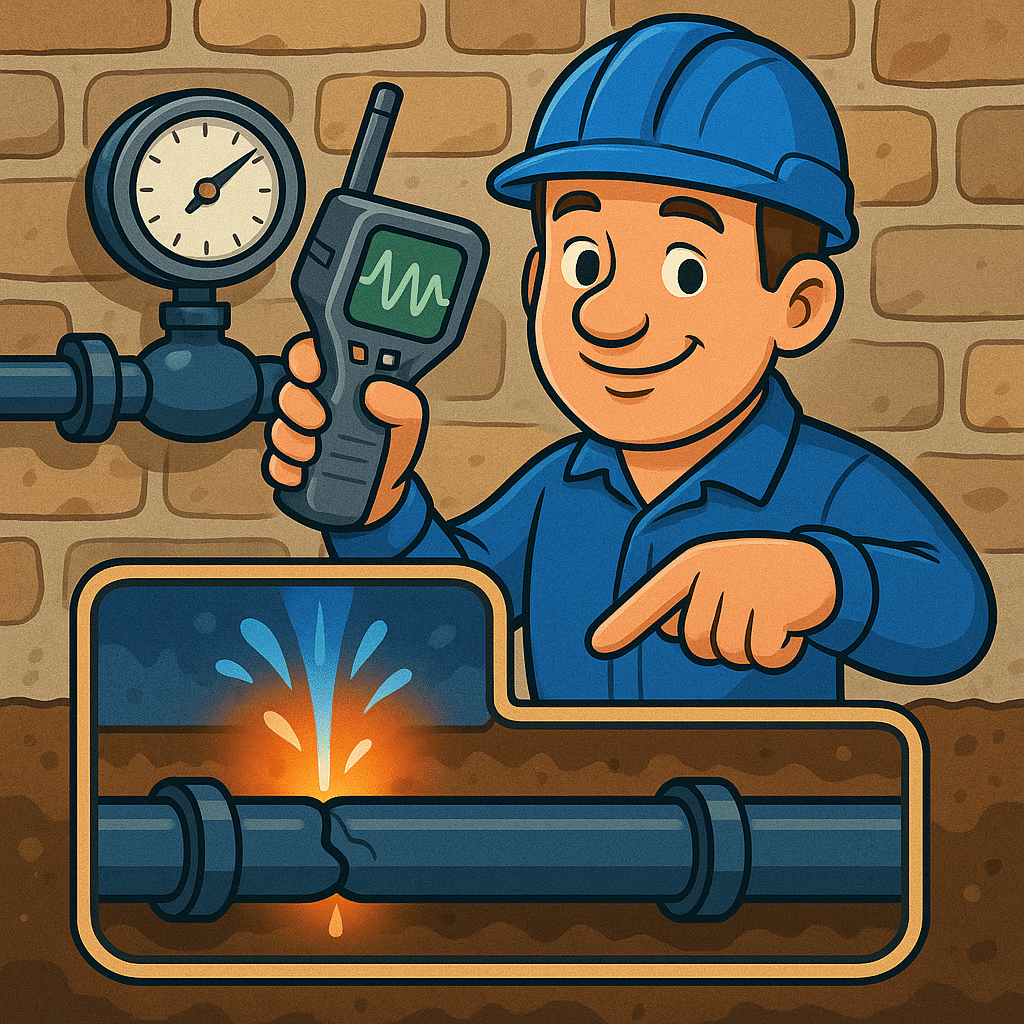
In a single house, a leak report is useful. In a factored block, it is the document everything else stands on. It establishes which pipe failed and where, which determines whose responsibility it is, which determines how the cost splits, which determines what the factor can bill and what an insurer will pay.
Independence matters because the finder has no stake in the answer. A report from a detection specialist carries weight with factors, insurers and tribunals precisely because it was not written by the contractor hoping to do the repair, or by the owner hoping the pipe belongs to someone else.
A good report states the methods used, the readings taken, the located failure point and photographs of the evidence. Our article on leak detection reports for insurance covers what should be inside one and how insurers use it. For factored blocks we would add one practical note: circulate it to every affected owner and the factor at the same time. Shared facts end disputes faster than anything else in this process.
Frequently asked questions
Is the factor responsible for fixing a water leak?
Only if the leak is in common property the factor is contracted to manage, and even then the owners collectively pay for the work. Leaks from private pipework inside a flat are that owner’s responsibility. The factor’s written statement of services defines exactly what falls within its remit.
Who pays for leak detection in a tenement or factored block?
It follows the pipe. If the survey finds a common pipe failed, the cost is normally shared under the title deeds or Tenement Management Scheme. If it is private, the responsible owner pays. Trace and access cover on a block or buildings policy often reimburses the detection cost either way.
Can one owner order a leak survey without the others agreeing?
Yes. Any owner can commission detection on their own instruction, and it is often the fastest way to unlock a stalled situation. Once the source is identified, the question of apportioning the survey and repair costs can be dealt with using the deeds, the Tenement Management Scheme or insurance.
What if the factor ignores a leak in the common pipes?
Put the request and the evidence in writing, then use the factor’s complaints procedure, which the statutory Code of Conduct requires it to have. If that fails, owners can apply to the First-tier Tribunal for Scotland (Housing and Property Chamber) for a ruling that the factor breached the Property Factors (Scotland) Act 2011.
Does block insurance cover finding the leak?
Commonly, yes. Trace and access cover appears in around 94% of buildings policies and pays for locating the leak and making good the access, typically up to £5,000 or £10,000. Check whether your block has a common policy, individual policies or both, and which one should respond first.
Speak to MCR Leak Detection
A leak in a factored block stays expensive while it stays unlocated. We survey tenements and apartment blocks across Scotland, pinpoint the failed pipe non-destructively and report to owners, factors and insurers, 24/7.
Related reading
- Tenement Water Leaks: Who Pays for Repairs in Scotland?
- Water Leak From the Flat Above: Your Rights in Scotland
- Shared Supply Pipes in Scottish Flats and Terraces: Who’s Responsible?
- Why Insurers Ask for a Leak Detection Report (and What’s in One)
Factored blocks are our daily work in Glasgow and Edinburgh.