

Yes, smart water leak detectors are worth having, with eyes open. Spot sensors and auto shut-off valves catch bursts and drips early, and several UK insurers now supply devices such as LeakBot to customers at no cost. What they cannot do is tell you where a hidden pipe is failing. They are an early warning, not a diagnosis, and in unmetered Scottish homes that warning is worth more than most people realise.
Smart Water Leak Detectors: Are They Worth It?
You would expect a leak detection company to feel threatened by gadgets that promise to detect leaks. We are not, and this article explains why. Smart sensors and professional detection do two different jobs, and homes are better protected when both get used for what they are actually good at.
Here is an honest look at what the devices do well, what the marketing skips over, what they cost, and where the professionals still earn their keep.
What’s in this guide
The three types of smart water leak detector
1. Spot sensors
Small battery pucks that sit on the floor where water might appear: under the sink, behind the washing machine, beside the hot water cylinder, in the loft. When the contacts get wet, your phone gets an alert and the unit sounds an alarm. Cheap, simple, and only as good as their placement.
2. Whole-home flow and temperature monitors
Devices that clip to or plumb into the incoming supply and watch how water moves through the house. Continuous flow at 3am, or the temperature signature of water constantly drawing in, flags a leak somewhere in the system. LeakBot is the best known UK example, clipped on near the stop valve.
3. Auto shut-off valves
The full setup: a motorised valve on the incoming main that closes automatically when sensors detect a leak, or when you tap a button from anywhere. This is the version that can genuinely save a kitchen while you are on holiday, because it acts rather than just notifies.
What smart leak detectors catch well
- Appliance and fitting failuresWashing machine hoses, dishwasher connections, sink traps and cylinder overflows are exactly where spot sensors sit, and these failures are common and messy.
- Bursts while nobody is homeThe holiday burst is the disaster scenario, and an alert plus an auto shut-off turns a wrecked ground floor into a mopped-up puddle. Empty and second homes benefit most.
- Freeze warningsMany devices monitor temperature and warn when pipework is heading towards freezing, which in a Scottish winter is a genuinely useful nudge to act before a burst pipe emergency.
- Slow habits you would never noticeFlow monitors spot the toilet that never stops filling and the dripping overflow, the quiet wasters that run for months.
What they miss, honestly
- LocationThe big one. A flow monitor can tell you water is escaping somewhere; it has no idea whether that is a weeping radiator valve or a supply pipe under the driveway. Detection in the professional sense, pinpointing the failure, is a different job entirely.
- Leaks away from the sensorsA spot sensor under the sink knows nothing about the pipe in the wall two rooms away. Coverage is only where you put the pucks.
- Central heating leaksMost devices watch the cold main. A sealed heating circuit losing pressure through a pinhole under the floor never touches the monitored supply, so the gadget stays silent while the slab soaks.
- Very slow weepsFlow-based devices need a detectable signal. A weep measured in drips per minute inside a wall can sit below the threshold until the damage is visible anyway.
- Outside leaksUnderground supply pipe failures between the boundary and the house are among the most expensive to leave running, and consumer devices mostly cannot see them.
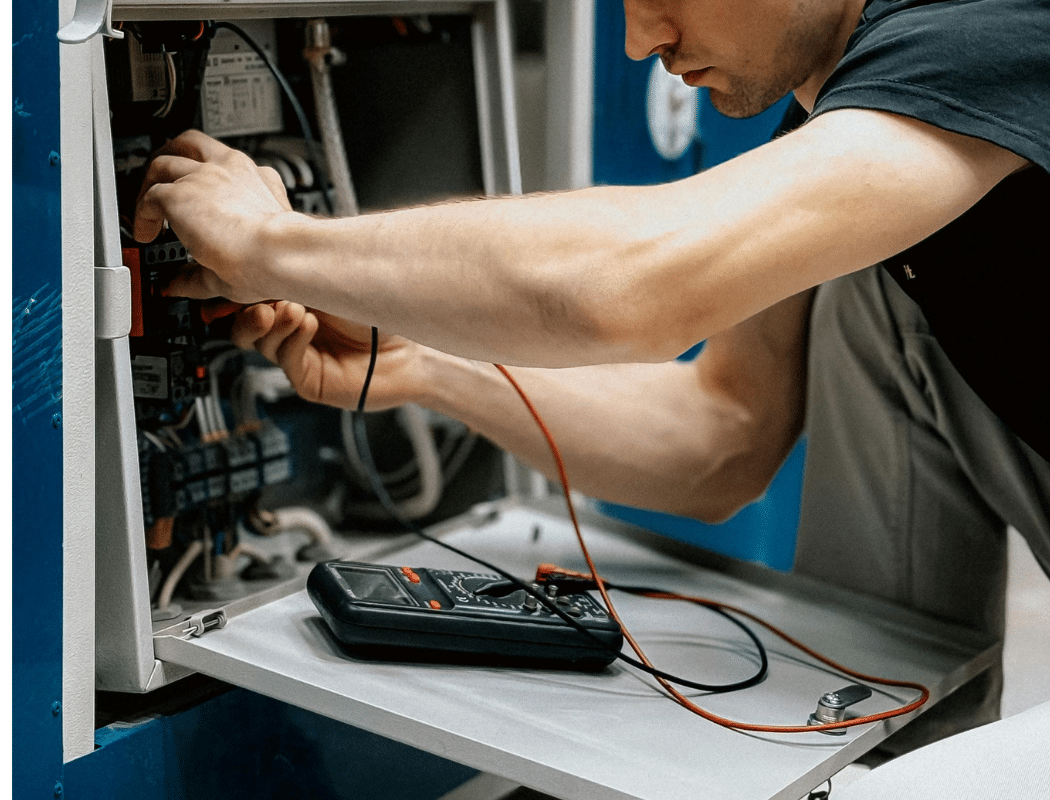
This is the practical division of labour. The gadget tells you that something is wrong, sometimes weeks before you would have spotted it yourself. Professional equipment and an experienced engineer tell you where, so the repair is one small opening rather than a hunt.
The worst outcome we see is the opposite of smart: an alert gets dismissed as a glitch because nobody can see any water. If your device keeps flagging use you cannot explain, treat it as evidence, not a nuisance.
What smart leak detectors cost
Entry-level spot sensors are pocket-money purchases, while installed whole-home systems are a proper investment. MyBuilder’s price guide for smart leak detector installation puts UK systems at roughly £100 to £1,000 depending on complexity, with auto shut-off valves and professional fitting at the top of that range. Between those extremes sit starter kits that pair a few sensors with a shut-off valve.
Set that against what escapes of water actually cost to put right, weeks of drying, new floors, redecoration, insurance excesses, and the arithmetic is not subtle. For a second home or a rental portfolio it is even less so.
The insurance angle: free devices exist
Insurers dislike water damage claims enough to give the technology away. Hiscox offers buildings insurance customers a free LeakBot, listed at £149, including an engineer visit to find and fix detected leaks. Aviva partnered with HomeServe to supply the same device to its customers, and other UK insurers have run similar schemes.
Before buying anything, check your own policy documents or ask your insurer whether a device is available free or discounted. And keep any alerts and app history if you ever claim, because a timestamped record of when a leak started is useful evidence.
The Scottish twist: no meter, no warning
Here is the part English advice guides miss. Most Scottish households pay for water through council tax rather than a meter, as Scottish Water explains, so a leak never shows up on a bill. In metered England, a shock bill is often the first warning of a hidden leak. In unmetered Scotland, that warning simply does not exist.
That makes early-warning technology more valuable here, not less. Without a meter, a hidden leak announces itself only when damage appears, and our guide to checking for a leak without a water meter shows how limited the DIY alternatives are. A flow or temperature monitor on the incoming main is, in effect, the meter test Scottish homes never had.
Where the professionals fit: the verdict
Buy smart detectors for
- Early warning, especially in unmetered Scottish homes
- Automatic shut-off when you are away or asleep
- Holiday homes, rentals and empty properties
- Freeze alerts before winter bursts
- Peace of mind at appliance trouble spots
Do not expect them to
- Tell you where a hidden pipe is failing
- Watch your sealed central heating circuit
- Detect underground supply pipe leaks
- Catch weeps below their flow threshold
- Replace a survey when damage has appeared
So, worth it? Yes. A sensible setup, a few spot sensors, ideally a flow monitor or shut-off on the main, costs little against the damage it can prevent, and your insurer may hand you the hardware free. Just be clear on the boundary. The device raises the alarm. When the alarm says water is escaping and nothing is visible, the next step is tracking the leak down, and that is where professional detection takes over.
Had an alert you cannot explain, or a device that keeps flagging invisible water use? Call us on 07700 152 467 and we will pinpoint what your sensor is trying to tell you.
Frequently asked questions
Are smart water leak detectors worth it in Scotland specifically?
Arguably more than anywhere else in the UK. Most Scottish homes are unmetered, so a hidden leak never shows on a bill and can run unnoticed for months. A flow or temperature monitor on the incoming main gives an unmetered home the early warning a meter would otherwise provide.
Can a smart leak detector tell me where the leak is?
No. Spot sensors know water reached one specific spot, and flow monitors know the system is losing water somewhere. Neither locates the failing pipe. Pinpointing a hidden leak needs professional methods such as thermal imaging, acoustic listening and tracer gas, which is a separate job from raising the alarm.
Do insurers give discounts for smart leak detectors?
Schemes vary. Some insurers supply devices such as LeakBot free to policyholders, Hiscox and Aviva have both run such offers, rather than discounting premiums directly. Check your own insurer before buying, and keep the app history, since a timestamped alert record is useful evidence in a claim.
Will a smart detector catch a central heating leak?
Usually not. Most devices monitor the cold water supply, while a sealed heating system loses water through its own circuit without touching the main. The tell-tale for heating leaks remains the boiler pressure gauge. If you keep topping up, something is escaping, and a detector on the main will not see it.
Are smart leak detectors hard to install?
Spot sensors just sit on the floor, and clip-on monitors such as LeakBot are designed for self-installation near the stop valve in minutes. Auto shut-off valves that cut into the incoming main are plumbing work and should be fitted professionally. UK guides price installed systems up to around a thousand pounds.
Speak to MCR Leak Detection
Your smart sensor says water is escaping, but not where. We take the alert the rest of the way, pinpointing hidden leaks non-destructively across Scotland, 24/7.
Related reading
- How to Check for a Water Leak When Your Home Has No Water Meter
- Where Is My Stopcock? How to Shut Off Your Water in an Emergency
- Protecting Your Pipes in a Scottish Winter: Heat, Insulate, Protect
- Burst Water Pipe? What to Do in the First 10 Minutes
Or learn more about our water leak detection across Scotland.