

Neither material is leak-proof; they fail differently. Copper leaks through corrosion pinholes and splits when frozen. Plastic pipe rarely fails itself, but its push-fit fittings do, and rodents can chew it. Installation quality and age matter more than the material, and the material changes how a hidden leak gets found.
Plastic vs Copper Pipes: Which Leaks More (and How)?
Ask three plumbers whether plastic or copper pipe is better and you will get three firm answers, none of them the same. We see the question from a different angle. As leak detection engineers we meet both materials only after something has gone wrong, so we know exactly how each one fails in practice in Scottish homes.
The honest answer to the plastic vs copper pipes question is that both leak, but not in the same way, not in the same places and not at the same age. This guide sets out the real failure modes of each, what freezing does to them, and why the material in your walls changes the way a hidden leak has to be traced.
What’s in this guide
How copper pipes leak
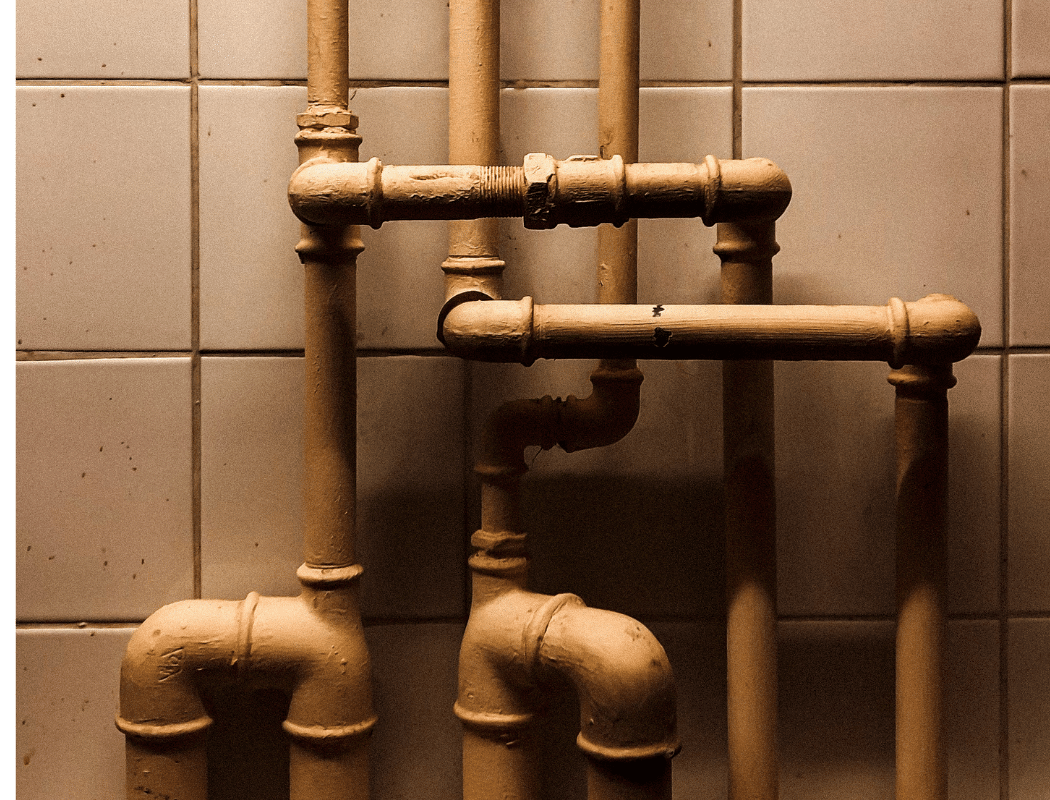
Copper has been the standard in UK plumbing since the 1950s, and much of it is still doing its job sixty years on. When it does fail, it fails in recognisable ways.
The classic is the pinhole leak: corrosion eats a pit through the pipe wall from the inside until a hole the size of a needle tip starts misting water into a wall or floor. Scotland gives this process a helping hand, because most drinking water in Scotland is classified as soft, and soft water never lays down the chalky scale that lines pipes in hard-water areas and slows corrosion from the inside.
Joints fail too. A well-soldered joint outlasts the pipe, but a rushed one with flux left inside corrodes early, and compression fittings weep when the olive was over-tightened or the pipe moved. Fast-flowing hot water erodes the inside of tight elbows, and copper buried unprotected in screed corrodes from the outside. Frozen copper splits along its length, since ice expands and the pipe cannot.
How plastic pipes leak
Plastic pipe, mostly PEX and polybutylene barrier pipe, took over new-build plumbing and heating from the 1990s onwards. The pipe itself is impressively tough. In our surveys, a hole in the middle of a plastic pipe run is rare, and when we find one the cause is usually mechanical: a nail or screw through a floorboard, a kink from installation, chafing against a joist edge, or an animal. Rodents chew plastic pipe readily, which copper largely shrugs off.
Where plastic systems actually leak is at the fittings. Push-fit connectors rely on an O-ring and a grab ring, and they are only as good as the person who assembled them. The failures we find again and again are a missing pipe insert, a pipe end cut at an angle or scratched, a fitting not pushed fully home, or a joint that was rotated and stressed after assembly. When a push-fit joint lets go it can release a lot of water quickly, and because plastic runs are usually clipped out of sight under floors and behind plasterboard, the damage is done before anyone notices. UV light also degrades plastic pipe left exposed, so it does not belong outdoors.
Failure modes compared
| Failure cause | Copper | Plastic (PEX / polybutylene) |
|---|---|---|
| Corrosion pinholes | Yes, the classic failure, worse in soft water | No, immune to corrosion |
| Joint and fitting failure | Weeping compression joints, poor solder | Push-fit O-rings, missing inserts, badly cut ends |
| Freezing | Pipe splits, floods on thaw | Pipe usually tolerates it; fittings blow off |
| Rodent damage | Teeth marks only, breach rare | Chewed through given time |
| Nails and screws | Vulnerable | Vulnerable |
| Sunlight and heat | Unaffected | Degrades in UV, limits near boilers and flues |
| Typical failure age | Decades in, as corrosion accumulates | Early, when installation faults surface |
That last row is the pattern worth remembering. Copper leaks tend to arrive late in life through slow chemistry. Plastic leaks tend to arrive early, when an assembly mistake finally lets go. A plastic system that has behaved for ten years will usually keep behaving.
Plastic vs copper pipes in a Scottish winter
Freezing is where the two materials part company most clearly. Ice expands as it forms, and a frozen copper pipe has nowhere to go, so it splits, often in several places, and floods when the thaw comes. Plastic pipe stretches slightly and usually survives the ice plug itself, but the pressure spike shoves at every fitting on the run, and a push-fit connector can simply let go.
Either way the freeze is the enemy, and Scottish winters supply plenty. Scottish Water dealt with around 3,100 burst pipes on its network in winter 2023/24, with over 30% of winter bursts on customer property, which is why its Protect your Pipes campaign pushes lagging and a heating baseline every year. Whatever your pipes are made of, our guide to protecting pipes in a Scottish winter covers the preparation, and if you are already staring at a frozen run, read what to do about frozen pipes before you reach for anything hotter than a hairdryer.
How the material changes leak detection
Here is the part most comparison articles miss: the pipe material decides how a hidden leak gets found. Metal pipe carries sound well, so a pressurised leak on copper sings through the pipe wall and the ground around it. Ground microphones and correlators pick that up, which is why acoustic leak detection works so well on copper and steel.
Plastic damps that noise. A leak on a plastic run can be nearly silent even under mains pressure, and correlation across plastic pipe needs different sensors and much more care. So on plastic systems we lean on other tools: thermal imaging where the water is warm, moisture mapping to shrink the search area, and tracer gas as the closer. The gas escapes at the split and rises to a surface probe regardless of what the pipe is made of. Our article on tracer gas leak detection explains why it has become the go-to method on plastic and mixed systems.
Not sure what your pipes are made of, or where the wet is coming from? Call us on 07700 152 467 and we will bring the right kit for both.
What this means for your home
Where copper earns its keep
- Proven lifespan measured in decades
- Rodents and UV cannot touch it
- Leaks are noisy, so they are easier to pinpoint
- Rigid runs stay where they were clipped
Where plastic earns its keep
- No corrosion, ever, in any water
- Handles freezing far more gracefully
- Fewer joints buried in floors when run in continuous lengths
- Quick to install and repair
Our advice is unexciting but true: do not rip out a healthy system of either material. Age and installation quality cause leaks, not the material on its own. If your 1960s copper is on its second or third pinhole, budget for replacing that circuit rather than chasing holes one at a time, and on heating circuits keep the water treated, because corrosion is the enemy either way. Our guide to central heating inhibitor explains that side of it.
Frequently asked questions
Which lasts longer, plastic or copper pipe?
A well-installed copper system has a track record of fifty years and more, which plastic cannot yet match simply because it has not existed in homes that long. Plastic manufacturers quote long design lives and the pipe resists corrosion completely. In practice, installation quality decides the outcome more than the material does.
Do plastic pipes burst in freezing weather?
The pipe itself usually survives a freeze because it can stretch slightly around the ice. The risk sits at the fittings, where the pressure spike can force a push-fit connector off the pipe. Copper is the opposite: the fittings hold but the pipe wall splits. Lagging protects both.
Can I mix copper and plastic pipe in one system?
Yes, and most modern Scottish homes already do, with copper tails at radiators and boilers joined to plastic runs under the floors. The connections need the right fittings and pipe inserts. From a leak detection point of view, mixed systems just mean we plan for both acoustic and tracer gas methods on the same survey.
How do I tell which pipes I have?
Look under the kitchen sink, behind radiators and beside the boiler. Copper is rigid bare metal, sometimes painted. Plastic is usually white or grey, slightly flexible, with printed markings along its length and bulky push-fit connectors at joints. Most homes built or replumbed after the late 1990s contain at least some plastic.
Does acoustic leak detection work on plastic pipes?
It works, but with reduced range and clarity, because plastic damps the noise a leak makes. A leak that would be obvious through a ground microphone on copper can be almost silent on plastic. That is why surveys on plastic systems usually bring in tracer gas or thermal imaging to pinpoint the escape.
Speak to MCR Leak Detection
Hidden leak and no idea what pipe is behind the wall? We survey copper, plastic and mixed systems across Scotland with acoustic, thermal and tracer gas methods, non-destructively and 24/7.
Related reading
- Acoustic Leak Detection: How Engineers Hear Leaks Underground
- Tracer Gas Leak Detection: How It Works and When It’s Used
- Frozen Pipes: How to Thaw Them Safely and Prevent a Burst
- The Equipment Professional Leak Detection Engineers Use
Or learn more about our water leak detection across Scotland.